

What if the real story of your deep plane facelift begins not on the day of surgery, but eighteen months later—when swelling finally surrenders to gravity and the tissues reveal their true settling point? Most patients obsess over week-one results, yet the decisive chapter unfolds across a five-year arc where distinct biological forces compete. Gravitational recurrence, fat pad re-descent, and skin quality aging each operate on their own clock, and understanding these separate timelines separates those who panic from those who plan.
This longitudinal guide delivers exactly what textbook overviews skip: a month-by-month and year-by-year account of what changes and what lasts after a deep plane facelift. You will find photographic documentation expectations at each milestone, evidence-based criteria for when a secondary procedure becomes appropriate, and non-surgical touch-up maintenance strategies calibrated to each phase. Drawing on Dr. Berat Çiğdem’s philosophy of graceful aging and his extensive revision surgery expertise, every recommendation below rests on clinical reality—not marketing mythology.

Table of Contents
Month 18: The First Reality Check on the Facelift Longevity Timeline
Eighteen months after surgery marks the end of what surgeons call the “honeymoon window.” Residual edema has dissolved, scars have matured through their proliferative phase, and collagen remodeling beneath the skin has reached a functional plateau. Patients who loved their early results sometimes feel alarmed at this stage—not because anything has failed, but because the face now reflects its genuine post-surgical baseline rather than the swelling-induced tightness they grew accustomed to.
What Actually Changes at Eighteen Months
Three phenomena surface simultaneously around the 18-month mark. First, gravitational recurrence begins its slow, relentless work. The deep plane dissection repositioned the SMAS and muscle layers as a unified sheet, but your body continues producing the same downward vector it always has. Studies tracking post-operative patients with three-dimensional photogrammetry show an average tissue descent of 0.3 to 0.5 millimeters per year beginning at this stage—the vector is subtle, yet measurable.
Second, fat pad re-descent becomes visible in the midface. The malar fat pads, which your surgeon lifted and secured during the deep plane approach, slowly migrate due to laxity in the ligamentous attachments that hold them in place. Patients often notice a softening of the cheek-cheek junction, where the midface meets the lower face, even though the jawline itself remains comparatively sharp.
Third, skin quality aging asserts itself independently of the surgical plane. Ultraviolet damage, glycation from dietary sugars, and declining estrogen levels all erode dermal elasticity at a rate that no facelift can arrest. The skin envelope—the outermost layer—ages on its own trajectory regardless of how deeply the underlying structure was repositioned.

Photographic Documentation Expectations at 18 Months
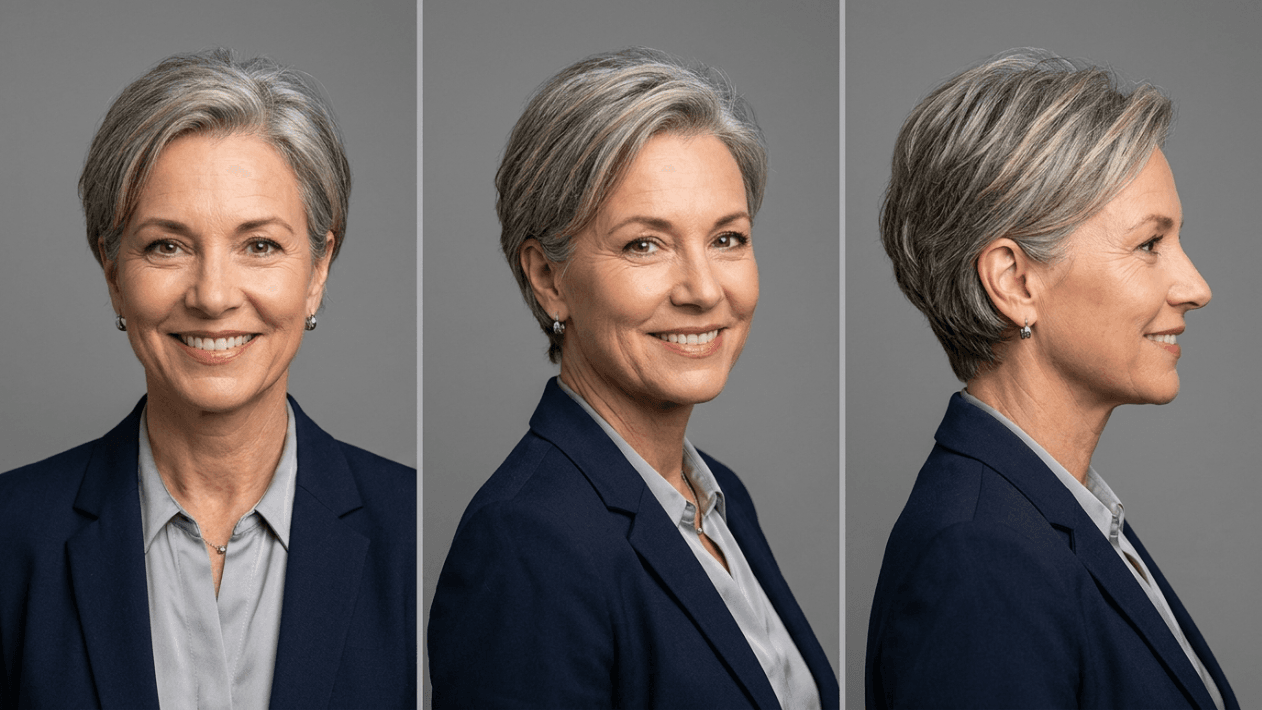
Clinical photography at the 18-month review should capture five standard views: frontal, right and left obliques, and right and left laterals. Use identical lighting, camera distance, and facial expression as your pre-operative and six-week post-operative images. Patients frequently perceive regression that photographs do not confirm—subjective dissatisfaction often outpaces objective change. Side-by-side comparison against the pre-operative baseline almost always reveals that the surgical gain remains substantial, even if the patient has grown accustomed to the new appearance.
Non-Surgical Touch-Up Maintenance at Month 18
This is the ideal window to introduce adjunctive treatments. The deep structural correction from your facelift remains intact, but the surface and volume layers benefit from targeted support:
- Hyaluronic acid fillers to restore midface volume where fat pad re-descent has created subtle hollowing.
- Fractional CO2 or Erbium laser resurfacing to restore skin surface texture and address pigmentation that the surgery could not correct.
- Neuromodulator injections to reduce dynamic wrinkles around the eyes and forehead that have re-emerged as facial expression returns to full mobility.
Dr. Berat’s philosophy of graceful aging guides this phase precisely: the goal is not to chase every millimeter of change, but to support the surgical foundation with well-timed, minimally invasive reinforcement. A patient who invests in skin quality maintenance at 18 months almost always requires a secondary surgical procedure later than one who neglects it.

Year 3: When Gravitational Recurrence Becomes Measurable
By the third anniversary of your deep plane facelift, the battle between surgical repositioning and lifelong gravity reaches a more visible inflection point. The tissues have now endured roughly 26,000 hours of downward force. Patients who had significant jowling pre-operatively tend to notice its earliest whispers returning, though far less pronounced than before surgery. The critical distinction here is between recurrence and relapse—your face is not “reverting” to its pre-operative state; it is aging forward from a better starting position.
Gravitational Recurrence Versus Fat Pad Re-Descent: Knowing the Difference
Patients—and, regrettably, some practitioners—routinely conflate two distinct phenomena. Gravitational recurrence refers to the downward sagging of repositioned tissue under the constant load of gravity. It affects all layers uniformly and typically produces a gentle, generalized descent across the lower face and neck. Fat pad re-descent, on the other hand, is volume-specific: the malar and buccal fat compartments shift because their fascial retaining ligaments have weakened over time, creating localized bulges or hollows independent of the overall tissue position.
Consider a patient whose lower face was lifted superbly but whose cheeks now appear flatter at year three despite an intact jawline. This pattern signals fat pad re-descent rather than gravitational recurrence. The distinction matters because the interventions differ: filler or fat grafting addresses volume displacement, while a secondary facelift addresses gravitational pull across all planes.
The Comparative Table: Year 3 Tissue Behavior
| Parameter | Gravitational Recurrence | Fat Pad Re-Descent | Skin Quality Aging |
|---|---|---|---|
| Primary driver | Downward force on repositioned SMAS-muscle unit | Laxity of osteocutaneous retaining ligaments | Collagen loss, UV damage, glycation |
| Visible sign | Softening of cervicomental angle, early jowl shadow | Midface flattening, deepening nasolabial fold | Fine wrinkling, textural irregularity, pore enlargement |
| Onset timeline | 12-18 months, accelerates slowly | 18-30 months | Continuous from day one |
| Best intervention | Monitor; secondary facelift if severe | Hyaluronic acid filler or structural fat grafting | Laser resurfacing, medical-grade skincare, RF microneedling |
| Surgical priority | Low at year 3 | Low to moderate | Non-surgical only |
| Impact on longevity | Direct—determines when secondary procedure is needed | Indirect—accelerates perceived aging if unaddressed | Indirect—weakens the skin envelope, reducing surgical longevity |
Photographic Expectations and Patient Reassurance at Year 3
Three-year photographs, when compared against the 18-month set, will show measurable but modest change. The most common finding is a 1-2 millimeter downward shift of the jowl line—barely perceptible to an untrained eye, yet deeply felt by the patient who examines herself daily. This is where objective photography becomes therapeutic: documenting that the surgical gain remains six to eight years ahead of where the face would have been without intervention helps reframe the patient’s perception.
Skin texture changes become more photographically apparent at year three than at year one. Perioral rhytides, temporal hollowing, and infraorbital discoloration all fall outside the facelift’s reach, yet they now claim a larger share of the patient’s attention as the structural foundation remains solid. A targeted approach—laser for texture, filler for hollows, skincare for maintenance—keeps the overall aesthetic harmonious.
Year 5: The Decisive Milestone on the Facelift Longevity Timeline
Five years after a deep plane facelift, the question patients ask shifts from “how do I look?” to “is it time for another surgery?” The honest answer: probably not yet, unless specific clinical criteria are met. Year five is where the confluence of gravitational recurrence, fat pad redistribution, and cumulative skin aging creates the most temptation toward premature intervention. Patience and precision in assessment distinguish an experienced surgeon from an eager one.
What Five Years of Data Actually Reveal
Longitudinal outcome studies published in Aesthetic Surgery Journal and Plastic and Reconstructive Surgery consistently demonstrate that deep plane facelift patients retain approximately 60 to 75 percent of their initial correction at the five-year mark. The lower boundary applies to patients with poor skin elasticity, significant weight fluctuations, or heavy smoking histories. The upper boundary belongs to patients who maintained stable weight, followed rigorous sun protection, and received periodic non-surgical touch-ups.
Crucially, the deep plane technique demonstrates superior longevity compared to SMAS plication or skin-only approaches at every measured interval. The unified SMAS-muscle flap resists gravitational recurrence far more effectively than a folded or imbricated SMAS layer because the repositioned tissue retains its native blood supply and structural continuity.
Secondary Facelift Timing: When Is It Appropriate?
Most reputable surgeons consider secondary facelift timing appropriate between years eight and twelve after a primary deep plane procedure—not at year five. However, exceptions exist. Consider secondary surgery at year five if you meet at least two of these clinical criteria:
- Visible and photographically documented jowl descent exceeding 4 millimeters from the post-operative baseline.
- Complete loss of the cervicomental angle due to platysmal recurrence而非 skin laxity alone.
- Significant post-operative weight loss exceeding 10 percent of body mass that has invalidated the original surgical design.
- Development of medically significant nasal labial folds and jowl lines that fillers cannot adequately address.
Dr. Berat’s revision surgery expertise proves particularly valuable at this crossroads. His clinical judgment distinguishes patients who genuinely benefit from returning to the operating room from those who would achieve better results through a disciplined non-surgical protocol. Premature secondary surgery risks vascular compromise in previously dissected planes and delivers diminishing returns compared to strategic patience.
Non-Surgical Touch-Up Maintenance Strategies at Year 5
At five years, the maintenance protocol requires escalation from the 18-month approach. Consider this tiered strategy:
Tier 1 — Volume Restoration: Structural fat grafting to the midface, tear troughs, and temporal fossae addresses the accumulated fat pad re-descent more effectively and durably than hyaluronic acid fillers at this stage. Fat grafting also contributes local stem cell activity that improves overlying skin quality.
Tier 2 — Skin Quality Intervention: Multi-session fractional laser resurfacing combined with/or RF microneedling to stimulate neocollagenesis in the dermis. Patients who underwent a blepharoplasty alongside their facelift often notice periorbital skin aging returning fastest, making this region a priority for resurfacing.
Tier 3 — Dynamic Line Management: Neuromodulators remain essential, but dosing may need adjustment as muscle activity patterns shift with age and surgical repositioning. A practitioner who understands your post-surgical anatomy can calibrate injections to avoid the heavy-handed look that undermines surgical results.
Beyond Year Five: The Long Arc of Facelift Longevity
What happens after year five receives far less attention than it deserves. The facelift longevity timeline does not terminate at an arbitrary checkpoint—it extends throughout your remaining life. Patients who understand the long arc make better decisions and experience far less anxiety about natural aging.
Years 6-8: Accelerated Gravitational Recurrence
Between years six and eight, gravitational recurrence begins to accelerate relative to the first five years. The SMAS layer, while still holding its repositioned position better than superficial techniques would allow, shows measurable stretching. Patients who responded well to filler touch-ups at year three often find that fillers alone no longer produce the same visual impact—the structural foundation itself has shifted enough that surface-level corrections appear insufficient.
This phase is where weekend lifts and mini-facelifts are often marketed aggressively. Resist the temptation. A mini-lift on a previously deep-plane-dissected face does not address the real problem—the deep plane architecture needs refinement, not a superficial skin pull. Choosing the wrong procedure at this stage can actually compromise the longevity of your original result by distorting tissue planes and creating adhesions that complicate a future secondary facelift.
Years 8-12: The Secondary Procedure Window
For most deep plane facelift patients, the eight-to-twelve-year window represents the appropriate secondary facelift timing. A well-executed secondary deep plane procedure can deliver results approaching 80 to 85 percent of the initial correction—remarkably effective, given that the surgeon now works within previously created tissue planes and faces less dissection resistance.
Revision expertise matters enormously here. Surgeons like Dr. Berat who routinely perform revision surgery understand the altered vascular anatomy, the scar tissue distribution, and the mechanistic changes that previous dissection imposes. A secondary facelift in skilled hands is not a repetition of the first operation—it is a calibrative adjustment that accounts for the tissue’s surgical history.
Years 12 and Beyond: Acceptance and Enhancement
After twelve years, even a secondary facelift begins to show the same cycle of gravitational recurrence and skin quality aging. At this stage, patients face a philosophical decision: pursue a third procedure, or shift focus toward maintenance and acceptance. Dr. Berat’s concept of graceful aging acknowledges that every human face tells the story of its years—the goal is to ensure that story remains dignified and coherent rather than chasing an impossible stasis.
Patients who combine strategic surgical intervention with disciplined non-surgical touch-up maintenance consistently report higher satisfaction in the second decade post-operatively than those who alternately binge on procedures and then abandon care entirely. The marathon metaphor applies: steady pacing outperforms sprint-and-collapse.
Distinguishing Fat Pad Re-Descent From Skin Quality Aging: A Closer Look
One of the most misunderstood aspects of long-term facelift outcomes is the interplay between fat pad re-descent and skin quality aging. These two processes operate through completely different mechanisms, yet patients frequently blame the surgery for changes that are purely dermatological. Clarifying this distinction protects patients from unnecessary secondary procedures and directs them toward interventions that actually solve their concerns.
The Mechanism of Fat Pad Re-Descent
The midface contains several discrete fat compartments bounded by fascial septa. During a deep plane facelift, the surgeon releases key osteocutaneous ligaments—specifically the zygomaticomaxillary and masseteric cutaneous ligaments—to mobilize and reposition these compartments. However, the fascial attachments that hold the repositioned fat in place are themselves subject to age-related weakening. Over five to ten years, these septa stretch, allowing the fat pads to descend once again.
The clinical signature of fat pad re-descent is volume redistribution: the cheeks hollow while the nasolabial region accumulates. The jawline may still appear sharp because the deeper SMAS repositioning remains effective—but the midface looks flattened and tired. Patients describe looking “gaunt” or “hollow” rather than “saggy,” which is the critical diagnostic clue.
The Mechanism of Skin Quality Aging
Skin quality aging operates independently of fat and SMAS position. The epidermis thins, the dermal-epidermal junction flattens, and collagen cross-linking shifts from functional to pathological—a process called glycation that transforms resilient collagen fibers into brittle, disorganized structures. Elastin fibers fragment. Decreased hyaluronic acid synthesis reduces dermal hydration. The result: fine lines, textural roughness, increased pore visibility, and a general loss of the luminescent quality that signals youthful skin.
Patients with excellent surgical results but poor skin quality present a frustrating picture—structurally sound, yet perceptively aged. No amount of additional surgery resolves this; only dermal-level interventions succeed. This reality underscores why Dr. Berat insists that surgical planning always account for the skin envelope’s condition. A facelift addresses contour; laser addresses surface; both are required for outcomes that photograph as beautiful at five years as they did at six weeks.
Non-Surgical Touch-Up Maintenance: A Stage-by-Stage Protocol
Maintenance is not an afterthought—it is the discipline that determines whether your surgical investment earns returns for eight years or fifteen. Each post-operative stage demands a specific protocol calibrated to the dominant aging force at that interval.
Stage 1 (Months 1-12): Foundational Recovery Support
During the first year, your focus belongs to surgical recovery optimization. Lymphatic massage reduces persistent edema. Silicone gel sheeting minimizes scar hypertrophy. Broad-spectrum sunscreen at SPF 50 prevents the UV-induced collagen degradation that accelerates visible aging around healing incisions. Medical-grade retinoid therapy can typically resume at the three-month mark, depending on your surgeon’s guidance.
Stage 2 (Months 12-36): Preventive Volume and Texture Management
As gravitational recurrence and fat pad re-descent begin their earliest emergence, hyaluronic acid fillers in the midface and tear troughs provide targeted support. Fractional laser resurfacing every twelve to eighteen months maintains epidermal turnover and dermal collagen density. This two-pronged approach—volume below and texture above—addresses the two forces that otherwise conspire to diminish surgical results prematurely.
Stage 3 (Years 3-7): Structural Reinforcement
At this stage, hyaluronic acid fillers may no longer suffice for fat pad re-descent. Structural fat grafting—harvesting autologous fat from the abdomen or thighs and injecting it into the midface, temples, and periorbital region—offers longer-lasting volume restoration with the added benefit of adipose-derived stem cell activity. Two to three fat grafting sessions spaced six months apart typically achieve stable correction lasting three to five years.
RF microneedling enters the protocol at this stage for patients who have not yet pursued laser resurfacing or who require a less aggressive option for skin quality maintenance. Devices combining radiofrequency energy with microneedle penetration stimulate deep dermal remodeling without the extended downtime of fractional CO2, making them ideal for patients with active lifestyles.
Stage 4 (Years 7+): Pre-Surgical or Post-Surgical Bridging
By year seven and beyond, non-surgical touch-up maintenance reaches its practical ceiling. Fillers and fat grafting continue to support volume, but gravitational recurrence eventually exceeds what these tools can compensate for. This is the interval where patients must honestly evaluate whether a secondary procedure serves them better than continued non-surgical investment.
For patients not yet ready for surgery, a combination of intensified skin care protocols, biennial fat grafting, and occasional thread-based suspension procedures can bridge the gap. However, the return on investment from each non-surgical session diminishes with time. An experienced surgeon will provide an honest cost-benefit analysis comparing accumulated non-surgical expenditure against a secondary facelift that resets the structural clock for another decade.
Photographic Documentation: Building Your Longitudinal Record
Nothing protects your surgical outcome—and your peace of mind—like a disciplined photographic record. The human memory for facial appearance is catastrophically unreliable. Patients routinely believe their results have regressed dramatically, only to discover upon photographic comparison that the change is marginal. Conversely, some patients fail to notice gradual gravitational recurrence that photographs reveal unmistakably.
Establishing Your Baseline Protocols
Request standardized clinical photographs from your surgeon at the following intervals: pre-operative, two weeks, six weeks, three months, six months, twelve months, eighteen months, three years, and five years. If your surgeon does not offer this protocol, take your own images using consistent overhead lighting, a neutral background, and a fixed camera distance of approximately one meter. Capture the five standard views: frontal, right and left three-quarter oblique, and right and left lateral.
Store these images chronologically in a dedicated album—ideally on your phone for easy comparison during consultations. The before and after gallery on Dr. Berat’s website demonstrates the photographic standards that matter: consistent exposure, neutral expression, and elimination of variable lighting that creates false impressions of change.
What Photographs Reveal at Each Stage
At eighteen months, photographs typically confirm that 90 to 95 percent of the surgical correction persists. Patient perception often lags behind reality—expecting permanent change without any aging creates an illusory sense of regression that images decisively disprove.
At year three, lateral photographs most sensitively capture gravitational recurrence: look for the angle between the submental line and the neck. A loss of 10 to 15 degrees from the post-operative peak indicates normal progression, not surgical failure. Frontal views at year three often show deepening of the nasolabital folds due to fat pad re-descent, while the jawline remains relatively preserved.
At year five, oblique views become the most diagnostic. The three-quarter angle simultaneously reveals jawline definition, midface volume, and skin texture—making it the single most valuable view for tracking overall outcome trajectory. Compare the year-five oblique against both the pre-operative and twelve-month post-operative views to assess both absolute gain and relative change.
Your Longitudinal Action Plan: Preserving Results Year by Year
Knowledge without application is merely trivia. Below is a step-by-step plan calibrated to each stage of the facelift longevity timeline—specific actions you can take to maximize longevity while staying alert for signs that warrant professional evaluation.
Step 1: Establish Your Photographic Baseline Within 60 Days
Capture five-view standardized photographs no later than two months post-operatively, once initial swelling has diminished but before the face has fully settled. This becomes your comparison standard for all future evaluations. Without this baseline, every subsequent assessment rests on subjective memory rather than objective evidence.
Step 2: Commit to a Medical-Grade Skincare Protocol by Month 3
Begin a skincare regimen that includes prescription-strength tretinoin, vitamin C serum at 15-20 percent concentration, and broad-spectrum SPF 50 sunscreen applied every morning. These three agents address the overwhelming majority of preventable skin quality aging. Consistency matters more than product price—daily application of an evidence-based routine outperforms sporadic use of expensive formulations.
Step 3: Schedule Your First Non-Surgical Touch-Up at Month 12-18
Book a consultation with your surgeon or an experienced injector to evaluate midface volume and skin texture. Targeted hyaluronic acid filler in the malar region and tear troughs, combined with a fractional laser session, establishes early momentum against fat pad re-descent and skin quality aging. This first session sets the tone for your entire maintenance approach.
Step 4: Transition to Structural Fat Grafting Between Years 2-4
As hyaluronic acid filler costs accumulate and the volume deficit from fat pad re-descent increases, autologous fat grafting offers a more durable and biologically active alternative. Discuss fat grafting timing with your surgeon at your three-year review. Two sessions spaced six months apart can address midface, temporal, and periorbital volume loss simultaneously—achieving correction that lasts three to five years with a single intervention cycle.
Step 5: Conduct an Honest Five-Year Surgical Assessment
At the five-year mark, schedule a comprehensive evaluation with your original surgeon if possible. Compare five-year photographs against the surgical baseline. If your descent exceeds 4 millimeters measured from the post-operative jawline position, if the cervicomental angle has closed beyond 120 degrees, or if fillers no longer produce visually satisfactory results—discuss secondary facelift timing with a revision specialist. Dr. Berat’s experience with revision cases ensures that the evaluation factors in tissue memory, scar architecture, and vascular considerations unique to previously operated faces.
Step 6: Reassess and Recalibrate Every Two Years Beyond Year Five
Beyond year five, schedule biennial consultations to photograph and measure tissue position. These check-ins provide early warning of accelerated gravitational recurrence while offering opportunities to refresh non-surgical protocols. Think of these visits as calibration appointments—they keep your maintenance plan aligned with your face’s actual trajectory rather than assumptions.
Step 7: Make the Secondary Decision on Evidence, Not Emotion
When the question of a secondary facelift arises—and it will—base your decision on photographic data, clinical measurement, and expert surgical judgment rather than the mirror at bad lighting angles or comparison to celebrities who have themselves undergone multiple procedures. A thoughtful secondary procedure performed at the right time delivers extraordinary satisfaction. A panicked premature intervention delivers regret.
The Psychological Dimension: Living With a Changing Face
No longitudinal guide is complete without addressing the emotional reality of watching a post-surgical face age. Patients who undergo facelift surgery make an implicit bargain: they trade acceptance of aging for a new baseline, then must learn to accept aging from that new baseline. The psychological literature on post-operative adaptation reveals a consistent pattern: satisfaction peaks between months six and eighteen, dips between years two and four as subtle regression becomes noticeable, and stabilizes after year five once patients recalibrate their expectations.
Understanding this emotional arc in advance reduces the risk of reactive decision-making. The patient who knows that year three brings a predictable dip in satisfaction is less likely to panic and pursue unnecessary interventions. The patient who recognizes that year five represents a natural calibration point—not a failure—makes decisions from a position of knowledge rather than fear.
Dr. Berat’s philosophy of graceful aging provides the philosophical scaffolding for this journey. His approach explicitly rejects the notion that surgical results should or can be frozen in time. Instead, he positions the deep plane facelift as a powerful reset that buys patients a decade of better aging—after which maintenance, acceptance, and selective intervention combine into a sustainable long-term strategy. This vision resonates deeply with patients from the United Kingdom and across Europe who seek refinement rather than reversal, improvement rather than denial.
Five years after a deep plane facelift, your face tells a story of surgical science, biological persistence, and personal discipline. Gravity continues its work. Fat pads drift. Skin quality ages. But the structural correction from your procedure endures—giving you a face that is five to eight years younger than the face you would have had without intervention. The longitudinal perspective reveals not decline, but a dynamic and manageable trajectory that rewards informed patients who invest in maintenance with patience and precision. Ready to assess where you stand on the facelift longevity timeline? Schedule your longitudinal consultation with Dr. Berat today.
How long does a deep plane facelift actually last?
A deep plane facelift typically retains 60-75% of its correction at five years and maintains meaningful improvement for 10-15 years. Longevity depends on skin quality, weight stability, sun protection habits, and adherence to non-surgical touch-up maintenance protocols throughout the facelift longevity timeline.
What is the difference between gravitational recurrence and fat pad re-descent?
Gravitational recurrence affects all tissue layers uniformly, producing generalized downward sagging of repositioned structures. Fat pad re-descent specifically involves the malar and buccal fat compartments descending due to weakened retaining ligaments, creating localized volume shifts like cheek hollowing and nasolabital deepening even when the jawline remains intact.
When should I consider a secondary facelift after my initial procedure?
Most surgeons recommend considering secondary facelift timing between years 8-12 after a deep plane procedure. Earlier intervention at year 5 may be appropriate if jowl descent exceeds 4 millimeters, the cervicomental angle has closed significantly, or major weight loss has invalidated the original surgical result. Photographs provide the essential objective evidence.
Why does my face look different at 18 months even though my surgeon did excellent work?
At 18 months, residual swelling has fully resolved and tissues have settled into their true post-operative position. The initial tightness patients admired was partially edema-driven. This settling is normal and expected—it reveals the genuine surgical baseline, not a decline. Photographic comparison against pre-operative images confirms that significant improvement persists.
Can non-surgical treatments extend my facelift results?
Yes. Hyaluronic acid fillers address early fat pad re-descent, laser resurfacing combats skin quality aging, and neuromodulators manage dynamic lines. Structural fat grafting between years 2-4 provides longer-lasting volume restoration. These non-surgical touch-up maintenance strategies can extend surgical longevity by 3-5 years when applied consistently.
How should I photograph my face to track changes over time?
Capture five standardized views—frontal, right and left obliques, and right and left laterals—using consistent overhead lighting, a neutral background, neutral expression, and a fixed camera distance of approximately one meter. Schedule these at pre-operative, six weeks, twelve months, eighteen months, three years, and five years for meaningful comparison.
Will a mini-facelift fix the sagging I notice at year five?
A mini-facelift typically addresses only superficial skin laxity and cannot correct the deeper gravitational recurrence that deep plane patients experience. The deeper SMAS-muscle architecture requires revision at the same plane it was originally corrected. A superficial procedure risks distorting tissue planes and complicating future secondary deep plane surgery.
Does skin quality affect how long my facelift results last?
Absolutely. Patients with poor elastin quality, significant sun damage, or thin skin experience faster visible aging regardless of how well the deep structure was repositioned. Skin quality aging operates on its own timeline independent of the surgical plane, which is why disciplined skincare and laser maintenance directly impact facelift longevity outcomes.