

The fear of looking “overdone” or “artificial” after a facelift is one of the most common concerns among patients considering facial rejuvenation. Traditional facelift methods, which primarily involved pulling the skin tightly, often resulted in an unnatural, “windblown” appearance—characterised by a frozen face, visible scarring, and a loss of natural facial expressions. However, modern facelift techniques have evolved dramatically. Today, the focus is on repositioning deeper facial structures, such as the Superficial Musculoaponeurotic System (SMAS), rather than merely tightening the skin. This shift has revolutionised the outcomes, allowing patients to achieve a natural, refreshed, and youthful appearance while preserving their unique facial expressions and identity.
This article explores how facial expressions are impacted by facelift surgery, the science behind the SMAS technique, and how to avoid the artificial, overly tight look that many fear.
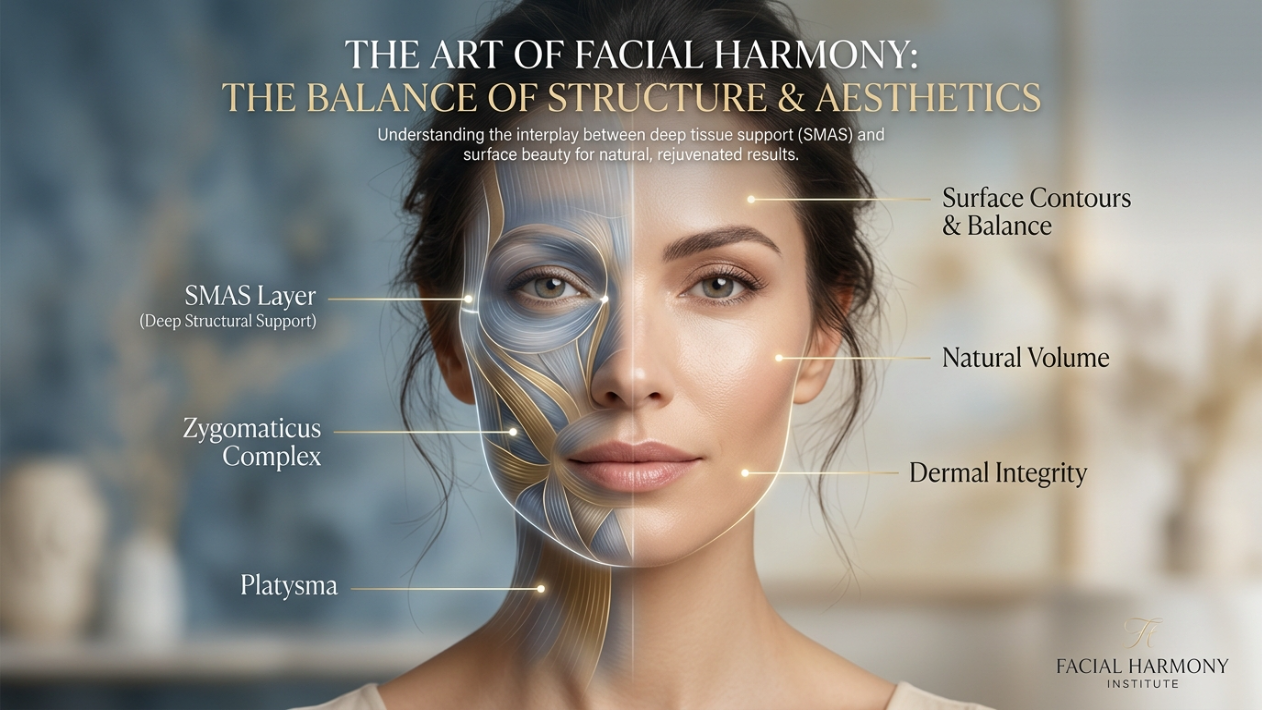
Table of Contents
Understanding Facial Expressions and the Role of SMAS
How Facial Expressions Work
Facial expressions are produced by a complex network of muscles, nerves, and connective tissues beneath the skin. The SMAS (Superficial Musculoaponeurotic System) is a critical layer of tissue that supports these muscles and plays a pivotal role in facial movement. When the SMAS sags due to aging, gravity, or loss of elasticity, it contributes to the formation of jowls, deep folds around the mouth, and a drooping appearance in the cheeks. Traditional facelifts, which only addressed the skin, often disrupted this delicate balance, leading to an unnatural, stiff appearance.
Why SMAS Matters in Facelifts
The SMAS facelift targets this deeper layer, lifting and repositioning the underlying structures rather than pulling the skin. By working with the SMAS, surgeons can:
- Restore youthful contours without excessive tension on the skin.
- Preserve natural facial movement, ensuring that expressions such as smiling, frowning, and raising the eyebrows remain intact.
- Achieve long-lasting results, as the deeper tissues provide more stable support compared to skin-only techniques.
This approach ensures that the face retains its natural softness and expressiveness, avoiding the “mask-like” or “frozen” look associated with outdated methods.
The Science Behind Natural-Looking Facelifts
How Modern Techniques Preserve Expressions
Modern facelift techniques, such as the Deep Plane Facelift and SMAS Facelift, focus on repositioning the deeper layers of the face rather than simply pulling the skin. Here’s how they work:
- Deep Plane Facelift
- The surgeon lifts and repositions the SMAS and deeper tissues, including ligaments and fat pads, to restore youthful contours.
- This technique minimises tension on the skin, reducing the risk of an artificial appearance.
- Studies show that 94.4% of patients are satisfied with the natural-looking results of deep plane facelifts, as they preserve facial mobility and expressions.
- SMAS Facelift
- The surgeon directly targets the SMAS layer, lifting and tightening it to address sagging without excessive skin tension.
- This method is particularly effective for patients with moderate aging concerns, such as jowling and loss of definition in the jawline.
- By avoiding over-tightening, the SMAS facelift ensures that facial expressions remain natural and dynamic.
- Mini Facelift
- A less invasive option, the mini facelift is ideal for early signs of aging.
- It involves shorter incisions and minimal manipulation of deeper tissues, resulting in subtle improvements without altering expressions.

Why Skin-Only Techniques Fail
Traditional facelifts that rely solely on skin tightening often lead to:
- Visible tension lines around the ears and hairline.
- A “pulled” or “windblown” appearance, where the face looks unnaturally stretched.
- Loss of natural facial expressions, as the skin is pulled too tightly, restricting movement.
- Short-lived results, as the skin eventually relaxes, leading to a return of sagging.
By contrast, modern techniques that focus on deeper tissue repositioning avoid these pitfalls, ensuring a harmonious and natural outcome.
How to Avoid an Artificial or Overly Tight Appearance
Key Principles for Natural Results
Achieving a natural-looking facelift depends on several factors, including surgical technique, patient anatomy, and post-operative care. Here’s how to ensure your results look refreshed, not artificial:
- Choose the Right Technique
- Deep Plane Facelift: Best for comprehensive rejuvenation of the midface, jawline, and neck. It provides the most natural results by lifting deeper structures without excessive skin tension.
- SMAS Facelift: Ideal for patients with moderate sagging in the lower face and jawline. It balances lifting and natural expression preservation.
- Mini Facelift: Suitable for early signs of aging, offering subtle improvements with minimal downtime.
- Avoid Over-Tightening
- Excessive tension on the skin can lead to an unnatural, stretched appearance.
- Modern techniques focus on repositioning deeper tissues rather than pulling the skin, ensuring a softer, more natural look.
- Respect Natural Facial Proportions
- A well-executed facelift should enhance your natural features, not distort them.
- Surgeons must consider individual anatomy, skin quality, and aging patterns to create a customised plan that preserves facial harmony.
- Address the Neck and Midface
- A facelift that only targets the lower face while ignoring the neck or midface can create an imbalance, making the results look unnatural.
- Techniques like the Deep Plane Facelift address the entire face as a cohesive system, ensuring a balanced and natural outcome.
- Prioritise Personalised Surgical Planning
- Every face is unique. A one-size-fits-all approach often leads to artificial results.
- Skilled surgeons tailor the procedure to the patient’s specific needs, anatomy, and goals, ensuring a natural and harmonious outcome.
The Role of the Surgeon: Artistry and Precision
Why Surgeon Expertise Matters
The skill and experience of the surgeon are the most critical factors in achieving natural-looking facelift results. Here’s what to look for:
- Board Certification
- Ensure your surgeon is board-certified by a recognised plastic surgery organisation, such as the American Board of Plastic Surgery.
- Certification guarantees that the surgeon has undergone rigorous training and adheres to high standards of practice.
- Experience with Facial Procedures
- Choose a surgeon who specialises in facial rejuvenation and has a proven track record of natural-looking results.
- Ask to see before-and-after photos of patients with similar facial structures and aging patterns.
- Artistic Sensibility
- Facial rejuvenation is as much an art as it is a science.
- A skilled surgeon understands facial harmony, proportions, and aesthetics, ensuring that the results enhance your natural beauty rather than altering your identity.
- Customised Approach
- Avoid surgeons who use a generic technique for all patients.
- The best results come from a personalised plan that addresses your unique anatomy and goals.
What to Expect During Recovery
The Healing Process
Facelift recovery is a gradual process, and understanding what to expect can help you achieve the best results:
- Weeks 1-2: Initial Recovery
- Swelling and bruising are common during the first two weeks.
- The face may appear tight or puffy, but this is temporary and part of the healing process.
- Weeks 3-4: Social Recovery
- Swelling begins to subside, and bruising fades.
- Most patients feel comfortable resuming social activities by the end of the fourth week.
- Months 1-3: Subtle Refinement
- Residual swelling resolves, and facial contours begin to look more natural.
- The face starts to soften and settle into its new position.
- Months 3-6: Final Results
- By this stage, most patients see their true, natural-looking results.
- Tissues continue to soften, and the face looks completely natural in all lighting and expressions.
- Months 6-12: Long-Term Refinement
- Scars fully mature, and the results become even more refined.
- The face retains its youthful and natural appearance for years to come.
Post-Operative Care Tips
To optimise your recovery and ensure natural results:
- Follow your surgeon’s instructions closely, including head elevation, activity restrictions, and skincare protocols.
- Avoid strenuous exercise for at least a few weeks to prevent complications.
- Attend all follow-up appointments to monitor your progress and address any concerns.
Complementary Procedures for Enhanced Results
Treating the Face as a Whole
A facelift that only addresses one area while ignoring others can create an imbalance, making the results look unnatural. To achieve the most harmonious and natural outcome, consider combining your facelift with complementary procedures:
- Neck Lift
- Addresses sagging skin and turkey neck, ensuring the neck matches the rejuvenated face.
- Blepharoplasty (Eyelid Surgery)
- Rejuvenates the upper and lower eyelids, creating a more refreshed and youthful appearance.
- Brow Lift
- Corrects sagging eyebrows and forehead lines, enhancing the overall facial harmony.
- Fat Grafting
- Restores lost volume in the cheeks, temples, and other areas, ensuring a natural and balanced look.
- Skin Resurfacing
- Improves skin texture and tone, complementing the structural improvements of the facelift.
Non-Surgical Maintenance
To extend the results of your facelift, consider non-surgical treatments such as:
- Medical-grade skincare to maintain skin health.
- Sun protection to prevent further aging.
- Injectables (e.g., Botox, fillers) to address fine lines and volume loss.
Frequently Asked Questions
Does a Facelift Change Natural Facial Expressions?
No, a well-performed facelift does not alter natural facial expressions. Modern techniques, such as the Deep Plane Facelift and SMAS Facelift, focus on repositioning deeper tissues rather than pulling the skin, ensuring that facial movement and expressions remain intact.
How Long Does It Take for a Facelift to Look Natural?
Most patients look presentable within 2-3 weeks, but true natural-looking results emerge gradually between 3-6 months as deeper tissues settle into their new position.
What Are the Telltale Signs of a Bad Facelift?
Common signs of a poorly executed facelift include:
- A “windblown” or “pulled” appearance.
- Pixie ears (earlobes pulled downward).
- Visible scarring near the ears or hairline.
- Loss of natural facial expressions.
- An obvious imbalance between a rejuvenated face and an untreated neck.
Can Non-Surgical Treatments Achieve the Same Results as a Facelift?
Non-surgical treatments like FaceTite, RF microneedling, and injectables can provide meaningful improvement for mild to moderate concerns. However, they cannot replicate the comprehensive, long-lasting results of a surgical facelift for significant skin laxity.
At What Age Should I Get a Facelift for the Most Natural Results?
Many surgeons find that patients in their late 40s to 60s achieve the most refined results, as their skin retains sufficient elasticity. However, the right timing depends on individual anatomy and aging patterns.
Conclusion: Embracing Natural Rejuvenation
The key to achieving a natural-looking facelift lies in modern techniques, surgical expertise, and personalised planning. By focusing on repositioning deeper facial structures (such as the SMAS) rather than merely pulling the skin, patients can enjoy youthful, refreshed, and natural results that preserve their unique facial expressions and identity.
If you’re considering a facelift, take the time to research your options, choose a skilled and experienced surgeon, and discuss your goals in detail. With the right approach, you can achieve a beautifully natural rejuvenation that enhances your appearance without looking artificial or overdone.
Sources
- Does a facelift change natural expressions?
- Natural Looking Facelift Results: How to Avoid the ‘Overdone’ Appearance
- Why SMAS Facelift Provides Long-Lasting, Natural Results
- Facelift Techniques Compared: Deep Plane, SMAS, Mini & More for Natural Results
- What is the SMAS and What Does It Mean for Modern Facelifting?
- Facelift: How to Achieve Natural-Looking Results
- Natural-Looking Facelifts: What Separates a Great Result From an Obvious One
- Can a Facelift Look Natural? Avoiding the Pulled Look