
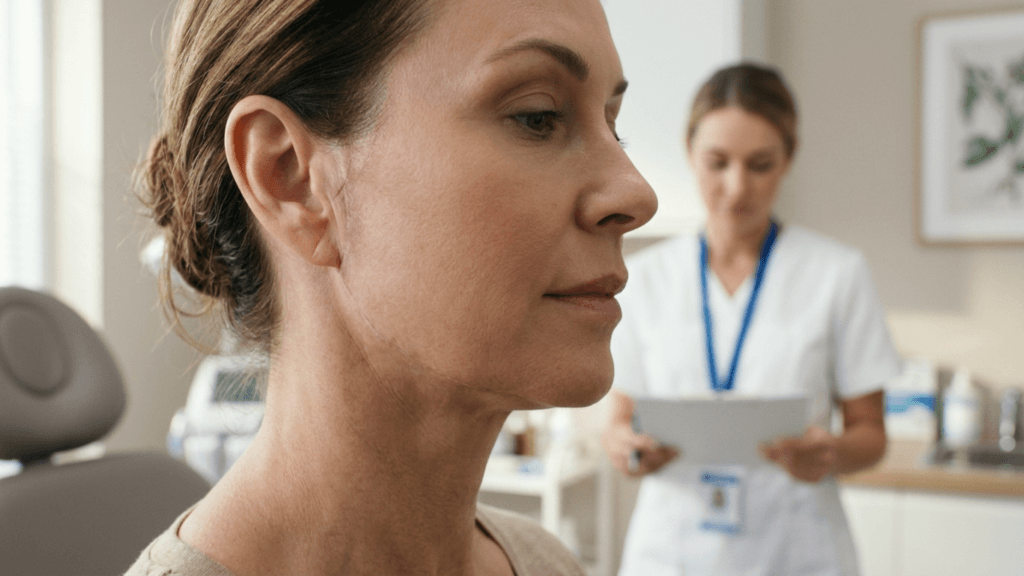
What happens at 2 a.m. on a Tuesday in London when your incision begins draining fluid ten days after your facelift in Antalya? This question haunts thousands of medical tourists annually, yet clinics overwhelmingly focus on selling the transformation rather than equipping patients for the moment recovery deviates from the expected path. Research from the Aesthetic Surgery Journal Open Forum confirms that cosmetic procedures performed within medical tourism contexts carry notably higher complication rates due to limited preoperative evaluation and constrained postoperative care access. The silence surrounding post-discharge emergencies is not just a gap in patient education—it is a safety liability.
By the end of this guide, you will possess a concrete, sequential emergency response plan for facelift complications Antalya scenarios, spanning from the moment you notice something unusual through remote clinical assessment, local emergency triage, Turkish legal protections, and long-term malpractice recourse. This is not another article listing normal swelling versus dangerous swelling. You are holding the operational playbook that most patients wish they had before boarding their return flight.
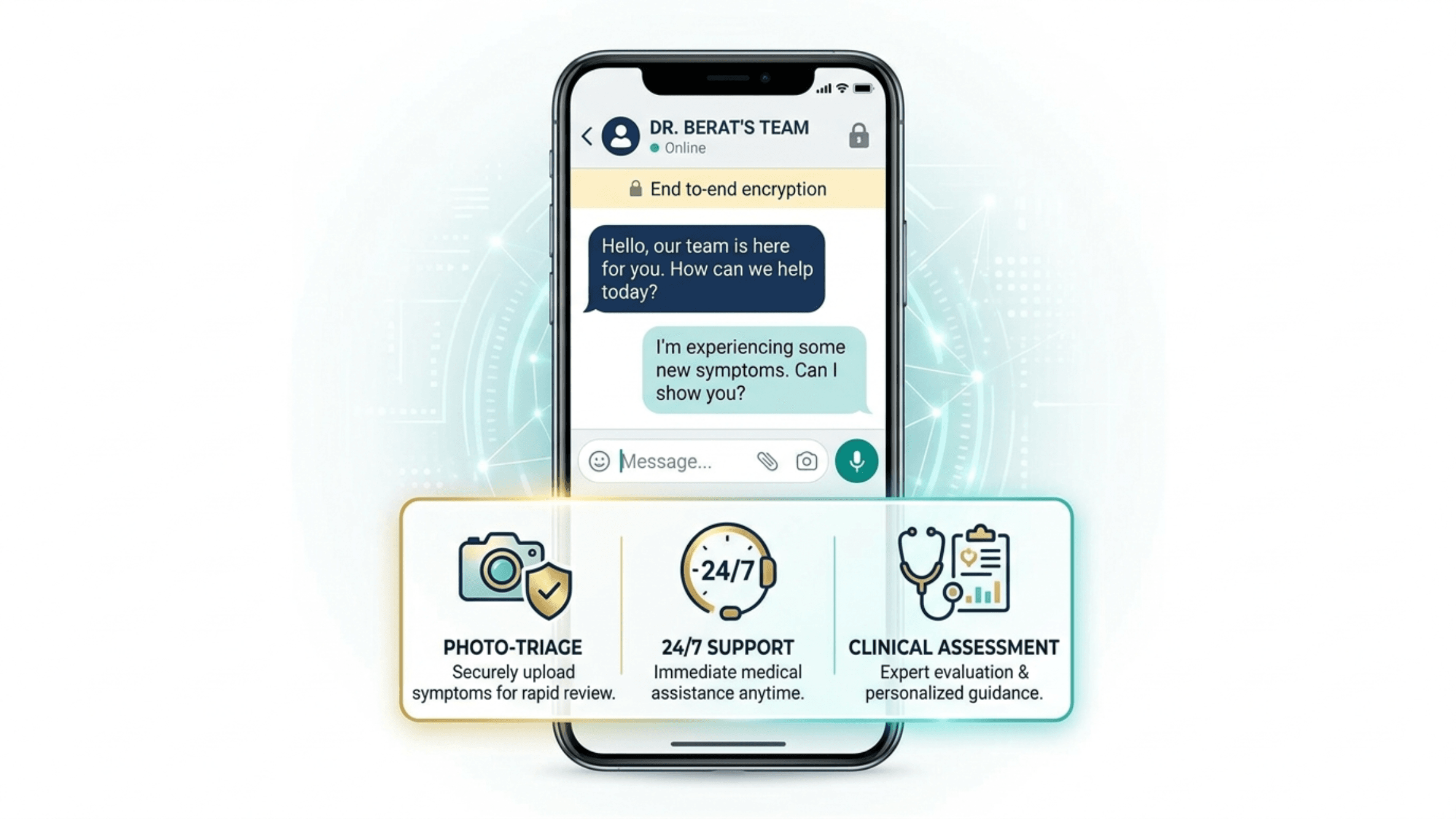
Table of Contents
The Critical First 72 Hours Post-Discharge: Where Emergencies Ignite
The window between hospital departure and the first follow-up call is the most dangerous period for any surgical patient. For international facelift patients, this risk compounds because they are typically cleared for travel during the precise timeframe when hematomas and infections declare themselves. A facelift complications Antalya emergency rarely emerges without warning. The body sends signals that patients dismiss as normal healing because nobody told them what an urgent signal looks like compared to a benign one.
The Unspoken Timestamp Problem in Medical Tourism
Domestic patients stay near their surgeon for the full acute recovery phase. International patients receive clearance to fly and leave the country within five to seven days. This creates what emergency physicians call a surveillance gap—the period when the patient has no physical access to the operating surgeon and the surgical team has no physical access to the patient. During this gap, hematomas can expand, seromas can accumulate, and incision-line infections can advance from cellulitis to abscess formation. The patient, thousands of kilometers away, has no practical framework for distinguishing urgency from expected discomfort.
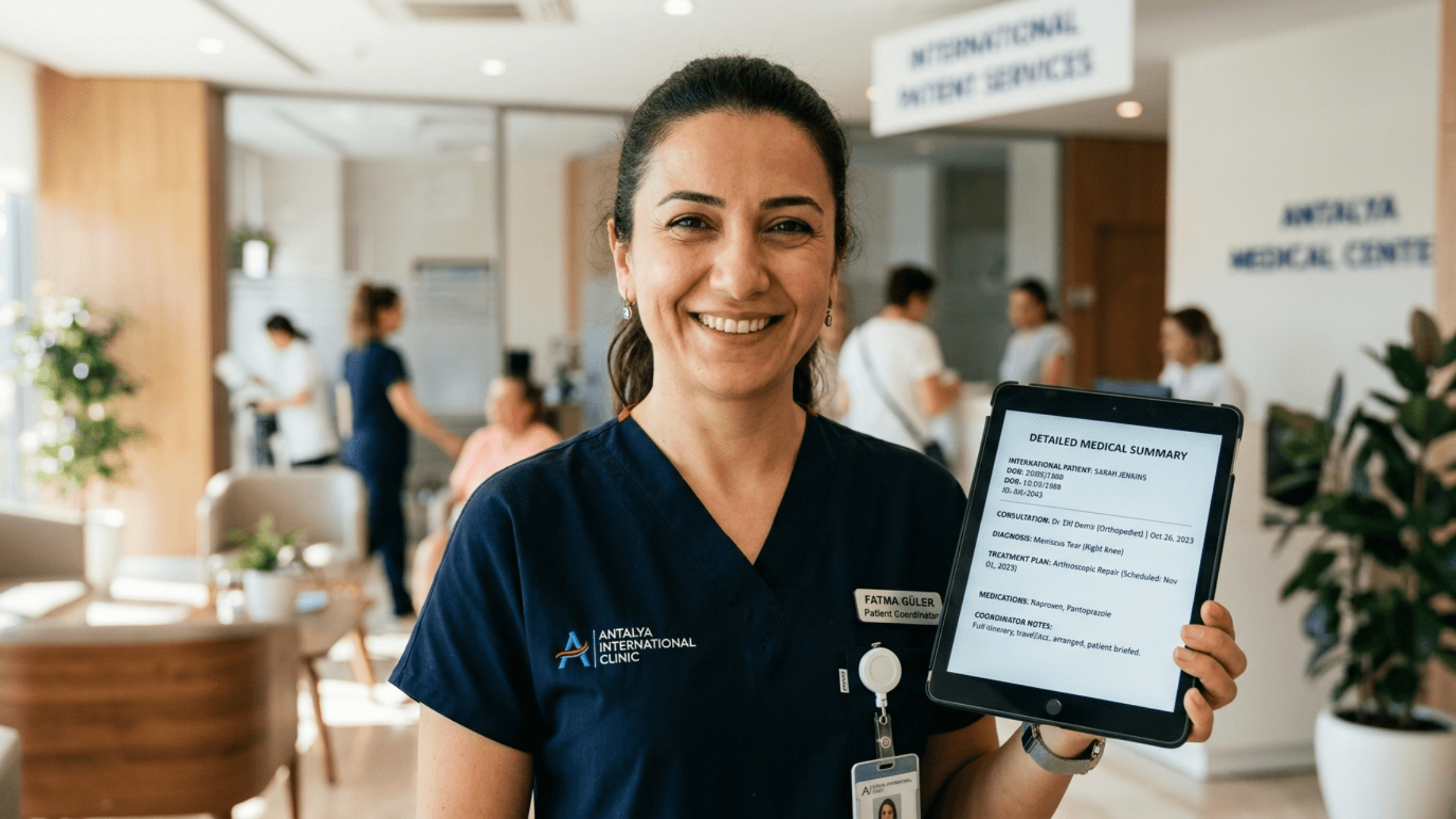
This is exactly why Dr. Berat Çiğdem’s practice assigns a dedicated patient coordinator—Fatma—to every international patient. Rather than leaving you to interpret symptoms alone, the coordinator becomes your single point of contact who can triage your concern, relay photographic documentation to the surgical team, and direct you to the appropriate level of care within minutes, not days.
Recognizing the Red-Flag Signs That Demand Immediate Action
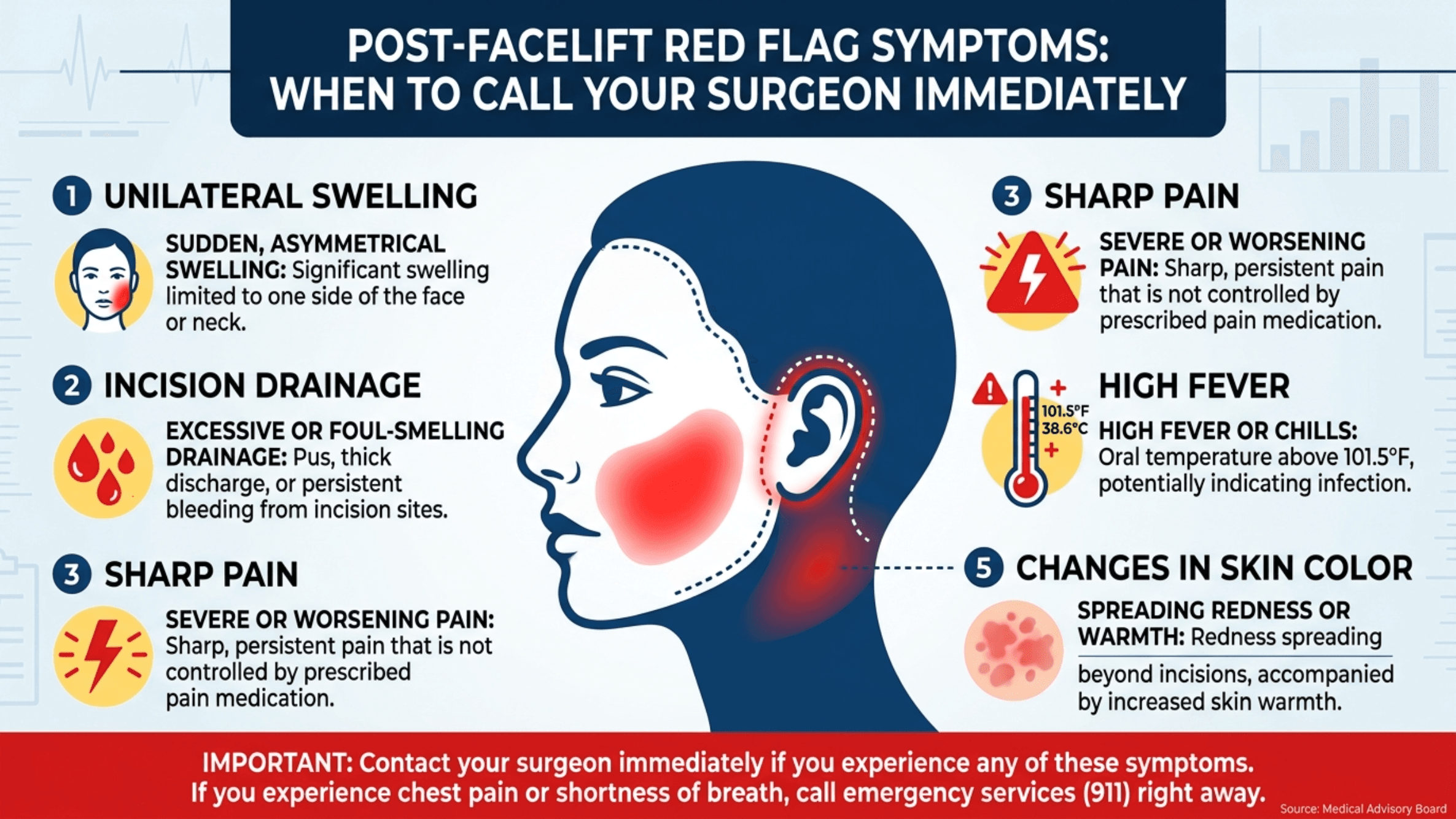
Certain post-operative signals are unequivocal emergency triggers. Unilateral facial swelling that worsens rapidly suggests an expanding hematoma. Thick, foul-smelling drainage from incision lines indicates active infection. Sharp, localized pain that does not respond to prescribed analgesics signals something beyond typical surgical discomfort. Numbness that spreads or asymmetrical facial movement raises immediate concerns about nerve injury. Any of these signs requires activation of your emergency protocol—not a wait-and-see approach.
Patients who undergo a facelift abroad must treat these symptoms with the same urgency they would apply to chest pain or stroke symptoms. Delayed response in the setting of post-operative emergencies is the single greatest predictor of permanent aesthetic and functional damage.
Turkish Clinic Follow-Up Agreements: What Your Commitment Letter Actually Covers
Most reputable Turkish plastic surgery clinics provide international patients with a written follow-up agreement before discharge. However, few patients read this document with the seriousness it deserves, and even fewer understand what it legally obligates the clinic to provide after departure. The disparity between what patients assume is covered and what the agreement actually guarantees constitutes one of the most common sources of post-operative distress.
Standard Versus Enhanced Follow-Up Commitments
A standard follow-up agreement typically covers pre-scheduled video consultations at fixed intervals—commonly at one week, one month, and three months post-operatively. These are structured check-ins, not on-demand emergency support. Enhanced follow-up agreements, like those provided by Dr. Berat’s practice, include unrestricted WhatsApp access to the patient coordinator, photo-based remote assessment within two hours of submission, and coordination with local medical providers in your home country if escalation is required.
The difference is not cosmetic. When a patient experiences concerning symptoms at an unscheduled time—say, day nine post-operatively at midnight—standard follow-up agreements leave them navigating emergency rooms alone. Enhanced agreements provide structured medical guidance that prevents both unnecessary emergency department visits and dangerous delays in seeking care.
The Private Nurse Advantage and Its Limitations
Private nursing services during your stay in Antalya are invaluable for early detection of complications before you travel. Dr. Berat’s practice offers private nurse arrangements precisely because trained eyes catch what untrained eyes miss. But this advantage evaporates the moment you board your return flight. Understanding the limitations of in-country nursing support is essential. These professionals monitor your recovery during the Antalya stay; they cannot evaluate you remotely after departure. The transition point from nurse-monitored care to self-monitored care is where your emergency protocol must activate.
Remote Complication Assessment: How Photo-Based Triage Saves Hours and Lives
Telemedicine in post-operative plastic surgery has advanced dramatically, but it operates under strict constraints. Photographs and video calls can rule out emergencies or confirm them, yet they cannot replace physical examination. Understanding what photo-based remote assessment can and cannot accomplish determines whether you waste critical hours waiting for a callback or seek immediate local emergency care.
Maximizing the Diagnostic Value of Your Photographs
The quality of remote assessment depends entirely on the quality of the images you provide. Blurry, poorly lit photographs taken at awkward angles are essentially useless for clinical decision-making. When you submit images for review, follow this protocol: use natural daylight or a white-light source, photograph the area from three angles—frontal, left lateral, and right lateral—and include a reference point like a ruler or coin near any area of concern to communicate scale. Avoid using flash, which distorts color and obscures wound characteristics like pallor or erythema. Never apply filters or edit the images.
Include a brief written description alongside the photographs: onset timing, pain score on a scale of one to ten, skin temperature changes you can feel with your hand, and any medications taken in the preceding twelve hours. This combination of visual and narrative data allows the surgical team to make provisional triage decisions with much greater confidence.
When Remote Assessment Hits Its Diagnostic Wall
A photograph cannot palpate tissue to assess fluctuance suggestive of abscess. A video call cannot measure vital signs. Remote assessment is exceptional for evaluating visible wound healing, incision line integrity, and gross swelling patterns, but it fails for internal complications. If you experience fever above 38.3°C, rapid-onset shortness of breath, or expanding facial swelling that visibly changes within hours, skip the photo protocol entirely and proceed directly to your local emergency department. These symptoms suggest systemic infection, pulmonary embolism, or expanding hematoma—conditions where every hour of delay worsens the outcome.
Dr. Berat’s team explicitly instructs patients on these boundaries before departure. The goal of remote assessment is not to replace emergency care but to route you to the correct care pathway efficiently—avoiding both overreaction and underreaction.
When to Contact Your Turkish Surgeon Versus Seeking Local Emergency Care
The most consequential decision an international post-operative patient faces is the choice between contacting their surgeon abroad and walking into a local emergency department. Choose incorrectly in either direction and the consequences range from wasted time to permanent harm. This section provides the definitive triage framework.
Contact the Turkish Surgeon First: Non-Emergent Concerns
Contact the surgical team when symptoms are progressive but not acute. Mild incision redness without warmth, minor oozing that is clear or serosanguinous, slow-developing asymmetrical swelling, and minor skin changes near incision margins all warrant photographic assessment before taking any other action. These findings frequently represent normal healing variants but require professional confirmation.
Proceed Directly to Local Emergency Care: Life-Threatening Presentations
Go to your nearest emergency department immediately if you experience fever exceeding 38.3°C, rapid-onset facial swelling that visibly progresses over hours, foul-smelling or thick opaque drainage, acute shortness of breath or chest pain, sudden unilateral facial weakness, or uncontrolled bleeding from incision sites. These symptoms indicate potentially life-threatening conditions including sepsis, expanding hematoma, deep vein thrombosis, pulmonary embolism, or facial nerve compromise. No photograph or video call should delay emergency evaluation for these presentations.
The Dual-Notification Strategy
In most emergency scenarios, the optimal approach is simultaneous action: a trusted person contacts the Turkish surgical team via the dedicated coordinator line while you are en route to or already at the local emergency department. This dual-notification strategy ensures that your Turkish surgeon is aware of the situation and can communicate directly with the local treating physician if needed. Dr. Berat’s coordinator provides a structured medical summary that you can hand to the emergency physician, containing operative details, suture materials used, and anesthesia records—information that accelerates local triage decisions dramatically.
Patients who have also undergone complementary procedures like eyelid aesthetic surgery must be especially vigilant, as facial swelling from a facelift can compromise blepharoplasty incisions and vice versa, creating compound emergencies that demand coordinated assessment.
International Patient Rights and Legal Protections Under Turkish Law
Turkey has enacted specific legislation protecting international medical tourists, yet most patients remain uninformed about these protections until a problem forces them to investigate. Knowing your rights before surgery transforms you from a vulnerable consumer into an empowered patient with enforceable legal standing.
The Health Tourism Authorization Certificate: Your First Line of Verification
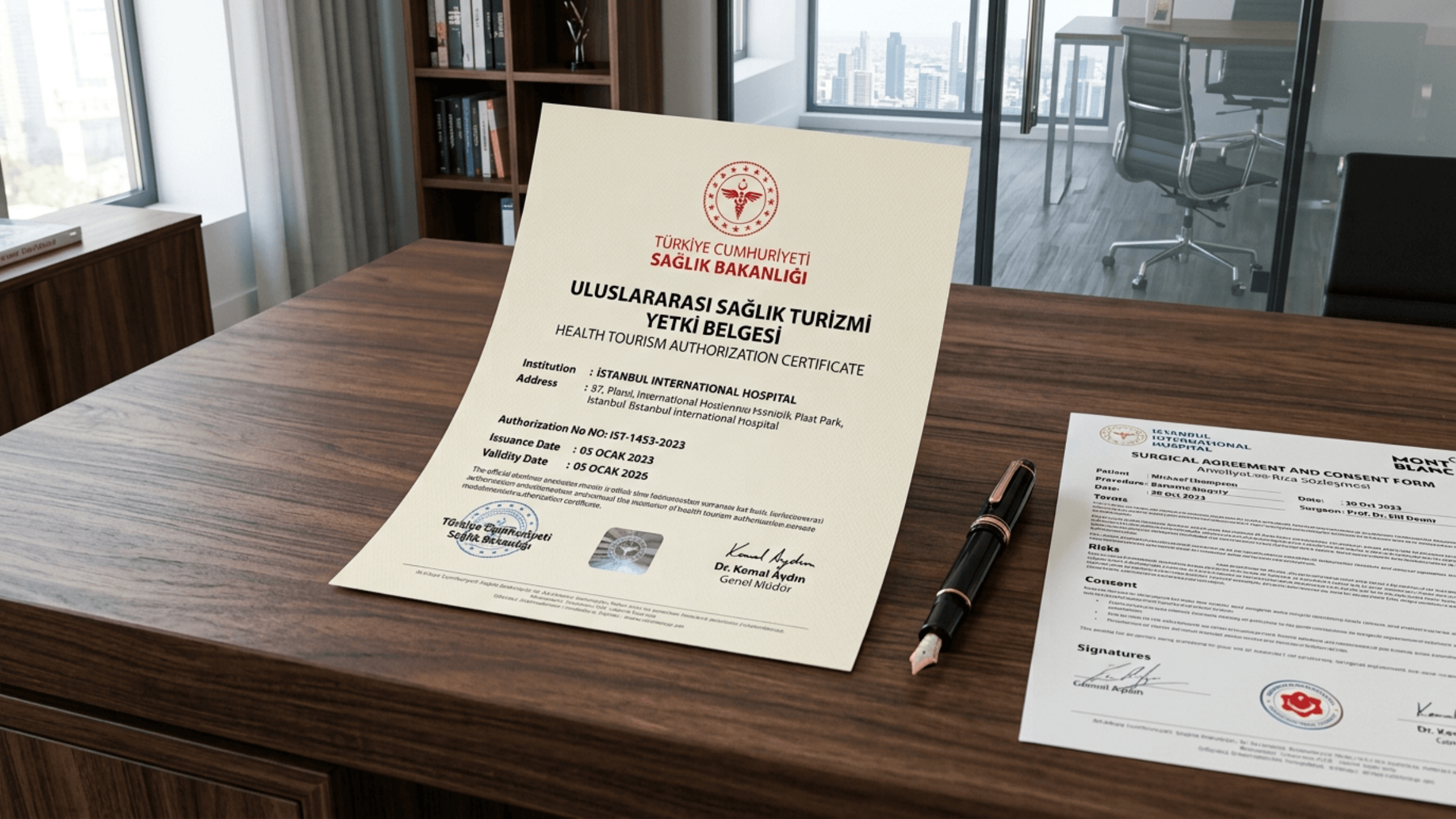
Clinics authorized to treat international patients in Turkey must hold a Health Tourism Authorization Certificate issued by the Turkish Ministry of Health. This certificate is not a mere administrative formality. It requires the holder to meet infrastructure, staffing, and patient safety standards that exceed those mandated for domestic-only facilities. Dr. Berat Çiğdem’s practice holds this certification, which also obligates the clinic to maintain documented complication management protocols and provide international patients with accessible complaint channels.
Informed Consent and Language Rights
Turkish law mandates that informed consent for international patients be provided in a language the patient understands. This means the consent document must be available in English, and verbal explanations must be offered through a qualified interpreter if the patient is not fluent in Turkish. According to Surgyteam’s analysis of legal protections for facelift patients abroad, informed consent laws require patients to be fully informed about the procedure, risks, and alternatives before giving agreement. Patients should request a detailed consent form in their language and clarify all doubts before signing—this is not merely recommended, it is a legally enforceable right.
The Patient Rights Framework in Turkish Healthcare
Turkey’s Patient Rights Regulation provides foreign patients the right to safe care, privacy, access to medical records, and formal complaint mechanisms. If a clinic breaches these rights, patients can file complaints through the Provincial Health Directorate where the clinic operates. The directorate is obligated to investigate, and sanctions for confirmed violations range from fines to operational license revocation. These protections apply regardless of the patient’s nationality or country of residence.
Malpractice Recourse: Pursuing Justice Across Borders
The moment a patient suspects malpractice after a procedure abroad, panic often overrides strategic thinking. Understanding the available legal pathways before you need them is the most effective preparation you can undertake. Malpractice recourse in the medical tourism context involves navigating two distinct legal systems, and the choice of jurisdiction significantly affects the outcome.
Turkish Medical Malpractice Law: What You Can Claim
Turkish medical malpractice law recognizes both criminal negligence and civil liability for surgical errors. Claims can be filed for compensation covering corrective surgery costs, lost income, pain and suffering, and permanent disability. The burden of proof requires demonstrating that the surgeon’s actions deviated from the accepted standard of care and directly caused the harm. Turkish courts rely on independent medical expert panels for assessment, and the process typically takes between twelve and twenty-four months.
Home Country Litigation: Extremely Limited but Not Impossible
Filing a malpractice claim in your home country against a foreign surgeon is extraordinarily difficult. Courts generally lack jurisdiction over the foreign provider, and enforcement of a home-country judgment in Turkey requires a separate legal recognition process. The one viable scenario for home-country litigation involves claims against a medical tourism facilitator or agency based in your country. If your trip was arranged through a UK or EU-based agency, consumer protection law in those jurisdictions may provide recourse against the intermediary—even if the surgeon themselves remains outside the court’s direct reach.
Arbitration as the Practical Middle Path
Increasingly, Turkish clinics include arbitration clauses in their surgical agreements. This is not inherently unfavorable to the patient. Arbitration through recognized international bodies can resolve disputes faster than Turkish civil courts—typically within six months—and the decisions are enforceable across signatory countries under the New York Convention. Before signing your surgical agreement, verify whether it contains an arbitration clause and which body administers it. The International Court of Arbitration under the ICC is the gold standard; avoid agreements that mandate arbitration through obscure local bodies.
Insurance Considerations: Standard Travel Insurance Will Not Save You
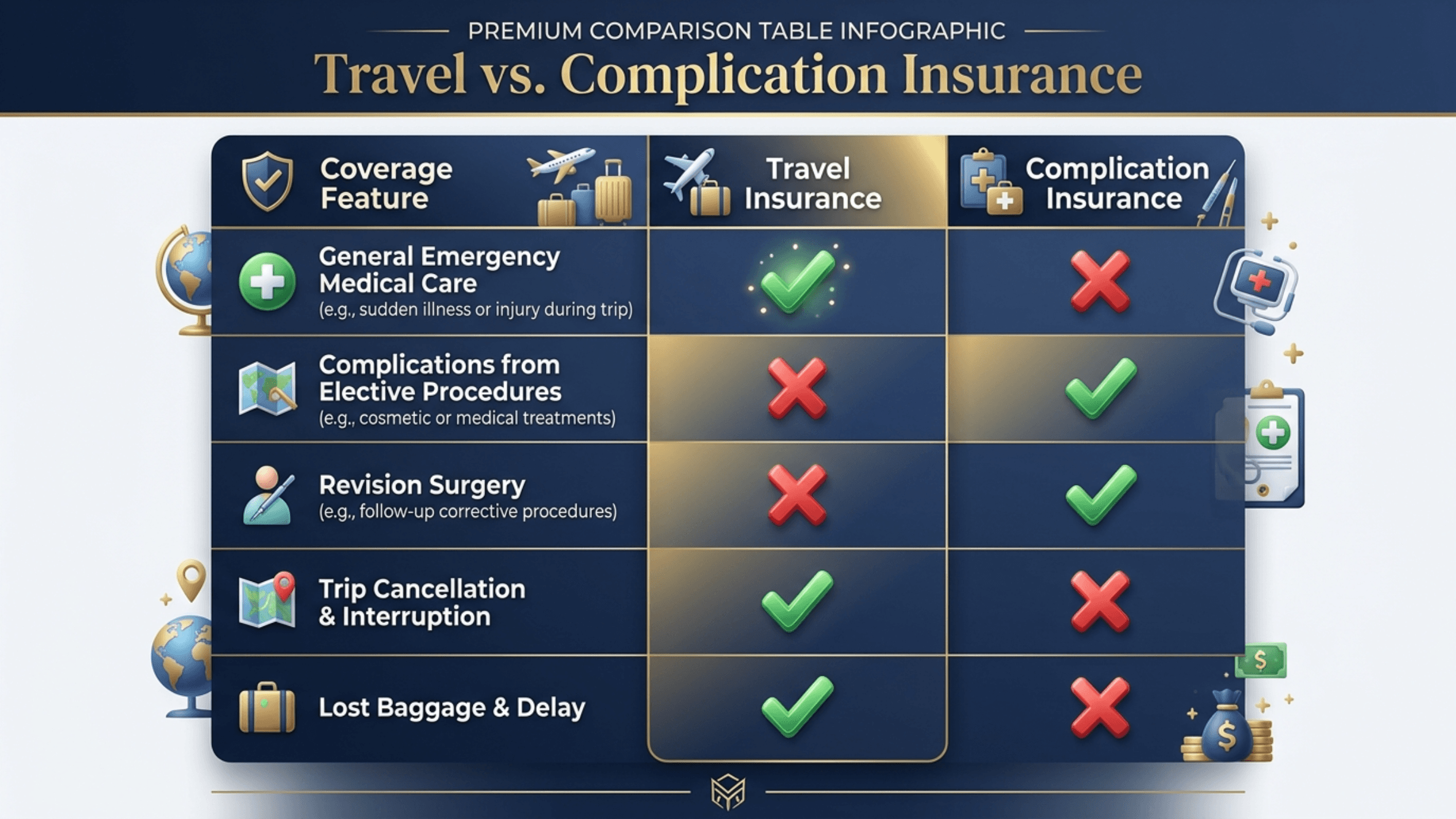
This is the financial reality that catches more international patients off guard than any clinical complication: standard travel insurance policies explicitly exclude coverage for complications arising from elective cosmetic procedures. Reading the fine print after a complication has already occurred is a devastating lesson that thousands of patients learn annually. Understanding the insurance landscape before you travel prevents this scenario entirely.
What Standard Travel Insurance Actually Covers
Standard travel insurance covers trip cancellation, lost luggage, medical emergencies unrelated to elective procedures, and emergency evacuation for acute conditions arising independently of your surgery. Once a medical event is traced back to your cosmetic procedure, the exclusion clause activates and the claim is denied. This applies even to life-threatening complications like pulmonary embolism if the insurer determines the event originated from the surgical intervention.
Complication-Specific Insurance Policies
Specialized medical tourism complication insurance exists and addresses precisely this coverage gap. Policies from providers like Medicalfly and Avia Protect cover emergency treatment costs in your home country necessitated by surgical complications, revision surgery expenses, and in some cases, return travel to the original surgeon for corrective procedures. Premiums range from approximately one hundred fifty to four hundred euros depending on procedure type and coverage limits.
Insurance Coverage Comparison for Medical Tourists
The table below summarizes coverage distinctions across common insurance scenarios faced by facelift patients returning from Antalya:
| Coverage Type | Cosmetic Complication Coverage | Emergency Room in Home Country | Revision Surgery by Original Surgeon | Medical Evacuation |
|---|---|---|---|---|
| Standard Travel Insurance | Excluded | Excluded | Excluded | Limited to non-cosmetic emergencies |
| Complication-Specific Insurance | Included (subject to limits) | Included | Varies by policy | Included in comprehensive policies |
| Domestic Private Health Insurance (UK/EU) | Generally excluded | Emergency stabilisation only | Excluded | Not applicable |
| Clinic-Provided Aftercare Guarantee | Clinic-determined scope | Not covered | Included if complication is clinic-acknowledged | Not covered |
Table: Comparative insurance coverage for post-operative facelift complications across different policy types. Always verify specific policy terms before purchase.
Your Actionable Emergency Response Protocol: Seven Steps That Protect You
Every recommendation in this guide distills into one operational sequence. Memorize it. Print it. Keep it accessible from the moment you leave Antalya until your surgeon confirms full healing. When you face a facelift complications Antalya emergency, hesitation is your greatest enemy and structure is your strongest ally.
Step 1: Assess the Symptom Against Red-Flag Criteria
Before reaching for your phone, evaluate what you are experiencing against the emergency triggers listed earlier. Fever above 38.3°C, rapidly expanding swelling, foul drainage, acute breathing difficulty, sudden facial weakness, or uncontrolled bleeding are immediate emergency department presentations. Everything else enters the photo-assessment pathway.
Step 2: Capture High-Quality Photographs
If symptoms do not meet emergency criteria, photograph the area of concern using natural white light, from three angles, with a size reference adjacent to any visible abnormality. Record a brief description including onset time, pain level, and any medications taken in the last twelve hours.
Step 3: Transmit to Your Surgical Coordinator
Send photographs and written description to Fatma or the designated coordinator via WhatsApp. Expect an acknowledgment within thirty minutes and a clinical assessment response within two hours. If you receive no acknowledgment within thirty minutes, proceed to the next step.
Step 4: Request the Structured Medical Summary
If the surgical team recommends local evaluation, request the structured medical summary document. This contains operative notes, suture material, anesthesia records, and post-operative medication lists. Hand this directly to the emergency physician—do not summarize it verbally. Clinical accuracy in the emergency department depends on precise surgical records.
Step 5: Present to Local Emergency Care With Surgical Records
Attend your nearest emergency department and state clearly that you recently underwent facial surgery abroad. Provide the structured medical summary. Inform the emergency team that your Turkish surgeon is available for direct physician-to-physician communication if needed.
Step 6: Activate Your Insurance Claim Immediately
Once emergency care is initiated, contact your complication-specific insurance provider and open a claim. Provide the claim reference number to the treating hospital’s billing department. This prevents you from absorbing upfront costs that may exceed several thousand pounds or euros for emergency surgical management.
Step 7: Document Everything for Potential Recourse
From the first photograph to every clinical note the emergency department produces, maintain a chronological file. If the complication results from surgical error, this documentation becomes the foundation of any malpractice claim or arbitration proceeding. Without contemporaneous records, recourse becomes significantly more difficult to pursue.
These seven steps transform a moment of panic into a structured response. Preparation turns vulnerability into capability. Dr. Berat’s practice builds these safeguards into every patient’s discharge plan because proactive protection always surpasses reactive scrambling. Your safety does not end at the airport—it ends when your surgeon confirms that healing is complete and no further intervention is required.
Medical tourism offers extraordinary access to world-class surgical expertise at accessible prices, but cost advantage must never come at the expense of post-operative safety infrastructure. Every patient who boards a return flight from Antalya deserves the confidence that their surgical team remains reachable, their rights remain enforceable, and their emergency protocol remains clear. Demand nothing less from your surgical journey—because the quality of your safety net defines the quality of your entire medical tourism experience. Contact Dr. Berat’s team to discuss post-operative support provisions before your procedure.
How quickly can I reach Dr. Berat’s team if I experience facelift complications after returning home?
Dr. Berat’s dedicated patient coordinator Fatma monitors WhatsApp communications continuously during business hours and responds within thirty minutes. For after-hours emergencies, direct contact numbers are provided in your discharge protocol.