

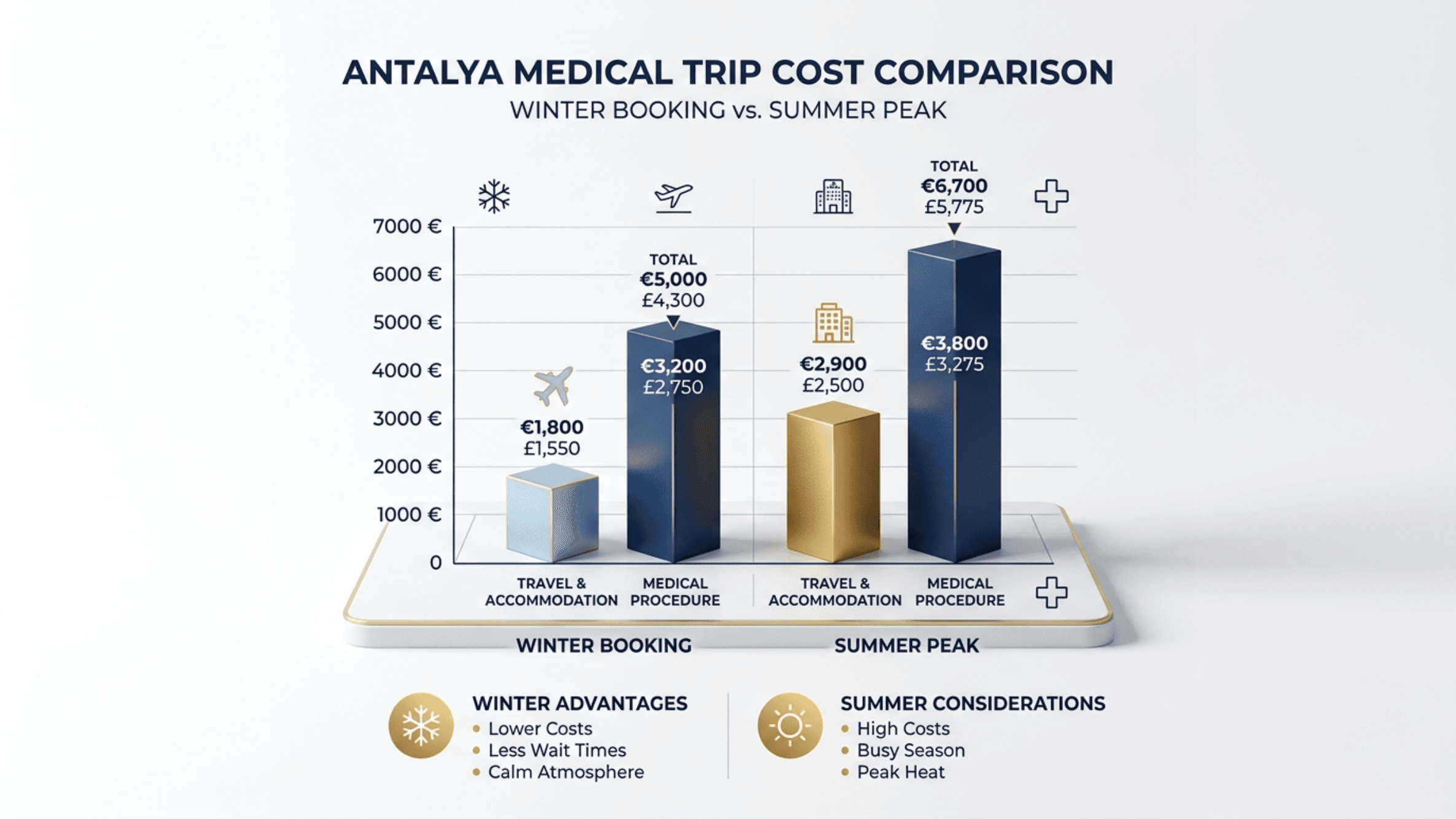
Did you know that a patient who schedules a facelift in Antalya during February can save up to 40% on combined travel and accommodation costs compared to someone who books the identical procedure in July? Most medical tourists fixate on finding the cheapest surgeon. They completely overlook that when they book determines the total expenditure far more than the surgical fee itself. The date you select for your procedure directly shapes your recovery comfort, your access to top surgical calendars, and the final figure on your bank statement.
This guide abandons the usual “visit Antalya in spring” advice. Instead, you will gain a month-by-month booking strategy built on real cost data, surgeon availability patterns, and the physiological reality of how Antalya’s climate interacts with your healing tissue. By the final section, you will possess a concrete decision framework to book your facelift in Antalya at the precise moment that balances medical priorities, financial savings, and personal comfort.

Table of Contents
Why Your Booking Month Changes Everything About Your Facelift Outcome
Patients spend weeks comparing before-and-after galleries, yet they give almost zero thought to the month on their booking confirmation. This mistake costs thousands. Antalya operates on a dramatic seasonal pendulum. Resort hotels slash rates by half between November and March. Direct flights from London, Berlin, and Amsterdam drop to off-peak pricing. Even surgical package add-ons shift, because clinics compete harder for patients during quieter months. Meanwhile, the climate’s effect on post-surgical swelling is equally dramatic.
The Swelling-Climate Connection Nobody Explains
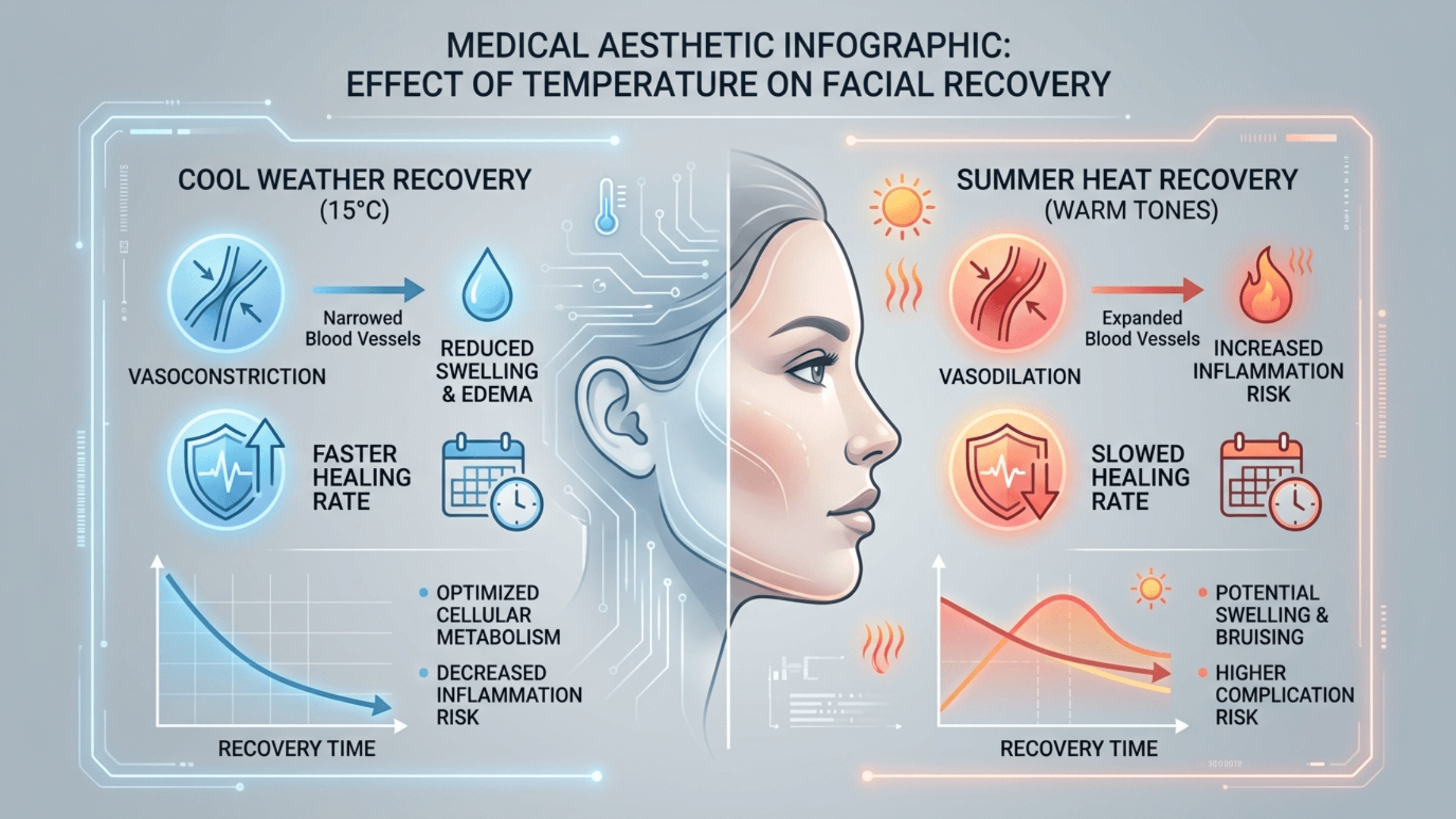
According to CK Health Turkey, Antalya’s Mediterranean climate delivers approximately 300 sunny days annually, and moderate temperatures during spring and autumn specifically reduce post-operative swelling because cooler ambient conditions constrict superficial blood vessels naturally (CK Health Turkey, 2025). When temperatures exceed 30°C, vasodilation increases. Your already-stressed facial tissue swells more. What does this mean for you? Patients recovering in July heat experience visibly puffier results during weeks two through four compared to patients recovering in March at 18°C. The surgical work is identical. The canvas transforms entirely.
Antalya Climate and Recovery Conditions Across the Year
Antalya’s weather cycles through four distinct phases. Summers are hot, dry, and intense, with July and August regularly hitting 35°C. Winters remain mild, hovering between 10°C and 15°C, with occasional rain. Spring and autumn occupy a sweet zone between 15°C and 25°C. For someone wearing compression garments and avoiding direct sun on fresh incisions, these numbers matter deeply. Cooler temperatures make compression wraps tolerable. Lower humidity keeps perspiration away from healing suture lines. Recovery conditions become a medical variable, not just a comfort preference.
January to April: Off-Peak Advantage Meets Ideal Surgical Conditions
The first four months of the year present a convergence of benefits that savvy patients exploit. Flight costs from major European hubs sit at annual lows. Hotel rates in Antalya’s medical corridors, particularly Lara and Konyaaltı, drop substantially. Clinic availability opens wide. You secure your preferred date with Dr. Berat Çiğdem without the three-week wait that summer patients face.
January: The Quietest Calendar Window
January delivers Antalya at its calmest. Temperatures average 11°C to 15°C. Rainfall occurs, but it falls in short bursts rather than all-day drizzle. For facelift patients, this is physiologically advantageous. Cool air suppresses vasodilation. Swelling resolves faster. Compression garments feel comfortable against the skin instead of stifling. Flight costs from London hover near their lowest annual point. A return flight that costs £280 in August often drops below £120 in January. Combined with hotel rates 30-50% below peak season, the total logistics cost for a 10-day stay can fall by £600 or more compared to a July trip.
February: Maximum Financial Leverage
February mirrors January’s advantages and adds one: clinics often release promotional surgical packages to stimulate demand during their quietest stretch. This is the month to book your facelift in Antalya if financial savings rank high on your priority list. Temperatures begin edging upward toward 16°C. Rainfall decreases. The surgical calendar remains wide open, meaning you choose your exact preferred date. Patients who combine a facelift with a neck lift particularly benefit, because the combined procedure requires longer surgical scheduling blocks that are readily available during this low-demand window.
March: The First Wave of Wise Bookings
By March, Antalya’s temperatures reach a pleasant 15°C to 20°C. Spring blossoms transform the city, and the psychological lift of recovering amid vibrant scenery should not be dismissed. Medical tourism booking timelines show March as the first month when experienced medical tourists start reserving their spots, ahead of the spring rush. Clinic availability still runs high. Flight prices begin climbing from their January低谷, yet they remain well below summer rates. For patients with fair or sensitive skin, March offers a critical advantage: UV index levels stay moderate, reducing the risk of hyperpigmentation on fresh incision lines if you accidentally catch brief sun exposure.
April: Peak Recovery Comfort Before Peak Prices
April sits at a pivotal intersection. Temperatures range from 16°C to 24°C. Recovery conditions reach their annual best for facelift patients. Compression garments remain comfortable. Swelling stays controlled. Sun exposure risks stay manageable. However, savvy patients know April also introduces the first significant flight and hotel cost increases of the year as leisure tourists discover Antalya’s spring appeal. Booking by mid-February for an April procedure locks in lower travel rates before the spring price surge takes full effect. This two-month advance booking window is one of the most powerful financial tools available to medical tourists.
May to August: Peak Tourism Meets Peak Recovery Challenges
Summer in Antalya is a paradox for medical tourists. The city sparkels. Beaches fill. Restaurants buzz. Yet for a facelift patient, the period from May through August introduces the year’s most frustrating recovery complications. Heat amplifies swelling. Sun threatens incision lines. Compression garments become oppressive. Flight costs double. Hotels fill. The seasonal scheduling equation tilts sharply against you.
May: The Borderline Month
May temperatures average 20°C to 28°C. For early May, conditions remain tolerable for facelift recovery. By late May, the heat intensifies noticeably. Clinic availability tightens because international patient volume rises. Flight costs from European capitals climb sharply, often reaching 60-80% above January pricing. If May is your only option, book by early March at the latest and aim for a surgery date in the first two weeks of the month before the Mediterranean heat settles in fully.
June to August: When Heat Rewrites Your Recovery
From June through August, Antalya temperatures routinely exceed 34°C. For a facelift patient, this creates three specific problems that standard medical tourism guides ignore. First, vasodilation from heat increases facial swelling during the critical first 14 days, meaning your reflection at week two will look puffier than a patient who had the same surgery in February. Second, compression garments trap body heat against fresh incisions, raising the risk of contact dermatitis and localized infection. Third, UV exposure reaches its annual peak, and even brief unprotected exposure on healing skin can cause permanent hyperpigmentation along incision lines around the ears and hairline.
Flight costs peak in tandem with tourist demand. A London-to-Antalya return flight in July often costs £350 or more. Hotel rates in the Lara district, popular among recovering patients, double compared to winter. Some patients accept summer surgery because their work schedule limits travel to vacation months. For these patients, an early morning surgery followed by strict indoor recovery in air-conditioned accommodation becomes essential. Evening walks to promote circulation are limited to after sunset.
July and August: Maximum Demand, Minimum Flexibility
These two months concentrate the highest patient volumes in Antalya’s clinics. Surgeon schedules fill fast. Consultation slots tighten. Pre-operative assessment appointments require longer lead times. If complications arise and a follow-up procedure becomes necessary, squeezing it into the surgical calendar becomes difficult during peak season. Medical tourism booking timelines suggest securing your July or August facelift reservation no later than April to guarantee your preferred surgeon and date. Patients who delay often discover their chosen dates are fully booked, forcing them into September or later.

September to December: The Strategic Sweet Spot Returns
As summer crowds depart, Antalya transforms into a far more accommodating environment for surgical recovery. September through December represents a second window of opportunity that many patients overlook entirely. The mistake costs them nothing in surgical quality but plenty in comfort and cash.
September: The Premium Recovery Month
September is arguably the single best month for facelift recovery in Antalya. Temperatures settle between 24°C and 29°C during the day, dropping to a comfortable 18°C at night. The searing heat has passed, but the Mediterranean remains warm enough for gentle strolls along the coast during week three of recovery. Tourists thin out. Flight costs begin their descent from August peaks, though they remain elevated compared to winter. Clinic availability opens as the summer rush subsides. Patients who choose September enjoy the rare combination of pleasant weather, manageable swelling, and surgeon availability.
October: Where Value Meets Medical Excellence
October may represent the smartest financial booking on the entire calendar for medical tourists. Temperatures drop to a range of 18°C to 25°C, excellent for facial surgery recovery. Flight prices from the UK and Germany fall 30-40% below summer rates. Hotels in Antalya’s medical districts cut prices aggressively as leisure tourism winds down. Clinic availability expands further, giving you unrestricted choice of surgical dates. Patients who book their October facelift in August or early September often negotiate favorable package add-ons, such as extended hospital stays or private nursing care, because clinics actively seek to fill their autumn schedules.
November: The Quiet Recovery Corridor
November temperatures range from 14°C to 20°C. Rain increases, but Antalya’s rain comes in short periods, not the sustained grey drizzle familiar to Northern European patients. For facelift recovery, November offers the same physical advantages as January: cool air, minimal swelling, comfortable compression garments. The additional benefit is psychological. The city moves at a slower pace. Fewer tourists mean quieter cafes for your soft-food diet during week one. Pharmacies are less crowded. Your recovery feels private rather than public. Flight costs reach near-annual lows. Clinics extend their most flexible scheduling. If you want the most relaxed facelift experience possible, target November.
December: Year-End Financial Advantage
December closes the year with another outstanding booking opportunity. Temperatures stay between 11°C and 16°C. Some clinics offer year-end package pricing to meet annual patient volume targets. Flight costs remain at rock bottom. Hotel rates sit at yearly minimums. For patients combining procedures, such as a blepharoplasty alongside their facelift, December’s open surgical calendar accommodates the longer operative time without scheduling conflicts. The one caveat: verify your surgeon’s holiday availability, as Turkish clinics often observe reduced hours between Christmas and New Year.
The Decision Matrix: Matching Your Anatomy to the Right Month
Not every facelift patient should choose the same month. Your skin type, procedure scope, and recovery timeline create a unique profile that aligns with specific seasonal windows. The following table distills twelve months of data into the key variables that shape your booking decision.
| Month | Avg Temp (°C) | Flight Cost Index | Clinic Availability | Recovery Comfort | Best For |
|---|---|---|---|---|---|
| January | 11-15 | ★★☆☆☆ | ★★★★★ | ★★★★☆ | Budget-focused patients |
| February | 11-16 | ★★☆☆☆ | ★★★★★ | ★★★★☆ | Maximum savings seekers |
| March | 15-20 | ★★★☆☆ | ★★★★☆ | ★★★★★ | Fair-skinned patients |
| April | 16-24 | ★★★☆☆ | ★★★☆☆ | ★★★★★ | Balanced cost and comfort |
| May | 20-28 | ★★★★☆ | ★★★☆☆ | ★★★☆☆ | Early month only |
| June | 25-34 | ★★★★★ | ★★★☆☆ | ★★☆☆☆ | Avoid if possible |
| July | 28-36 | ★★★★★ | ★★☆☆☆ | ★☆☆☆☆ | Only if no alternative |
| August | 28-35 | ★★★★★ | ★★☆☆☆ | ★☆☆☆☆ | Only if no alternative |
| September | 24-29 | ★★★★☆ | ★★★★☆ | ★★★★★ | Premium recovery seekers |
| October | 18-25 | ★★★☆☆ | ★★★★★ | ★★★★★ | Best overall value |
| November | 14-20 | ★★☆☆☆ | ★★★★★ | ★★★★☆ | Private, quiet recovery |
| December | 11-16 | ★★☆☆☆ | ★★★★★ | ★★★★☆ | Year-end package deals |
Skin Type and Procedure Considerations for Seasonal Scheduling
Fitzpatrick skin types I through III, meaning fair to medium skin, demand lower UV exposure during healing. These patients must target October through March, when Antalya’s UV index stays manageable. Patients with Fitzpatrick types IV through VI carry more melanin and tolerate moderate UV exposure better, giving them a broader scheduling window, though incision sun protection remains mandatory regardless of skin type.
Procedure scope matters equally. A limited-incision temporal lift or mini-facelift creates smaller wounds and carries lower swelling risk, allowing more flexibility in booking during warmer months. A full deep-plane facelift combined with eyelid surgery demands sustained tissue management during the first three weeks. For these extensive procedures, the cool months from October through April give your body the physiological conditions it needs to heal without fighting heat-induced inflammation simultaneously.
Your Step-by-Step Booking Strategy
Knowing the best month is only half the battle. Executing your booking at the right time, with the right advance notice, determines whether you actually capture the financial and logistical advantages available to you. Follow these steps to turn this guide into action.
Step 1: Identify Your Procedure Scope and Recovery Window
Determine whether you need a full deep-plane facelift with extended recovery, a limited-incision temporal lift, or a combined multi-procedure approach. Full facelifts require 10-14 days in Antalya before you are fit to fly. Limited procedures may allow departure after seven days. Your procedure scope dictates your minimum stay length, which in turn affects accommodation costs.
Step 2: Map Your Skin Type Against the Climate Window
Fair-skinned patients with Fitzpatrick types I to III must prioritize months with lower UV indexes: October through March. Patients with richer melanin tones enjoy more flexibility but should still avoid July-August peak UV. Write down your two or three eligible months based on this factor alone.
Step 3: Set a Financial Baseline for Flights and Hotels
Use a flight comparison tool to check current pricing from your departure city to Antalya for each of your eligible months. Document the difference. You will typically see a spread of £200 to £400 between the cheapest and most expensive travel month. Add estimated hotel costs for your required stay length at each period. This number reveals your true total cost variance.
Step 4: Check Clinic Availability and Calendar Clearance
Contact your chosen clinic and confirm surgical availability for your target dates. Summer months and September require the longest advance booking, typically 8-12 weeks ahead. Winter and November-December months often accept bookings 4-6 weeks in advance. Secure your date before booking flights.
Step 5: Lock Your Travel Booking Within the Advance Window
Once your surgery date is confirmed, book flights and accommodation immediately. For spring procedures, book travel by mid-February at the latest. For autumn procedures, secure flights by mid-July. Crossing these advance thresholds means paying premium rates. The patients who save the most are those who treat their travel booking as urgently as their surgery booking.
Step 6: Prepare Climate-Specific Recovery Supplies
Winter and spring patients should pack layered, loose-fitting clothing that does not pull over the head. Summer patients must buy broad-spectrum SPF 50 sunscreen, a wide-brimmed hat, and lightweight scarves before departure, as post-surgical patients should avoid shopping. Regardless of season, prepare all recovery items before leaving home.
Step 7: Finalize Your Booking and Secure Your Facelift Date in Antalya
Submit your surgical deposit, confirm your procedure date, and share your flight itinerary with your patient coordinator. At Dr. Berat Plastic Surgery, Fatma coordinates every detail from hospital admission to post-operative checkouts. Having your complete travel itinerary in place before you arrive streamlines every step and eliminates the most common source of patient anxiety: arriving without a plan. Ready to choose your month? Contact Dr. Berat’s team today and secure the date that delivers the best result for your face, your comfort, and your budget.
Beyond the Calendar: Final Considerations for Your Antalya Facelift
Seasonal scheduling gives you power over cost and comfort, but timing alone cannot substitute for surgical expertise. Dr. Berat Çiğdem performs facelifts, neck lifts, and facial rejuvenation procedures year-round in Antalya, adjusting technique and post-operative protocols to match each season’s demands. His deep-plane and modified SMAS techniques deliver consistent, natural results regardless of whether you book in February or September.
Patients who follow this scheduling guide gain something beyond savings. They gain control. Rather than accepting default holiday dates or convenient airline promotions, you now choose your surgical month with full awareness of how temperature affects swelling, how tourist season distorts pricing, and how clinic calendars shift across the year. That control is the difference between a stressful medical trip and a confident, well-planned transformation.
The next step is yours. Pick up the phone, send a WhatsApp message to +90 531 818 20 81, or fill out the contact form. Tell the team which month you are targeting and why. Let them match your anatomy, your procedure, and your schedule to the optimal booking window. Your facelift in Antalya deserves nothing less than precise timing.
How does Antalya’s summer heat affect facelift swelling?
High temperatures above 30°C cause vasodilation, which increases blood flow to facial tissue and worsens post-operative swelling during the first two weeks. Patients recovering in summer months experience noticeably puffier results initially compared to those recovering in cooler seasons. Air-conditioned accommodation and strict indoor rest become essential.
Why should I book my facelift in Antalya during winter months?
Winter months from November through February offer the lowest flight and hotel costs, widest clinic availability, and coolest temperatures for comfortable recovery. Compression garments feel pleasant rather than stifling, and swelling resolves faster. Many clinics also offer seasonal package pricing during this low-demand period.
How far in advance should I book a summer facelift in Antalya?
Summer months demand the longest advance booking. Reserve your surgical date 8 to 12 weeks ahead to secure your preferred surgeon and date. Clinic schedules fill quickly from June through August because international patient volume peaks alongside leisure tourism. Wait too long and dates disappear entirely.
Which month offers the best balance of cost and recovery comfort?
October stands out as the strongest overall value. Temperatures drop to a comfortable 18°C to 25°C, flight costs fall 30-40% below summer, hotels reduce rates as leisure tourism declines, and clinic availability opens wide. Patients enjoy excellent recovery conditions without paying peak-season premiums.
Does my skin type affect which month I should choose for surgery?
Yes. Fair-skinned patients with Fitzpatrick types I to III are more vulnerable to UV-induced hyperpigmentation on healing incisions and should target October through March when UV levels stay moderate. Patients with richer melanin and Fitzpatrick types IV to VI have broader scheduling flexibility but must still protect incisions from direct sun.
Can I combine a facelift with other procedures year-round?
Combined procedures like facelift with blepharoplasty or neck lift require longer surgical time and extended recovery. Cool months from October to April work best because your body heals without fighting heat-induced inflammation simultaneously. Winter also offers the calendar space surgeons need for these longer operative sessions.
What should I pack differently for a winter versus summer facelift in Antalya?
Winter patients need layered, loose-fitting clothing that buttons or zips rather than pulls over the head. Summer patients must pack SPF 50 sunscreen, a wide-brimmed hat, and lightweight scarves for incision protection. All seasons require comfortable slip-on shoes since bending is restricted during early recovery.
Are clinic prices lower at certain times of year in Antalya?
Some clinics offer promotional packages during their lowest-demand months, typically January and February, or year-end specials in December. However, surgical fees themselves remain relatively stable. The major cost fluctuations come from travel and accommodation, where off-peak savings can total £600 or more per trip.