

The quest for a refined, youthful appearance has led to significant advancements in facial rejuvenation techniques. Among these, the Deep Plane Facelift stands out as the gold standard for achieving natural, long-lasting results. Unlike traditional facelift methods that focus primarily on skin tightening, the Deep Plane Facelift targets deeper structural layers, offering comprehensive rejuvenation that addresses the root causes of facial aging. This guide explores why the Deep Plane Facelift is the preferred choice for patients seeking transformative, enduring outcomes, particularly in Antalya, a hub for advanced cosmetic surgery.

Table of Contents
Why the Deep Plane Facelift? Understanding the Technique
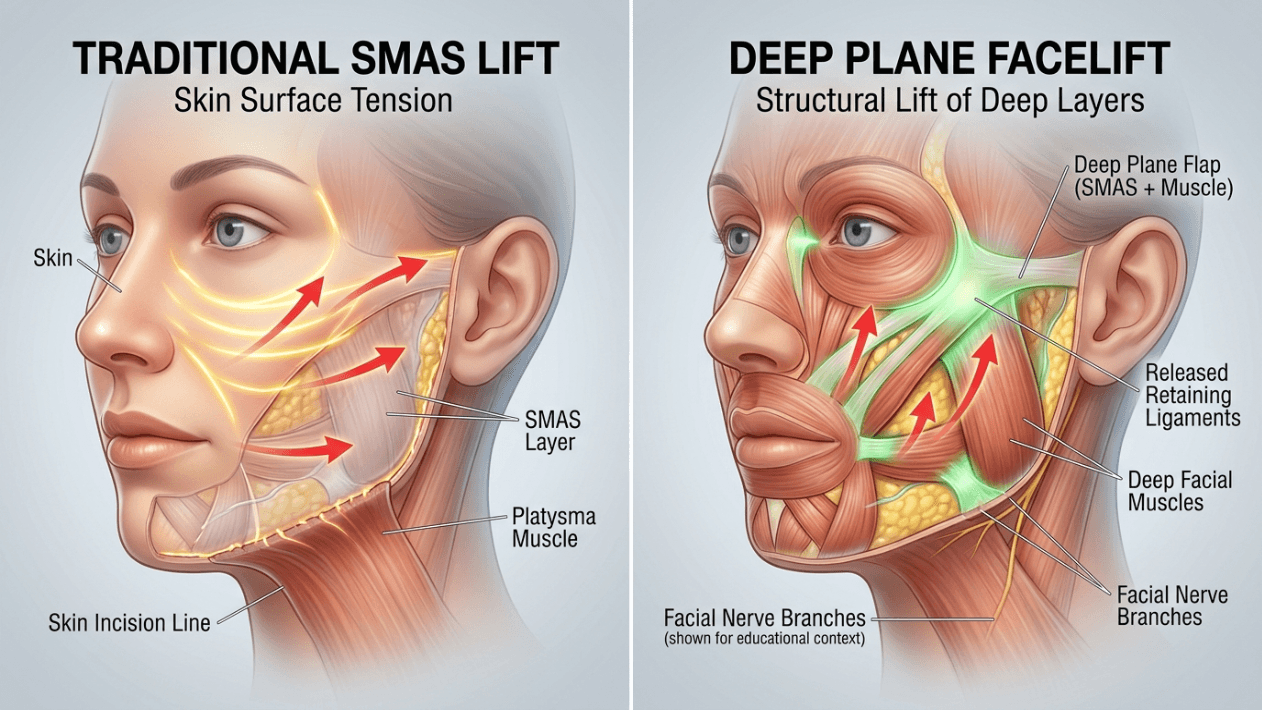
Facial aging is a multifaceted process involving the descent of soft tissues, loss of volume, and weakening of structural support. Traditional facelift techniques, such as the SMAS (Superficial Musculoaponeurotic System) lift, primarily address skin laxity by tightening the superficial layers. While effective for mild to moderate sagging, these methods often fail to deliver the natural, long-lasting results desired by patients with advanced signs of aging.
The Deep Plane Facelift, pioneered by Dr. Sam Hamra in the 1990s, revolutionized facial rejuvenation by targeting the deeper layers of the face. This technique involves the elevation of a composite flap comprising the skin, subcutaneous fat, and the SMAS layer, allowing for the release of key retaining ligaments and repositioning of descended fat pads. By addressing the underlying structural changes, the Deep Plane Facelift achieves a more natural and durable outcome, with results that can last 10-15 years.
Key Advantages of the Deep Plane Facelift
- Natural Results: By repositioning the deeper layers of the face, the Deep Plane Facelift avoids the “pulled” or artificial appearance often associated with traditional facelifts. The technique preserves the patient’s unique facial contours, ensuring a refreshed yet natural look.
- Long-Lasting Outcomes: Studies have shown that patients undergoing a Deep Plane Facelift experience results that last significantly longer than those achieved with superficial techniques. A 2026 study published in Facial Plastic Surgery & Aesthetic Medicine found that patients returned for revision surgery after an average of 10.9 years, with younger patients (≤53 years) enjoying even greater longevity (Levin & Frankel, 2026).
- Comprehensive Rejuvenation: The Deep Plane Facelift effectively addresses multiple signs of aging, including midface descent, deep nasolabial folds, jowling, and neck laxity. By releasing the zygomatic and masseteric ligaments, the technique restores volume to the midface and defines the jawline, creating a harmonious, youthful appearance.
- Reduced Risk of Skin Complications: The composite flap used in the Deep Plane Facelift is thicker and better vascularized than the flaps used in traditional techniques, reducing the risk of skin necrosis and other healing complications. This makes the procedure particularly suitable for patients with compromised skin quality, including smokers (Hohman et al., 2026).
- Minimal Scarring: The Deep Plane Facelift relies on tension-free skin closure, which minimizes scarring and promotes faster healing. Incisions are strategically placed within natural facial contours, ensuring that scars are discreet and nearly invisible over time.
Deep Plane Facelift vs. Traditional Facelift: What’s the Difference?
To appreciate the superiority of the Deep Plane Facelift, it is essential to understand how it differs from traditional facelift techniques. The table below highlights the key distinctions:
| Feature | Deep Plane Facelift | Traditional SMAS Facelift |
|---|---|---|
| Target Layer | Deep structural layers (SMAS, retaining ligaments, fat pads) | Superficial layers (skin and SMAS) |
| Longevity of Results | 10-15 years | 5-10 years |
| Natural Appearance | High (preserves facial contours) | Moderate (risk of “pulled” look) |
| Midface Rejuvenation | Excellent (repositions malar fat pads) | Limited (minimal midface lifting) |
| Jawline Definition | Superior (releases mandibular ligaments) | Moderate (limited jawline improvement) |
| Risk of Complications | Low (thicker, vascularized flap) | Moderate (higher risk of skin necrosis) |
| Recovery Time | 2-3 weeks (slightly longer due to deeper dissection) | 1-2 weeks |
| Patient Satisfaction | 94.4% (Khoury et al., 2025) | 87.8% (Khoury et al., 2025) |
The Deep Plane Facelift’s ability to deliver superior, long-lasting results is further supported by a 2025 systematic review and meta-analysis published in Aesthetic Plastic Surgery. The study, which analyzed data from 2,896 patients, found that patient satisfaction with the Deep Plane Facelift was 94.4%, compared to 87.8% for traditional SMAS facelifts. Additionally, the Deep Plane technique demonstrated a lower risk of skin-related complications, making it a safer and more effective option for comprehensive facial rejuvenation (Khoury et al., 2025).

Who Is an Ideal Candidate for a Deep Plane Facelift?
The Deep Plane Facelift is particularly well-suited for patients who exhibit the following characteristics:
- Moderate to Severe Facial Aging: Patients with significant midface descent, deep nasolabial folds, jowling, and neck laxity benefit the most from this technique.
- Desire for Natural Results: Those who wish to avoid the artificial, “overdone” look often associated with traditional facelifts will find the Deep Plane Facelift to be an ideal solution.
- Good Overall Health: Candidates should be in good general health, with no uncontrolled medical conditions that could increase surgical risks.
- Non-Smokers or Willing to Quit: While the Deep Plane Facelift is safer for smokers than traditional techniques, patients are advised to quit smoking at least 4-6 weeks before and after surgery to minimize complications.
- Realistic Expectations: Patients should have a clear understanding of what the procedure can achieve and be committed to following postoperative care instructions for optimal results.
The Deep Plane Facelift Procedure: What to Expect
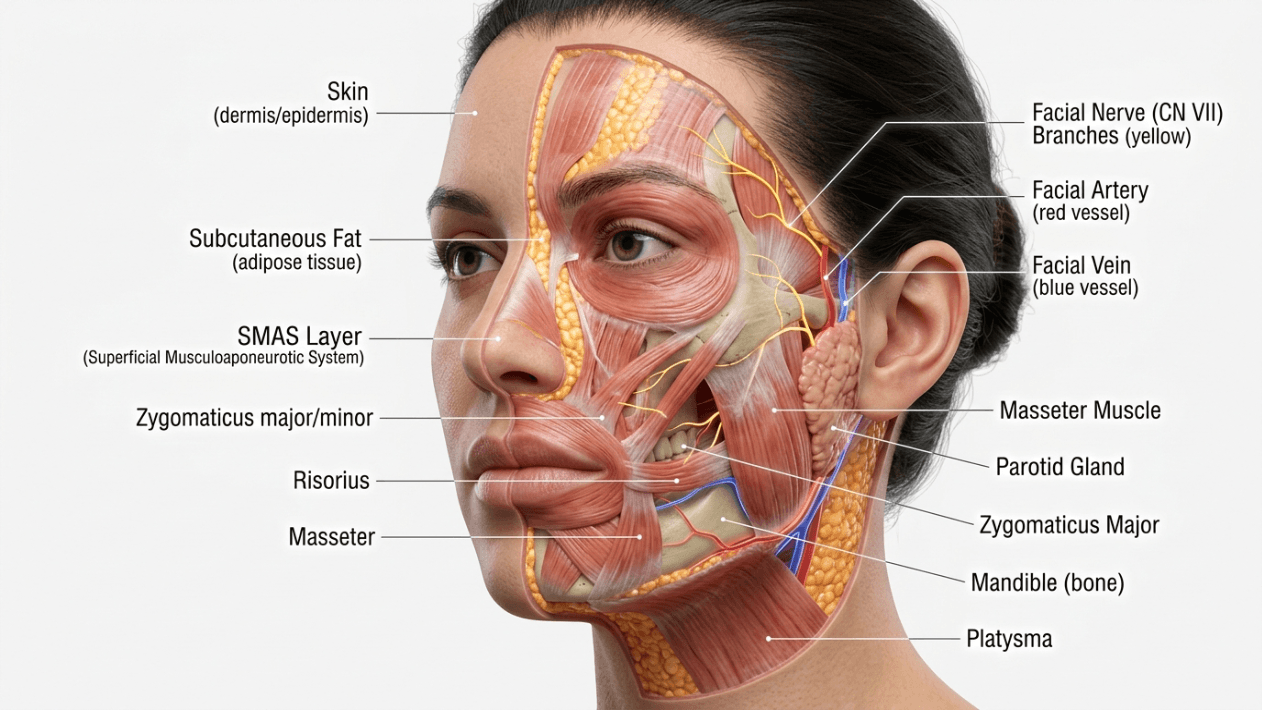
The Deep Plane Facelift is performed under general anesthesia or deep sedation with local anesthesia, ensuring patient comfort throughout the procedure. The surgery typically takes 3-5 hours, depending on the extent of rejuvenation required and whether additional procedures (e.g., blepharoplasty, neck lift) are performed simultaneously.
Step-by-Step Overview
- Incision Placement: Incisions are made along the natural contours of the face, typically starting at the temples, extending around the ears, and ending in the lower scalp. In women, incisions are often placed within the hairline and around the ear for optimal scar concealment. In men, incisions may be placed slightly differently to avoid displacing beard hair.
- Subcutaneous Dissection: The skin is carefully elevated from the underlying tissues, creating a flap that preserves a thin layer of fat for vascular support. This step is crucial for minimizing the risk of skin necrosis and ensuring even healing.
- Deep Plane Entry: The SMAS layer is incised along a diagonal line running from the angle of the mandible to the malar eminence. This allows access to the deeper facial structures, including the retaining ligaments and fat pads.
- Ligament Release: Key retaining ligaments, such as the zygomatic and masseteric ligaments, are released to mobilize the midface and jawline. This step is critical for achieving a natural lift and restoring youthful contours.
- Fat Pad Repositioning: Descended fat pads, particularly in the midface, are repositioned to restore volume and eliminate hollowed or sunken areas. In some cases, buccal fat reduction may also be performed to refine the jawline.
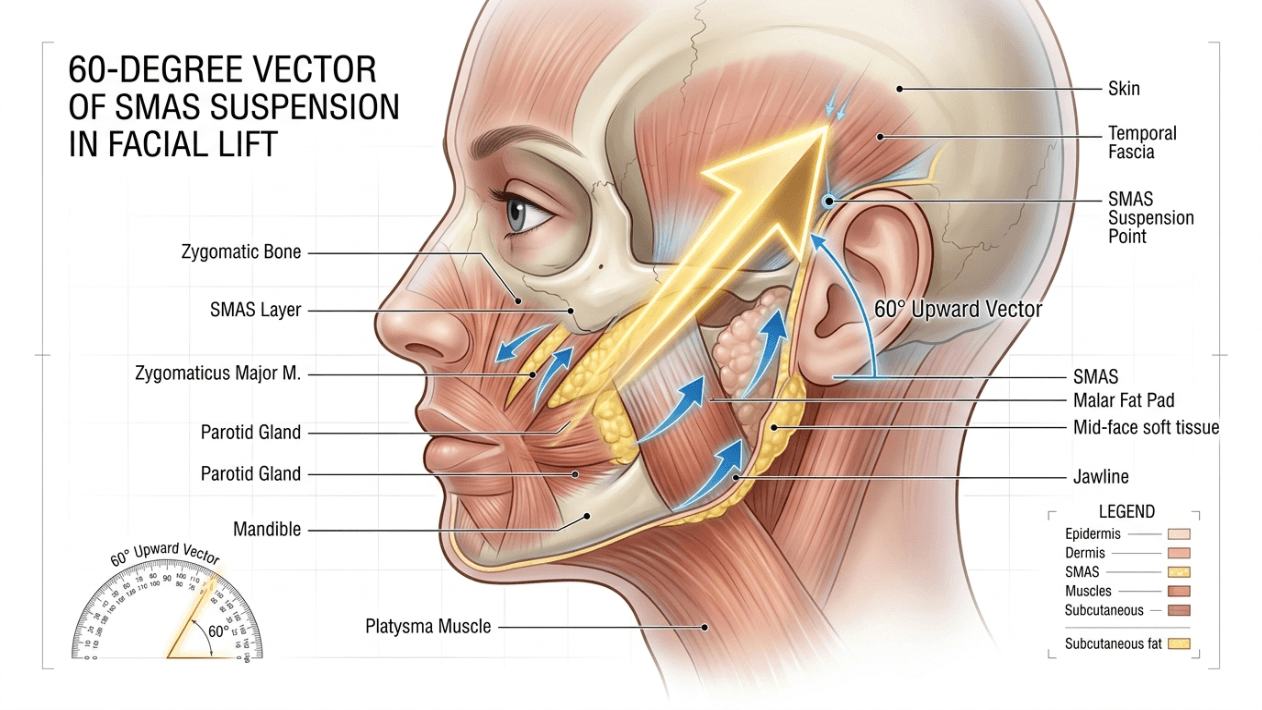
- SMAS Suspension: The SMAS flap is elevated and suspended in a vertical vector, typically at a 60-degree angle, to lift the midface and jawline. This step ensures a natural, tension-free lift that avoids the “pulled” appearance.
- Skin Redraping and Closure: Excess skin is trimmed, and the remaining skin is redraped without tension. Incisions are closed with fine sutures, and drains may be placed to minimize postoperative swelling and bruising.
The Deep Plane Facelift can be combined with other procedures, such as neck lift, blepharoplasty, or fat grafting, to achieve comprehensive facial rejuvenation. Your surgeon will tailor the procedure to your unique anatomical needs and aesthetic goals.
Recovery and Postoperative Care
Recovery from a Deep Plane Facelift requires patience and adherence to postoperative care instructions. While the procedure offers transformative results, the recovery process is slightly longer than that of traditional facelifts due to the deeper dissection involved. Here’s what to expect:
- First 48 Hours: Patients may experience swelling, bruising, and mild discomfort. Cold compresses and prescribed medications help manage these symptoms. Head elevation and avoiding strenuous activities are essential to minimize swelling.
- First Week: Swelling and bruising peak during this period but gradually subside. Most patients can return to light activities within 7-10 days, though strenuous exercise should be avoided for at least 3-4 weeks. Sutures are typically removed within the first week.
- 2-4 Weeks: Residual swelling and bruising continue to resolve. Patients can usually resume most normal activities, including work, though social events may still be avoided due to visible signs of healing.
- 3-6 Months: Final results become apparent as all swelling subsides and tissues settle into their new position. Scars continue to fade and become less noticeable.
To optimize recovery, patients are advised to:
- Avoid smoking and alcohol for at least 4-6 weeks to promote healing.
- Follow a healthy diet rich in vitamins and protein to support tissue repair.
- Attend all follow-up appointments to monitor progress and address any concerns.
- Use sunscreen and avoid direct sun exposure to protect healing skin and minimize scarring.
Potential Complications and How to Minimize Risks
While the Deep Plane Facelift is a safe and effective procedure when performed by an experienced surgeon, all surgical interventions carry some degree of risk. Understanding these risks and how they are managed is crucial for making an informed decision.
Common Complications and Mitigation Strategies
| Complication | Risk Level | Mitigation Strategy |
|---|---|---|
| Hematoma | Low (1-2%) | Meticulous intraoperative hemostasis, postoperative blood pressure control, and the use of drains or hemostatic nets (Jacono et al., 2024). |
| Facial Nerve Injury | Very Low (<1%) | Precise anatomical knowledge, intraoperative nerve monitoring, and careful dissection techniques. Most nerve injuries are temporary and resolve within weeks to months (Hohman et al., 2026). |
| Skin Necrosis | Very Low (<1%) | Thicker, well-vascularized flap reduces risk. Smokers are advised to quit pre- and postoperatively to minimize this complication. |
| Infection | Very Low (<1%) | Prophylactic antibiotics, sterile technique, and proper wound care. |
| Pixie Ear Deformity | Low | Avoiding excessive tension on the lobule during skin closure. Corrective surgery may be required if the deformity occurs. |
| Great Auricular Nerve Injury | Low (up to 7%) | Careful dissection in the neck region, particularly around the sternocleidomastoid muscle. Most injuries result in temporary numbness that resolves over time. |
| First Bite Syndrome | Rare | Minimizing trauma to the parotid gland during dissection. Symptoms are usually self-limiting but may be managed with botulinum toxin injections if necessary. |
Choosing a board-certified, experienced surgeon is the most effective way to minimize risks and ensure a safe, successful outcome. In Antalya, surgeons like Dr. Berat Çiğdem specialize in advanced facelift techniques, including the Deep Plane Facelift, and prioritize patient safety and natural results.

Why Choose Antalya for Your Deep Plane Facelift?
Antalya has emerged as a leading destination for medical tourism, particularly for advanced cosmetic procedures like the Deep Plane Facelift. Here’s why patients from Europe, the UK, and beyond choose Antalya for their facial rejuvenation:
- Expertise and Experience: Antalya is home to some of the world’s most skilled and experienced plastic surgeons, many of whom have trained internationally and specialize in advanced facelift techniques. Surgeons like Dr. Berat Çiğdem are renowned for their expertise in the Deep Plane Facelift, ensuring patients receive the highest standard of care.
- State-of-the-Art Facilities: Clinics in Antalya are equipped with cutting-edge technology and adhere to international standards of safety and hygiene. Many facilities are accredited by global organizations, providing patients with peace of mind.
- Cost-Effective Care: The cost of a Deep Plane Facelift in Antalya is significantly lower than in many Western countries, without compromising on quality. This affordability makes advanced facial rejuvenation accessible to a broader range of patients.
- Comprehensive Care Packages: Many clinics in Antalya offer all-inclusive packages that cover the procedure, accommodation, transportation, and postoperative care. This streamlined approach ensures a hassle-free experience for international patients.
- Recovery in Paradise: Antalya’s stunning Mediterranean coastline and luxurious resorts provide an ideal setting for recovery. Patients can relax and heal in a serene environment, enhancing their overall experience.
Choosing the Right Surgeon: What to Look For
The success of a Deep Plane Facelift depends largely on the skill and expertise of the surgeon. Here are key factors to consider when selecting a surgeon in Antalya or elsewhere:
- Board Certification: Ensure your surgeon is board-certified in plastic, reconstructive, or aesthetic surgery. This certification guarantees that they have undergone rigorous training and adhere to high ethical and professional standards.
- Specialization in Facial Rejuvenation: Look for a surgeon who specializes in facelift procedures, particularly the Deep Plane technique. Ask to see before-and-after photos of their previous patients to assess the quality and naturalness of their results.
- Experience and Volume: Inquire about the surgeon’s experience with the Deep Plane Facelift, including the number of procedures they perform annually. A higher volume of cases often correlates with greater expertise and better outcomes.
- Patient Reviews and Testimonials: Read reviews and testimonials from previous patients to gauge their satisfaction with the surgeon’s care, results, and bedside manner. Platforms like RealSelf and Google Reviews can provide valuable insights.
- Personalized Consultation: A reputable surgeon will conduct a thorough consultation to assess your facial anatomy, discuss your goals, and determine whether you are a suitable candidate for the procedure. They should also explain the risks, benefits, and alternatives in detail.
- Transparency and Communication: Choose a surgeon who is transparent about the procedure, recovery process, and potential risks. They should be willing to answer all your questions and provide clear, honest advice.
In Antalya, Dr. Berat Çiğdem exemplifies these qualities. With extensive training and a commitment to natural, harmonious results, Dr. Çiğdem has earned a reputation as a leading expert in the Deep Plane Facelift. His personalized approach ensures that each patient receives care tailored to their unique needs, resulting in outcomes that enhance their natural beauty.
The Lasting Impact of a Deep Plane Facelift: Confidence and Beyond
A Deep Plane Facelift is more than just a cosmetic procedure—it is a transformative experience that enhances both appearance and self-confidence. Patients who undergo this advanced technique often report feeling more youthful, energetic, and self-assured, with benefits that extend beyond the physical.
Natural Rejuvenation: The Ultimate Goal
The hallmark of a successful Deep Plane Facelift is its ability to deliver natural-looking results. Unlike traditional facelifts, which can sometimes create an artificial or “overdone” appearance, the Deep Plane technique preserves the patient’s unique facial features while addressing the signs of aging. The result is a refreshed, rejuvenated look that allows patients to appear like the best version of themselves—without looking like they’ve had surgery.
This natural outcome is achieved through:
- Preservation of Facial Anatomy: By targeting the deeper layers of the face, the technique avoids excessive tension on the skin, which can distort facial expressions and create an unnatural appearance.
- Restoration of Volume: The repositioning of descended fat pads and the release of retaining ligaments restore youthful volume to the midface and cheeks, eliminating hollowed or sunken areas.
- Harmonious Contours: The technique enhances the natural contours of the face, including the jawline and neck, creating a balanced, youthful appearance that complements the patient’s overall facial structure.

Confidence and Well-Being: The Inner Transformation
The psychological benefits of a Deep Plane Facelift are profound. Many patients experience a renewed sense of self-confidence, which can positively impact their personal and professional lives. A youthful appearance can open doors to new opportunities, enhance social interactions, and empower patients to embrace life with renewed enthusiasm.
Moreover, the long-lasting results of the Deep Plane Facelift mean that patients can enjoy their rejuvenated appearance for years to come, reducing the need for frequent touch-ups or additional procedures. This durability not only saves time and money but also provides peace of mind, knowing that the results will stand the test of time.
Ultimately, the value of a Deep Plane Facelift lies in its ability to harmonize outer appearance with inner confidence. When performed by an expert surgeon, it is a procedure that not only enhances beauty but also enriches quality of life.
Frequently Asked Questions About the Deep Plane Facelift
What is the ideal age for a Deep Plane Facelift?
There is no one-size-fits-all answer, as the ideal age depends on individual aging patterns and aesthetic goals. However, most patients who benefit from a Deep Plane Facelift are in their 40s to 60s, when signs of midface descent, jowling, and neck laxity become more pronounced. Younger patients with early signs of aging may opt for less invasive procedures, while older patients with advanced aging can still achieve excellent results with the Deep Plane technique.
How long do the results of a Deep Plane Facelift last?
The results of a Deep Plane Facelift are among the most long-lasting of all facelift techniques. On average, patients can expect their results to last 10-15 years, depending on factors such as skin quality, lifestyle, and genetics. A 2026 study found that patients returned for revision surgery after an average of 10.9 years, with younger patients experiencing even greater longevity (Levin & Frankel, 2026).
Can a Deep Plane Facelift be combined with other procedures?
Yes, the Deep Plane Facelift is often combined with other procedures to achieve comprehensive facial rejuvenation. Common complementary procedures include:
* Neck lift (to address neck laxity and platysmal bands)
* Blepharoplasty (to rejuvenate the eyes)
* Brow lift (to address forehead and brow ptosis)
* Fat grafting (to restore volume to the cheeks or temples)
* Rhinoplasty (to refine the nose)
Combining procedures can enhance overall results and reduce recovery time compared to undergoing multiple surgeries separately.
What is the recovery time for a Deep Plane Facelift?
Recovery from a Deep Plane Facelift typically takes 2-3 weeks for most patients to return to normal activities, though full healing and the final results may take 3-6 months. Swelling and bruising are most pronounced in the first week but gradually subside. Patients are advised to avoid strenuous activities for at least 3-4 weeks and to follow their surgeon’s postoperative care instructions closely to optimize healing.
Are there non-surgical alternatives to a Deep Plane Facelift?
For patients with mild signs of aging or those who are not ready for surgery, non-surgical alternatives can provide temporary improvements. These include:
* Thread lifts: Temporary lifting using dissolvable threads.
* Dermal fillers: Restore volume to the midface and cheeks.
* Laser resurfacing: Improves skin texture and tone.
* Ultherapy: Uses ultrasound energy to stimulate collagen production.
However, these non-surgical options cannot achieve the same degree of rejuvenation or longevity as a Deep Plane Facelift. They are best suited for patients with early signs of aging or as a complement to surgical procedures.
How do I choose the right surgeon for a Deep Plane Facelift?
Choosing the right surgeon is critical to achieving safe, natural, and long-lasting results. Here are key factors to consider:
* Board Certification: Ensure the surgeon is board-certified in plastic, reconstructive, or aesthetic surgery.
* Specialization: Look for a surgeon who specializes in facelift procedures, particularly the Deep Plane technique.
* Experience: Inquire about the surgeon’s experience with the Deep Plane Facelift, including the number of procedures performed annually.
* Before-and-After Photos: Review the surgeon’s portfolio to assess the quality and naturalness of their results.
* Patient Reviews: Read testimonials and reviews from previous patients to gauge their satisfaction.
* Personalized Consultation: Choose a surgeon who takes the time to understand your goals and provides a tailored treatment plan.
* Transparency: The surgeon should clearly explain the procedure, risks, benefits, and alternatives.
In Antalya, surgeons like Dr. Berat Çiğdem are renowned for their expertise in the Deep Plane Facelift, offering patients a combination of advanced surgical skills and personalized care.