
Aging after 40 is not just about wrinkles or sagging skin—it is a three-dimensional process involving volume loss, structural descent, and tissue laxity. Traditional facelifts or isolated eyelid surgeries often fall short for patients in their 40s and beyond because they fail to address the hollowing of the upper face, the descent of the temples, and the deflation of the periorbital area. The most effective, non-surgical-appearing solution for this demographic is a combined approach: upper blepharoplasty, temple lift, and autologous fat injection. This trio does not just pull or cut the face but restores lost volume, opens the gaze, and recontours the upper third of the face—delivering a 10-year rejuvenation without the “operated” look.
This strategy aligns with the modern “lift and fill” philosophy in facial rejuvenation, which recognizes that volume restoration is as critical as tissue repositioning for a natural, youthful outcome. For patients over 40, this combination is particularly transformative because it directly counters the hollowing of the temples, the deflation of the upper eyelids, and the descent of the brow tail—all hallmark signs of aging in this age group.
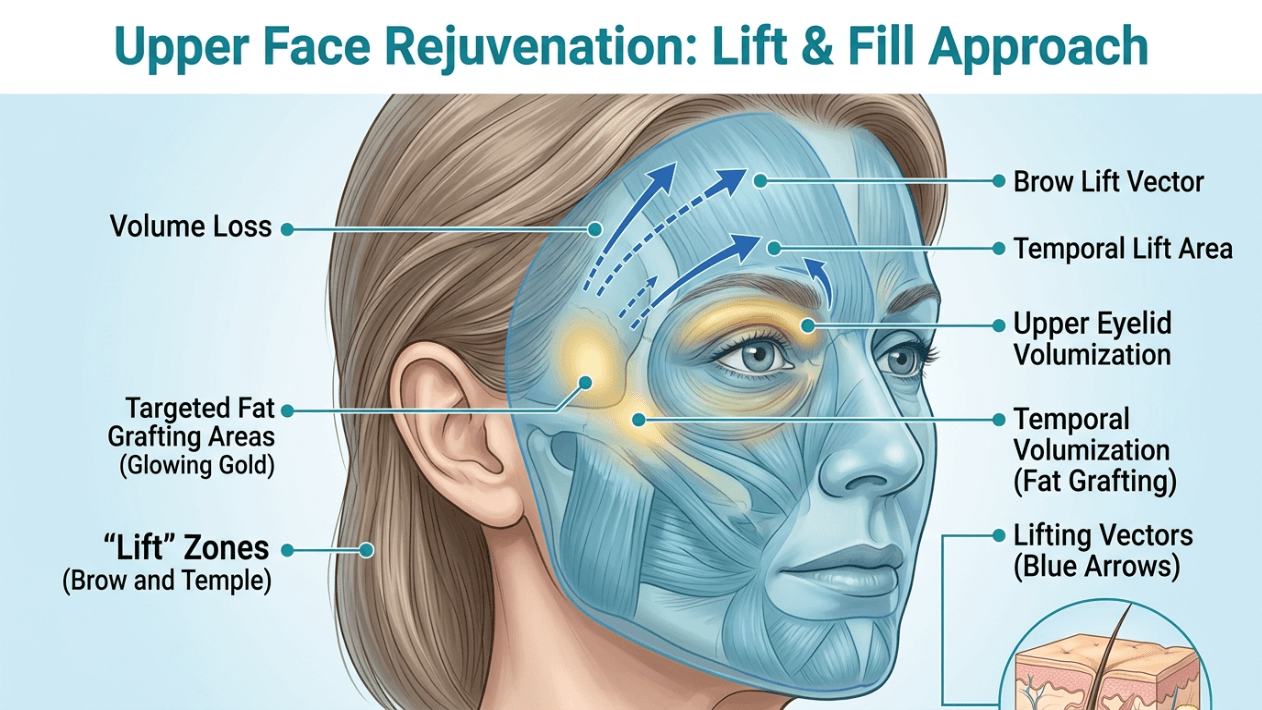
Table of Contents
Why This Combination Works: The Science of Volume and Structure
1. Upper Blepharoplasty: Opening the Gaze
Upper blepharoplasty is not merely about removing excess skin. In the context of periorbital rejuvenation for patients over 40, it serves a dual purpose:
- Removes redundant skin that weighs down the eyelids, contributing to a tired or aged appearance.
- Redrapes and repositions fat in the upper eyelid to eliminate puffiness while preserving or enhancing volume where it has been lost.
A volumetric upper blepharoplasty—a technique that combines fat grafting with skin resection—is especially effective for patients with hollow upper eyelids. In a clinical study published in Plastic and Reconstructive Surgery, 32 women underwent fat grafting to the upper eyelids, with an average of 0.4cc of fat injected into the deep plane (below the supraorbital rim) and 2.8cc in the superficial plane. The result? A convex, youthful contour replaced the concave, aged appearance, with no infections or revisions required. The procedure corrected the “inverted ratio” of the upper eyelid, where the loss of volume creates a shadowed, gaunt look.
For patients over 40, this approach is critical because traditional excisional blepharoplasty alone can exacerbate hollowing, leading to an unnatural, skeletonized appearance. By adding volume back into the upper eyelid sulcus, the surgery restores the youthful fullness that defines an open, refreshed gaze.
2. Temple Lift: Restoring the Upper Face’s Foundation
The temples are often overlooked, yet their volume and position are pivotal to a youthful facial structure. With age, the temple fat pads atrophy, leading to:
- A hollowed, skeletal appearance in the upper face.
- Brow ptosis (drooping), which further ages the eyes and forehead.
- A loss of the natural “heart-shaped” facial contour, which is a hallmark of youth.
A temple lift—whether performed as a surgical lift or via volume restoration with fat grafting—addresses these issues by:
- Elevating the lateral brow tail, which opens the outer corners of the eyes and restores a more alert, youthful expression.
- Restoring volume to the temporal fossa, the hollow area above and beside the eyes. This is typically done using deep-plane fat grafting, where fat is placed just above the periosteum to avoid visible contours or irregularities.
The synergy between a temple lift and upper blepharoplasty is undeniable. While the blepharoplasty removes excess skin and repositions fat in the eyelids, the temple lift elevates the brow and restores volume to the upper face, creating a harmonious, lifted effect that cannot be achieved with either procedure alone.
3. Autologous Fat Injection: The Natural Filler
Autologous fat transfer is the cornerstone of volume restoration in modern facial rejuvenation. Unlike synthetic fillers, fat grafting uses the patient’s own tissue, eliminating the risk of allergic reactions and providing long-lasting, natural results. For patients over 40, fat injection is particularly valuable because it:
- Replenishes deflated areas such as the upper eyelid sulcus, temples, and tear troughs, which are prone to volume loss with age.
- Stimulates tissue regeneration through the stem cells present in fat, which improve skin quality and elasticity.
- Creates a “lift effect” by supporting sagging tissues. For example, fat grafting to the malar (cheek) area can indirectly lift the lower eyelid, reducing the appearance of under-eye bags and creating a smoother transition to the cheek.
In the context of the 3-step combination, fat injection is used to:
- Fill the hollows above the eyelids (upper sulcus) that contribute to a tired look.
- Restore temple volume, which complements the mechanical lift of a temple procedure.
- Enhance the results of blepharoplasty by ensuring the eyelids do not appear hollow post-surgery.
Clinical evidence supports the longevity of fat grafting in the face. A systematic review of 4,577 patients who underwent facial fat transfer found that while some fat reabsorption occurs (typically 30-50%), the remaining fat integrates permanently into the tissue, providing enduring volume restoration.
The Synergy: Why This Trio Delivers 10 Years of Rejuvenation
The upper blepharoplasty + temple lift + fat injection combination is not just additive—it is synergistic. Here’s how each procedure amplifies the others:
| Procedure | Primary Benefit | Synergistic Effect |
|---|---|---|
| Upper Blepharoplasty | Removes excess skin, repositions fat | Opens the gaze and prevents post-surgical hollowing when combined with fat grafting. |
| Temple Lift | Elevates brow tail, restores upper face volume | Enhances the lift of the blepharoplasty and provides a foundation for fat grafting. |
| Fat Injection | Restores volume to hollow areas | Supports the structural changes from the lift and blepharoplasty, ensuring a natural contour. |
The Result: A 10-Year Rejuvenation Without Cutting the Face
For patients over 40, this combination achieves what no single procedure can:
- Opens the Eyes: The upper blepharoplasty removes the heavy, hooded skin that makes the eyes look small and tired, while fat grafting fills the hollows that create shadows.
- Lifts the Upper Face: The temple lift elevates the brow and restores volume, reversing the descent that makes the face look longer and more aged.
- Restores Youthful Contours: Fat injection replenishes lost volume in the temples, upper eyelids, and cheeks, recreating the three-dimensional fullness of a younger face.
Unlike traditional facelifts, which can create a pulled or artificial appearance, this approach works with the natural anatomy of the face. There are no visible scars (fat grafting is performed via tiny incisions), and the results are subtle yet transformative—patients look refreshed, not operated on.
Who Is the Ideal Candidate?
Not every patient over 40 is a candidate for this combination, but those who exhibit the following aging signs will benefit the most:
- Hooded or heavy upper eyelids (dermatochalasis) that obscure the natural eyelid crease.
- Hollow upper eyelids (sunken appearance) due to fat atrophy.
- Flattened or hollow temples, which contribute to a skeletal look.
- Mild to moderate brow ptosis, where the eyebrows sit lower than they did in youth.
- Volume loss in the upper face, particularly around the eyes and temples.
- Good overall health and realistic expectations about the outcomes.
Patients who are not ideal candidates include those with:
- Severe skin laxity that requires a full facelift.
- Very thin facial bones or poor fat reserves (as there may not be enough fat to harvest).
- Active smoking or uncontrolled medical conditions that could impair healing.

The Procedure: What to Expect
1. Preoperative Consultation
A comprehensive facial analysis is the first step. The surgeon will:
- Assess the degree of skin laxity, fat atrophy, and volume loss in the upper face.
- Determine the optimal harvest sites for fat (typically the abdomen, thighs, or flanks).
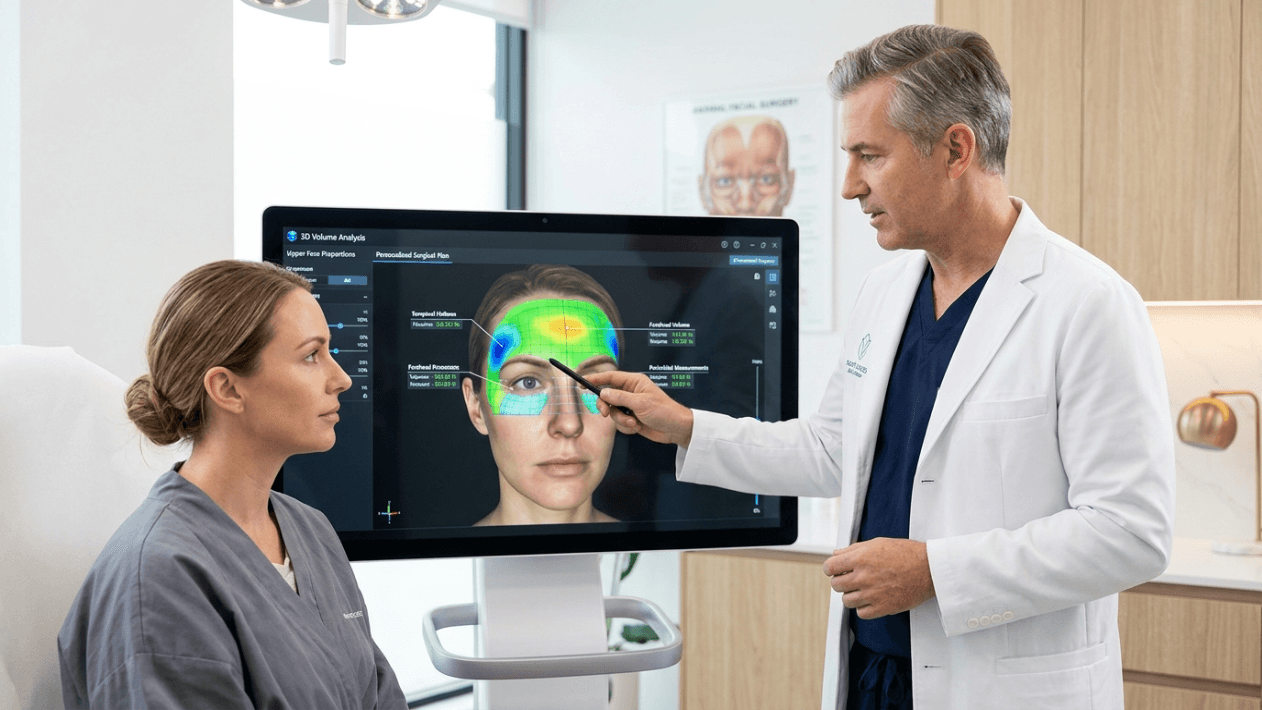
- Use 3D imaging or photographs to plan the procedure and show the patient a preview of the expected results.
Patients are encouraged to bring photos from their 20s or 30s to help the surgeon understand their youthful anatomy and tailor the procedure accordingly.
2. Surgical Technique
The 3-step combination is typically performed in a single operative session under general anesthesia (or local anesthesia with sedation for minor cases). Here’s how it unfolds:
Step 1: Fat Harvesting
- Fat is gently liposuctioned from a donor site (e.g., abdomen, thighs).
- The harvested fat is processed using a centrifuge to remove blood, oil, and water, leaving pure, viable fat cells for grafting.
Step 2: Upper Blepharoplasty
- An incision is made in the natural eyelid crease to minimize visible scarring.
- Excess skin and, if necessary, fat are removed or repositioned to smooth the eyelid.
- The orbicularis muscle may be imbricated (plicated) to enhance volume and support the fat grafts.
Step 3: Temple Lift
- The temple lift can be performed via:
- Surgical elevation: Incision along the temple hairline to lift the lateral brow and temple tissue.
- Volume restoration: Deep-plane fat grafting into the temporal fossa to restore fullness.
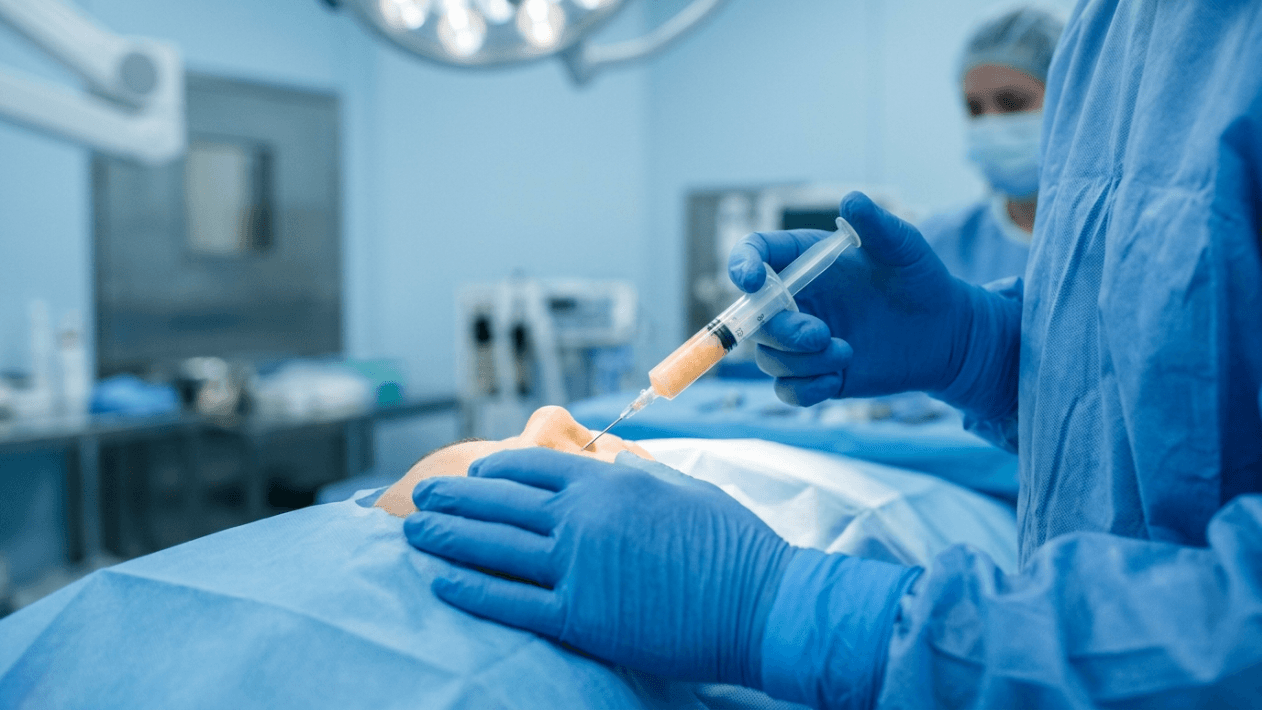
Step 4: Fat Injection
- The purified fat is injected in tiny, precise amounts into:
- The upper eyelid sulcus (to correct hollowing).
- The temples (to restore volume and support the lift).
- The tear troughs or malar area (if additional volume is needed for a seamless transition).
- The fat is sculpted to create a natural, youthful contour.
3. Recovery
- First 48 Hours: Mild to moderate swelling and bruising in the eyelids, temples, and donor sites.
- First Week: Cold compresses and head elevation are recommended to minimize swelling. Most patients can return to light activities within 5-7 days.
- 2-3 Weeks: Bruising subsides, and swelling significantly decreases. The eyes and temples will begin to look more natural.
- 6 Weeks to 6 Months: Final results emerge as the fat grafts integrate and the tissues settle. The temple lift and blepharoplasty results become more apparent as swelling resolves.
Downtime: Most patients can return to work and social activities within 10-14 days, though strenuous exercise should be avoided for 4-6 weeks.
Results: What Patients Can Expect
Immediate Results
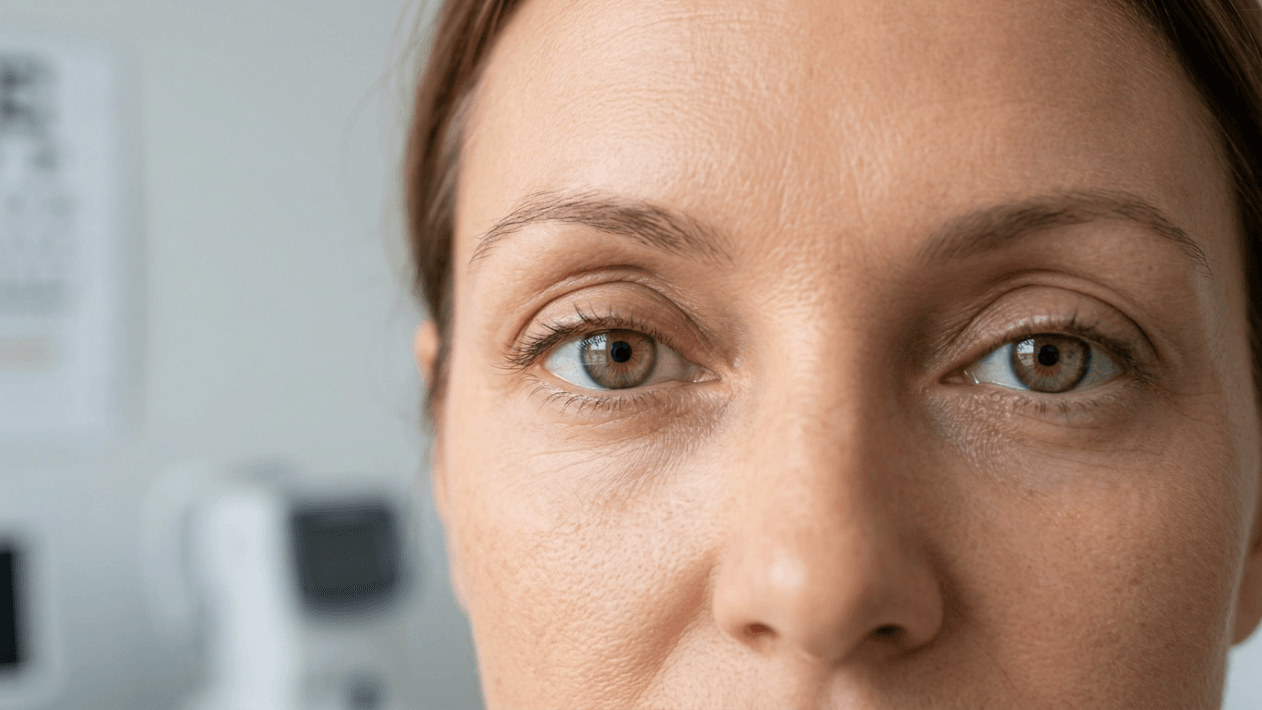
- Brighter, more open eyes due to the removal of excess skin and the lifting effect of the temple procedure.
- Improved upper face fullness from the fat grafting, which reduces the hollowed, tired look.
Long-Term Results
- 10-Year Rejuvenation: Patients typically appear 5-10 years younger, with a natural, rested appearance.
- Lifting Effect: The brow tail is elevated, and the upper eyelids appear fuller and more open.
- Volume Restoration: The temples and upper eyelids regain their youthful contours, eliminating the skeletal look.
- Permanent Volume: While some fat may be reabsorbed (30-50%), the remaining fat integrates permanently into the tissue, providing long-lasting results.
Before and After: Real Patient Examples
Clinical studies and before-and-after cases demonstrate the dramatic yet natural outcomes of this combination:
- A 39-year-old woman underwent upper and lower blepharoplasty with facial fat transfer, resulting in restored volume and a brighter, more youthful gaze.
- A 57-year-old woman combined ptosis repair, upper blepharoplasty, lower blepharoplasty, and facial fat transfer to achieve a holistic rejuvenation of the periocular area.
- In a clinical study of 32 women, volumetric upper blepharoplasty (fat grafting + skin resection) corrected the concave upper eyelid shape, converting it into a convex, youthful contour.
Risks and Considerations
While the upper blepharoplasty + temple lift + fat injection combination is safe and effective, it is not without risks. Potential complications include:
| Risk | Likelihood | Management |
|---|---|---|
| Swelling and Bruising | Common | Resolves within 2-3 weeks; cold compresses and head elevation help. |
| Fat Graft Reabsorption | Common (30-50%) | Overcorrection is often performed to account for this. |
| Asymmetry | Rare | Can be corrected with touch-up fat grafting. |
| Infection | Rare | Antibiotics are prescribed pre- and post-operatively. |
| Hematoma | Rare | Avoid blood thinners before surgery; immediate drainage if needed. |
| Eyelid Malposition | Rare | Surgical revision may be required if the eyelid does not close properly. |
| Contour Irregularities | Rare | Fat grafting refinement can smooth out uneven areas. |
| Nerve Injury | Very Rare | Temporary numbness or weakness may occur but usually resolves within weeks. |
Key Considerations for Patients Over 40:
- Skin Quality: Patients with thin, crepey skin may have a higher risk of visible irregularities from fat grafting.
- Bone Structure: Those with prominent bony orbits may require more conservative fat grafting to avoid overfilling.
- Lifestyle Factors: Smoking, poor nutrition, and sun damage can compromise healing and fat graft survival.
Why This Combination Is the Gold Standard for Over 40
For patients in their 40s and beyond, the upper blepharoplasty + temple lift + fat injection combination is the most effective non-surgical-appearing solution for facial rejuvenation because it:
- Addresses the Root Causes of Aging: It does not just pull the skin (like a traditional facelift) but restores volume, lifts structures, and smooths contours.
- Avoids the “Operated” Look: By working with the natural anatomy and using the patient’s own fat, the results are subtle and harmonious.
- Delivers Long-Lasting Results: Unlike fillers, which require repeat treatments every 6-18 months, fat grafting provides permanent volume restoration in most cases.
- Minimizes Downtime: The combined approach means one recovery period instead of multiple surgeries spaced over time.
- Customizable: The procedure can be tailored to the patient’s unique anatomy and aging concerns.
Alternatives and Adjunctive Procedures
While the 3-step combination is highly effective, some patients may benefit from additional or alternative procedures, including:
- Brow Lift: For patients with severe brow ptosis, a brow lift can be added to further open the upper face.
- Lower Blepharoplasty: To address under-eye bags or hollowing, a lower blepharoplasty with fat repositioning or grafting can be performed.
- Midface Lift: For those with descent of the midface, a midface lift can be combined to restore cheek volume and lift the lower eyelids.
- Laser Resurfacing: To improve skin texture and fine lines, CO2 or fractional laser resurfacing can be added to the treatment plan.
Conclusion: A Natural, Youthful Transformation
The upper blepharoplasty + temple lift + fat injection combination represents a paradigm shift in facial rejuvenation for patients over 40. Unlike traditional approaches that focus solely on skin excision or lifting, this trio restores volume, lifts structures, and enhances contours—delivering a 10-year rejuvenation that looks natural, refreshed, and harmonious.
For those seeking a non-surgical-appearing, long-lasting solution to the signs of aging, this combination is the gold standard. It is not just a procedure but a philosophy: one that prioritizes volume restoration, structural support, and natural beauty over artificial, pulled results.
If you are over 40 and noticing hollowing in your upper eyelids, flattening of your temples, or a tired, aged appearance, this 3-step combination may be the key to turning back the clock—without anyone knowing you had work done.
Sources
- Volumetric Upper Blepharoplasty: Clinical Study of Rejuvenation of the Hollow Upper Eyelid with Fat Injections
- Structural Fat Grafting for Upper Eyelids, Eyebrows, and Temples | UPMC
- Integrating Fat Graft with Blepharoplasty to Rejuvenate the Asian Periorbita – PMC
- Facial Fat Grafting | EyePlastics
- Stem Cell Fat Grafting – ScienceDirect
- Full Facial Rejuvenation Surgery: A Complete Guide
- Modern Eyelid Lift with Fat Transfer – Kronowitz Plastic Surgery