

Jowl sagging and the appearance of a double chin are among the most visible signs of aging, but they can also affect younger individuals due to genetics, weight fluctuations, or lifestyle factors. The jowls—loose or sagging skin and fat along the lower jawline—often create a softened, undefined lower face. A double chin, or submental fullness, refers to excess fat or skin beneath the chin, which can make the neck appear shorter and less defined.
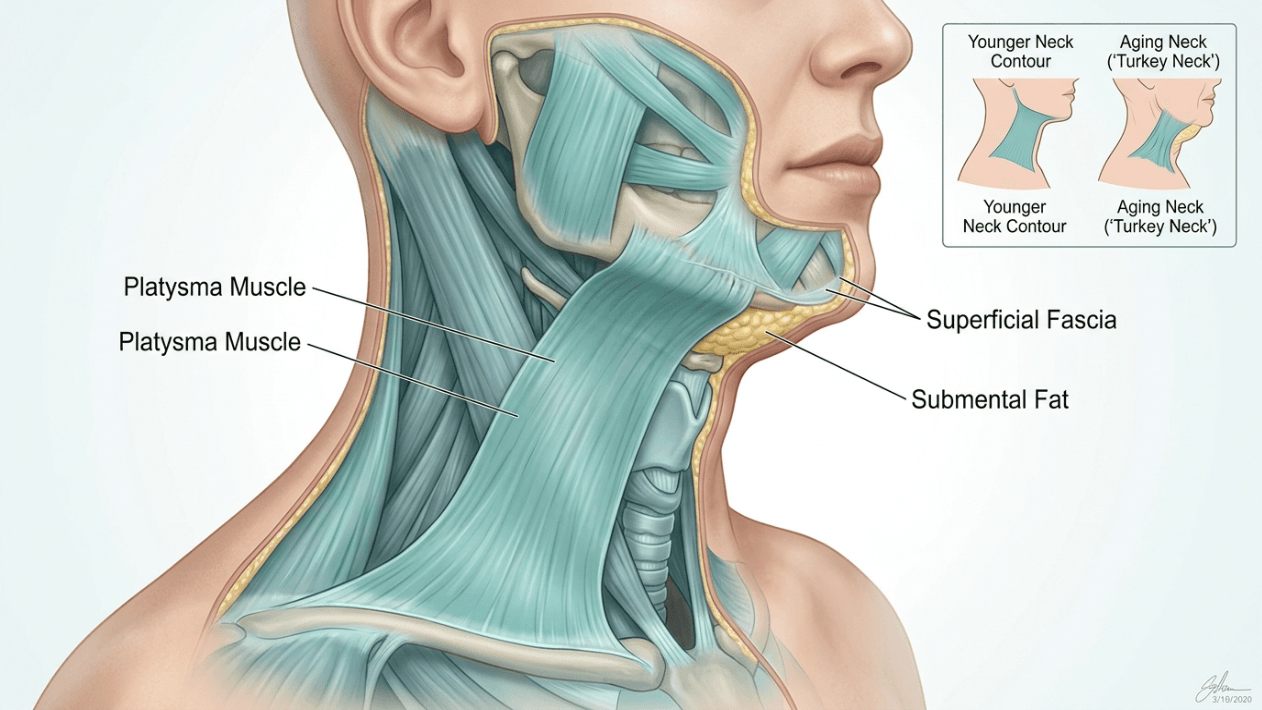
These concerns arise from a combination of skin laxity, fat accumulation, and muscle weakening. Over time, the platysma muscle (a broad muscle running from the chest and shoulders up the neck to the jawline) loses its tone, contributing to the “turkey neck” appearance. Additionally, the loss of collagen and elastin in the skin reduces its ability to snap back, while excess subcutaneous fat in the chin and neck area exacerbates the fullness. For some, a receding chin or weak jawline can also create the illusion of a double chin, even in individuals at a healthy weight.
Understanding the underlying cause is critical: Is the primary issue excess fat, loose skin, or weakened muscles? The answer determines whether liposuction, neck lift, or a combination of both is the most effective solution.

Table of Contents
Liposuction: Targeting Excess Fat for a Sharper Jawline
What Liposuction Addresses
Chin and neck liposuction is a minimally invasive surgical procedure designed to remove stubborn fat deposits beneath the chin and along the jawline. It is not a skin-tightening procedure but rather a fat-reduction technique that sculpts the neck and jaw for a more defined contour. When performed correctly, liposuction can:
- Eliminate a double chin by removing submental fat
- Restore a sharper, more angular jawline
- Improve the cervicomental angle (the angle between the chin and neck, ideally 90–120 degrees for a youthful appearance)
- Provide permanent fat removal (fat cells do not regenerate in treated areas, though new fat can accumulate if weight is gained).
Who Is an Ideal Candidate?
Liposuction works best for individuals who:
- Have good skin elasticity (typically younger patients, ages 20–50)
- Struggle with localized fat that is resistant to diet and exercise
- Do not have significant skin sagging or muscle laxity
- Seek a minimally invasive solution with a shorter recovery (3–7 days).
The Procedure
- Anesthesia: Usually performed under local anesthesia (sometimes with sedation).
- Incision Placement: Tiny incisions (2–3 mm) are made under the chin or behind the ears, leaving minimal visible scarring.
- Fat Removal: A cannula (thin tube) is inserted to suction out excess fat while sculpting the neck and jawline.
- Recovery: Patients typically return to work within 3–4 days and see final results in 4–6 weeks as swelling subsides. A compression garment is worn for 1–4 weeks to support healing.
Limitations of Liposuction
- Does not tighten loose skin: If skin elasticity is poor, removing fat can worsen sagging, creating a “hollow” or “deflated” appearance.
- Not effective for muscle laxity: Cannot address platysma banding (vertical neck bands) or severe skin laxity.
- Risk of contour irregularities: Over-removal of fat can lead to unnatural depressions or asymmetry.
Neck Lift: Correcting Skin Laxity and Muscle Weakness
What a Neck Lift Addresses
A neck lift (or cervicoplasty/platysmaplasty) is a surgical procedure that targets:
- Excess, sagging skin (removing the “turkey neck” appearance)
- Loose or separated platysma muscles (tightening to eliminate vertical neck bands)
- Jowls (sagging skin and fat along the jawline)
- Loss of neck definition (restoring a smoother, firmer contour).
Unlike liposuction, a neck lift directly addresses skin and muscle laxity, making it the superior choice for individuals with moderate to severe sagging.
Who Is an Ideal Candidate?
Neck lift surgery is best suited for those who:
- Have significant skin laxity (often ages 45+ or after dramatic weight loss)
- Exhibit platysma banding (visible vertical lines on the neck)
- Seek long-lasting rejuvenation (results can last 5–10+ years)
- Are willing to undergo a more invasive procedure with a longer recovery (2–6 weeks).
The Procedure
- Anesthesia: Typically performed under general anesthesia (local anesthesia with sedation is less common).
- Incision Placement: Incisions are made behind the ears and under the chin, allowing for hidden scarring.
- Tissue Adjustment:
- Excess skin is trimmed and repositioned.
- The platysma muscle is tightened (platysmaplasty) to eliminate banding.
- Fat may be removed or repositioned for optimal contouring.
- Recovery: Swelling and bruising last 2–3 weeks, with full recovery in 4–6 weeks. A compression garment is worn for 4–6 weeks to support healing.
Advantages of a Neck Lift
- Comprehensive rejuvenation: Addresses skin, fat, and muscle in one procedure.
- Long-lasting results: Can reverse signs of aging for a decade or more.
- Natural-looking outcomes: Restores a youthful neck-chin angle and smooth contour.
The Critical Distinction: When Fat Removal Alone Can Worsen Sagging
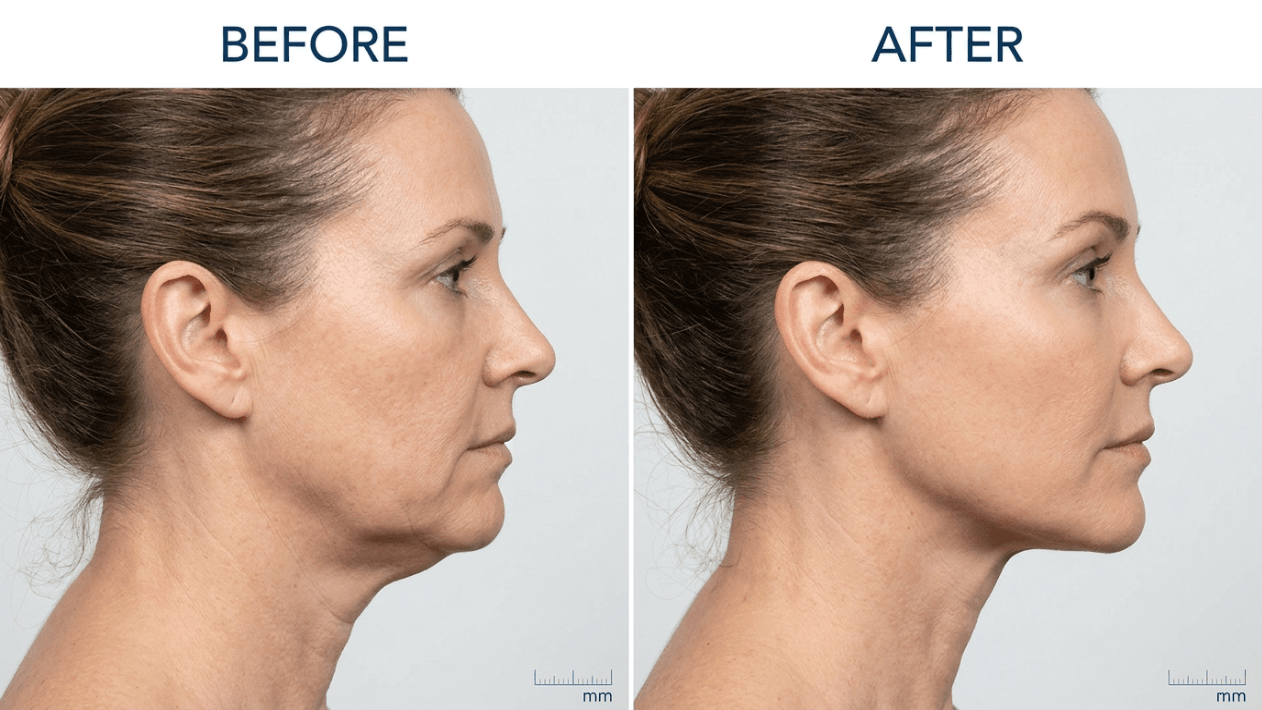
One of the most common misconceptions is that liposuction alone can solve all neck and jawline concerns. However, removing fat without addressing skin laxity can backfire. Here’s why:
- Skin Elasticity Matters: If the skin has lost elasticity (common in older adults or after weight loss), removing fat reduces the volume that was previously “filling out” the skin. This can result in:
- Increased sagging (the skin has nothing to cling to)
- Hollow or “deflated” appearance (unnatural contours)
- Worsened jowls (as the remaining skin sags further).
- The Platysma Muscle’s Role: In cases of severe muscle laxity, the platysma (the broad neck muscle) can separate or weaken, creating vertical bands and a loss of neck definition. Liposuction cannot tighten this muscle—only a neck lift with platysmaplasty can.
When to Combine Liposuction with a Neck Lift
For optimal results, many surgeons recommend combining both procedures in cases where:
- There is both excess fat AND loose skin
- The patient has moderate jowls and a double chin
- Skin elasticity is poor (liposuction alone would not suffice)
How It Works:
- Liposuction is performed first to remove excess fat.
- Neck lift follows to tighten the skin and platysma muscle, ensuring a smooth, defined contour.
Deep Neck Muscle Repair: The Role of Platysmaplasty
The platysma muscle is the key to a youthful, defined neck. When this muscle weakens or separates (a process accelerated by aging, genetics, or weight fluctuations), it creates:
- Vertical “neck bands” (visible when flexing the neck)
- Loss of the sharp jawline-neck transition
- A “turkey neck” appearance (excess skin hanging down).
What Platysmaplasty Achieves
Platysmaplasty is the surgical tightening of the platysma muscle, often performed as part of a neck lift. It can:
- Eliminate vertical neck bands
- Restore a smoother, firmer neck contour
- Enhance the jawline definition
- Prevent future sagging by reinforcing muscle structure.
Techniques Include:
- Medial Platysmaplasty: Tightening the muscle in the midline to correct banding.
- Lateral Platysmaplasty: Tightening the muscle laterally for a more lifted appearance.
- Corset Platysmaplasty: A suturing technique that creates a “corset” effect, pulling the muscle together for a tighter, more sculpted neck.
Non-Surgical Alternatives: When Surgery Isn’t an Option
For those unwilling or unsuitable for surgery, several non-surgical treatments can provide moderate improvements:
| Treatment | Best For | Duration of Results | Downtime |
|---|---|---|---|
| Deoxycholic Acid (Kybella) | Submental fat reduction | Permanent (if weight is maintained) | 10–14 days swelling |
| Botox (Nefertiti Lift) | Vertical neck bands, mild laxity | 3–4 months | Minimal |
| Dermal Fillers | Volume loss, mild skin laxity | 6–12 months | Minimal |
| Ultherapy | Skin tightening via ultrasound | 1–2 years | None |
| Radiofrequency (e.g., Thermage, Morpheus8) | Collagen stimulation | 1–2 years | Minimal |
| CoolSculpting | Fat reduction (less precise than liposuction) | Permanent (if weight is maintained) | Minimal |
Limitations:
- Non-surgical options cannot match the dramatic results of surgery.
- Multiple sessions are often required.
- Results are temporary (except for fat-dissolving injections like Kybella).
Recovery: What to Expect After Each Procedure
| Aspect | Liposuction | Neck Lift | Combined Procedure |
|---|---|---|---|
| Anesthesia | Local (or sedation) | General | General |
| Procedure Time | 30–90 minutes | 2–3 hours | 3–4 hours |
| Hospital Stay | Outpatient | Outpatient (or overnight) | Outpatient (or overnight) |
| Initial Recovery | 3–4 days | 7–10 days | 7–10 days |
| Full Recovery | 2–4 weeks | 4–6 weeks | 4–6 weeks |
| Compression Garment | 1–4 weeks | 4–6 weeks | 4–6 weeks |
| Return to Work | 3–4 days | 2 weeks | 2 weeks |
| Strenuous Activity | 2–4 weeks | 6 weeks | 6 weeks |
| Swelling/Bruising | 10–14 days | 2–3 weeks | 2–3 weeks |
| Final Results | 4–6 weeks | 3–6 months | 3–6 months |
Choosing the Right Procedure: A Step-by-Step Guide
Step 1: Identify Your Primary Concern
| Concern | Best Procedure |
|---|---|
| Excess fat only (good skin elasticity) | Liposuction |
| Loose skin + muscle laxity | Neck Lift |
| Both fat and sagging skin | Liposuction + Neck Lift |
| Mild fat with minimal sagging | Non-surgical (Kybella, Ultherapy) |
| Vertical neck bands | Neck Lift with Platysmaplasty |
Step 2: Consult a Board-Certified Surgeon
A personalized assessment is critical. Your surgeon will:
- Evaluate your skin elasticity, fat distribution, and muscle tone.
- Discuss your aesthetic goals (natural vs. dramatic improvement).
- Recommend the most suitable procedure(s).
- Provide before-and-after examples of similar cases.
Step 3: Consider Long-Term Maintenance
- Liposuction results are permanent (if weight is stable).
- Neck lift results last 5–10+ years but aging continues.
- Non-surgical treatments require maintenance (e.g., repeat Kybella sessions every few years).
Risks and Complications: What to Know Before Proceeding
All procedures carry potential risks, which your surgeon will discuss in detail. Common complications include:
Liposuction Risks
- Contour irregularities (lumps, depressions)
- Skin laxity worsening (if elasticity is poor)
- Nerve damage (temporary numbness)
- Hematoma or seroma (fluid buildup)
- Infection or bleeding (rare).
Neck Lift Risks
- Scarring (though usually well-hidden)
- Skin necrosis (rare, due to poor blood supply)
- Nerve injury (e.g., marginal mandibular nerve, causing temporary weakness)
- Hematoma (more common in neck lifts)
- Asymmetry or overcorrection.
Minimizing Risks
- Choose a board-certified facial plastic or cosmetic surgeon.
- Follow pre- and post-operative instructions carefully.
- Avoid smoking and blood thinners before and after surgery.
- Attend all follow-up appointments for monitoring.
Cost Comparison: Liposuction vs. Neck Lift
| Procedure | Average Cost (USD) | Anesthesia | Recovery Time | Longevity |
|---|---|---|---|---|
| Chin/Neck Liposuction | $2,000–$5,000 | Local/Sedation | 1–2 weeks | Permanent (fat cells) |
| Neck Lift | $5,000–$10,000+ | General | 4–6 weeks | 5–10+ years |
| Combined Procedure | $7,000–$15,000+ | General | 4–6 weeks | 5–10+ years |
| Kybella (Non-Surgical) | $1,000–$3,000 | None | Minimal | Permanent (if weight stable) |
Note: Prices vary based on geographic location, surgeon experience, and facility fees.
Realistic Expectations: What These Procedures Can and Cannot Do
What You Can Expect
✅ Improved jawline definition ✅ Reduction or elimination of a double chin ✅ Tighter, smoother neck skin (with neck lift) ✅ More youthful facial proportions ✅ Boosted self-confidence
What to Avoid Expecting
❌ A completely “new” face (results should look natural and refreshed, not overdone) ❌ Permanent halt to aging (maintenance may be needed over time) ❌ Immediate perfection (swelling can obscure results for weeks to months) ❌ Non-surgical results matching surgery (for severe sagging, surgery is superior)
Patient Testimonials and Before-and-After Results
While individual results vary, most patients report:
- High satisfaction with neck lift outcomes (especially for severe sagging).
- Noticeable improvement in jawline sharpness after liposuction (if skin elasticity is good).
- Combined procedures yielding the most dramatic, natural-looking results.
Before-and-After Examples:
- Liposuction: Best for younger patients with good skin tone—shows a slimmer, more defined neck.
- Neck Lift: Best for older patients with loose skin—shows a tighter, smoother neck and jawline.
- Combined: Ideal for patients with both fat and sagging—shows a completely rejuvenated lower face and neck.
Always review your surgeon’s portfolio of real patient results to gauge their expertise.
Conclusion: Making the Right Choice for Your Goals
Eliminating jowl sagging and a double chin requires a tailored approach based on your unique anatomy and concerns. Here’s a quick recap:
- If your primary issue is fat (with good skin elasticity) → Liposuction is likely sufficient.
- If your primary issue is loose skin and muscle laxity → Neck Lift with Platysmaplasty is the gold standard.
- If you have both fat and sagging → Combining Liposuction + Neck Lift yields the best results.
- If you prefer non-surgical options → Kybella, Ultherapy, or RF treatments can help, but expect modest, temporary improvements.
The most critical step? Consulting a board-certified facial plastic or cosmetic surgeon who can assess your needs and recommend the safest, most effective treatment plan.
Sources
- Solutions For Saggy Neck – Neck Liposuction vs Neck Lift | Centre for Surgery
- Double Chin Surgery: What You Need to Know | Johns Hopkins Medicine
- Chin Liposuction vs Neck Lift | Cadogan Clinic
- Neck Lift & Neck Liposuction Guide | American Board of Cosmetic Surgery
- Neck Lift vs. Chin Lipo: Your Guide to a Defined Jawline | Estethica
- Achieve a Defined Jawline: Neck Lift vs. Chin Lipo | Becker Plastic Surgery
- Jowl & Neck Liposuction: When Liposuction Alone Defines the Jawline | Dr. Robert Troell
- Platysmal Bands: Causes, Symptoms and Treatments | Cadogan Clinic