
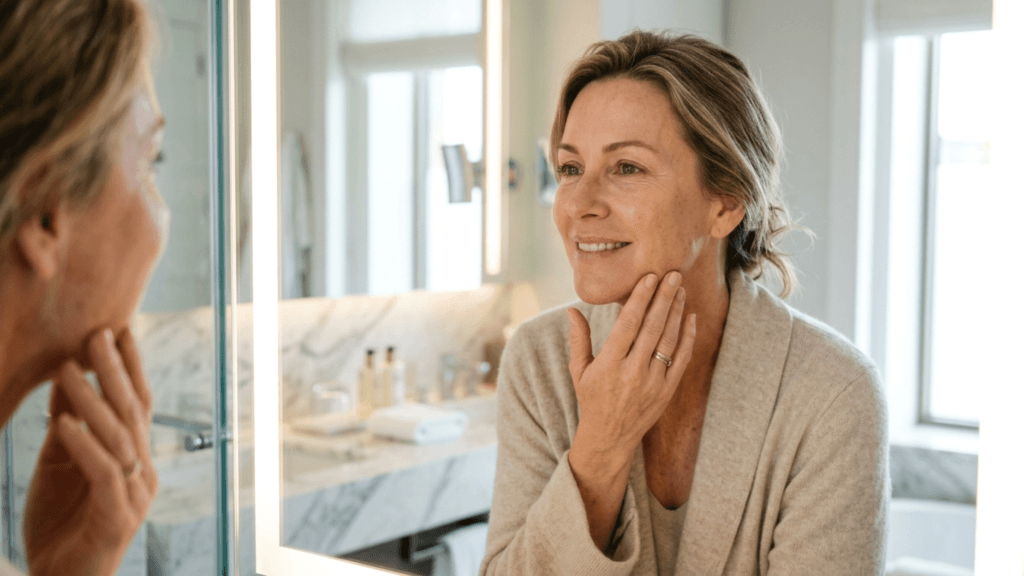
You wake up on day three after your facelift in Antalya. One cheek feels tight, warm, and strangely firm. The other side looks normal. Your mind races: is this the 1–3% hematoma statistic you read about, or just asymmetric swelling that every surgeon calls ‘normal’? The clock is ticking. In Turkey, you are 3,000 kilometers from your London GP. The hospital where you had surgery is a 20-minute drive away, but the surgeon who operated on you is not in the next room—he is at his clinic, reachable only through a WhatsApp number your coordinator Fatma gave you.
This guide gives you a clear, jargon-free decision framework for every phase of recovery. You will learn exactly which symptoms belong to the normal healing timeline and which demand an immediate message to Dr. Berat—organized by day, with specific photo thresholds and escalation contacts. No guesswork. No middle-of-the-night panic. Just a protocol you can follow when you are alone in a hotel room wondering if that purple patch is a bruise or a bleed. When to worry after facelift stops being a question and becomes a checklist you can trust.
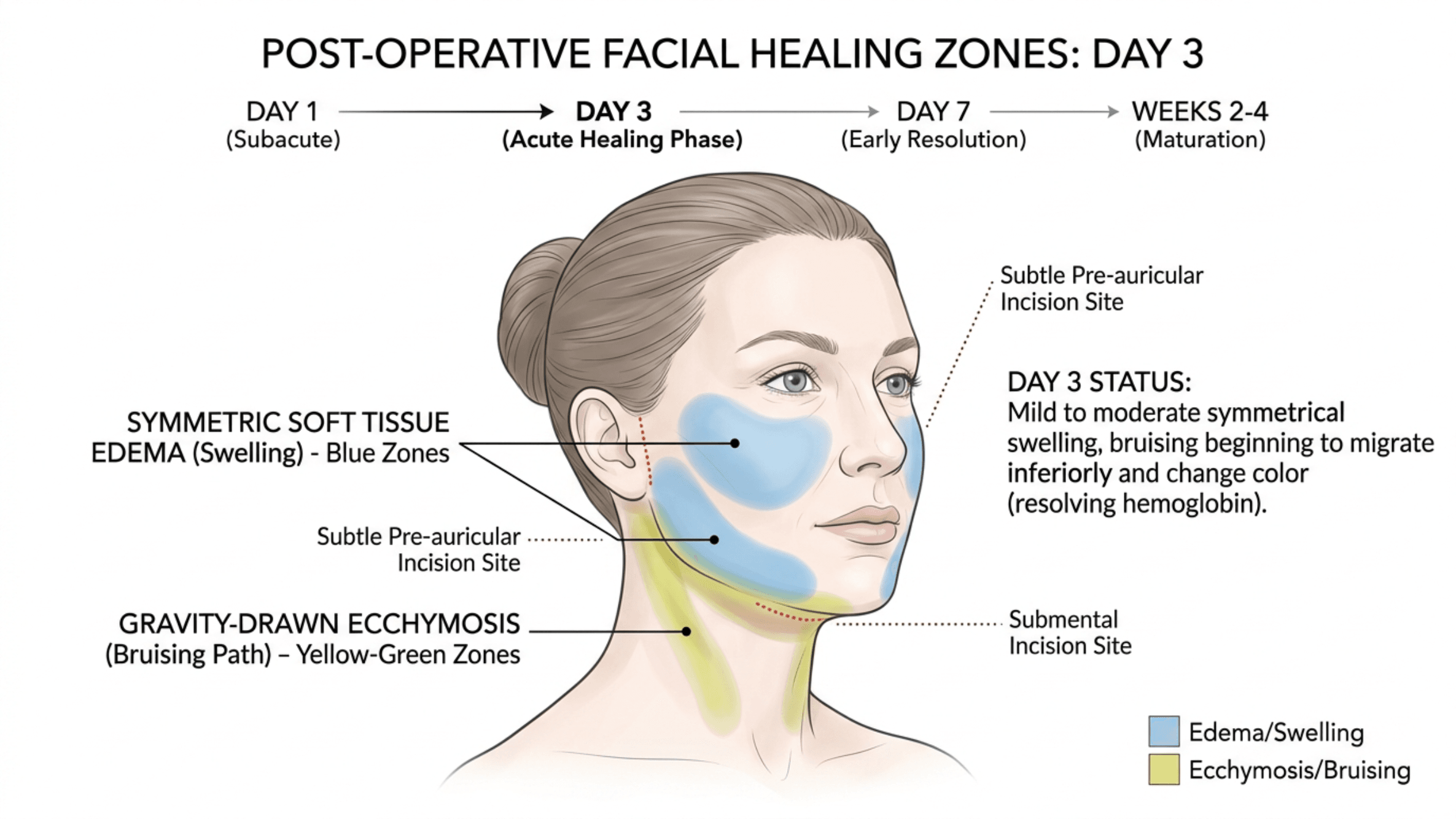
Table of Contents
Days 1–3: The Acute Phase – What Every Patient Feels
The first 72 hours are brutal by design. Your face has been dissected, lifted, and sutured. Swelling peaks around day three. Bruising blooms purple across the cheeks, jawline, and often drifts down the neck by gravity. You will feel tightness—as if a rubber band wraps your lower face. Numbness around the ears and cheeks is universal. Mild to moderate pain rates 3–4 out of 10 and responds to prescribed analgesics. Drains, if placed, collect serosanguinous fluid that turns from red to pink. All of this is expected.
Normal Signs You Can Safely Ignore
Symmetric puffiness that feels soft and doughy. Bruising that darkens then lightens uniformly on both sides. Incisional oozing of clear-pink fluid that stops with gentle pressure. Temperature up to 37.5 °C (99.5 °F) in the evening. Throat soreness from the intubation tube. Inability to smile fully or puff cheeks. These resolve without intervention.
Red Flags That Require Dr. Berat Within 2 Hours
Sudden, sharp, one-sided pain that jumps to 6/10 or higher—especially if it wakes you from sleep. Asymmetric swelling that visibly expands while you watch it in the mirror. A firm, tense mass under the skin on one cheek that does not compress. Skin turning deep purple, bruised black, or dusky grey on one side only. Active bleeding from an incision that soaks a gauze pad in under 15 minutes. Fever ≥38 °C (100.4 °F) with chills. Any of these: photograph the area in good light, note the time, and message Dr. Berat on WhatsApp (+90 531 818 20 81) immediately. Do not wait for morning.
Days 4–7: The Transition Window – Suture Removal and the First Reality Check
By day four, peak swelling has passed. Bruising shifts from purple to green-yellow at the edges. Drains are usually removed. You see your face without bandages for the first time—often a shock. The reflection looks swollen, bruised, and “not you.” This is normal. Sutures along the hairline and behind the ears come out between day 7 and 10. Numbness persists. Tightness eases slightly when you keep your head elevated at 30 degrees.
Normal Signs That Still Look Alarming
Residual bruising tracking down the neck and onto the upper chest—this is gravity moving old blood. A “double chin” appearance from dependent edema. Incisional lines that look pink, raised, or slightly gaping at the ends. Ear lobes that feel stuck or pulled. Tingling or electric-shock sensations when you turn your head—nerves waking up. All of these improve weekly without treatment.
Red Flags That Mean Infection or Delayed Hematoma
Spreading redness around an incision that extends more than 1 cm beyond the suture line. Warmth you can feel with the back of your hand. Yellow-green pus or foul-smelling discharge. Fever ≥38 °C that persists beyond 4 hours despite antipyretics. Sudden return of one-sided swelling after it had been improving. Skin edges turning black or grey (necrosis). New onset facial weakness—asymmetrical smile, inability to close one eye, drooping mouth corner. These are not normal. Send a close-up photo to Dr. Berat via WhatsApp and email (info@drberatplasticsurgery.com) with the subject line “URGENT: Post-op Day X – [Symptom].”
Weeks 2–4: The Social Recovery Phase – When Asymmetry Becomes Noticeable
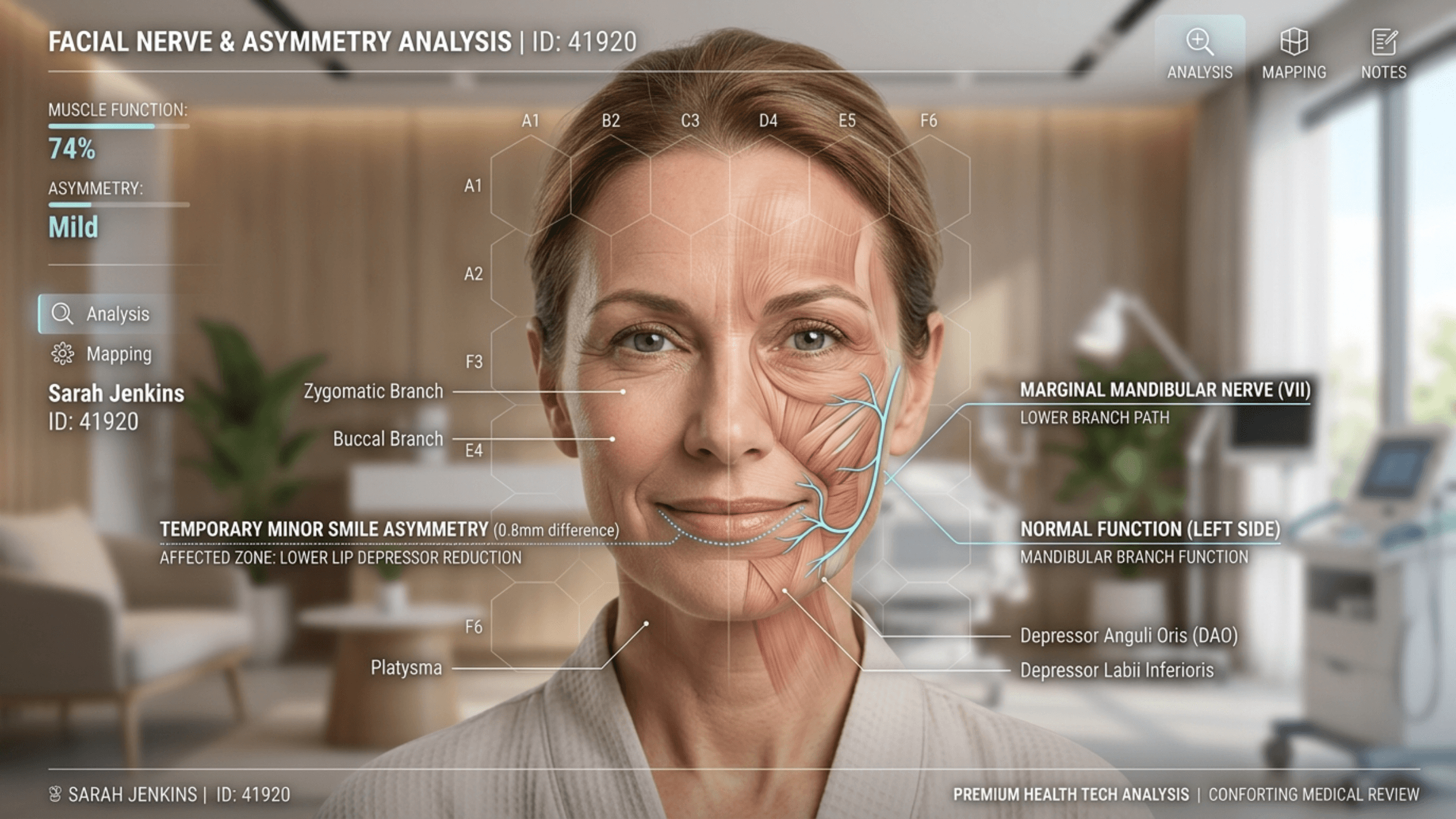
By week two, 50–60% of swelling has resolved. You can cover residual bruising with concealer. Most patients feel comfortable on video calls. However, this is the phase where persistent asymmetry triggers the most anxiety. One side of the face often heals faster. The smile may look crooked. One jawline looks sharper. One ear feels tighter. The critical question: is this temporary nerve neuropraxia or a structural problem?
Normal Asymmetry That Resolves in 8–12 Weeks
Slightly different swelling resolution rates between sides. Temporary weakness of the marginal mandibular branch causing a subtle smile asymmetry that improves weekly. Numbness that gradually recedes from the cheek toward the ear. Incisional firmness (cording) that softens with time. Scar lines that remain pink and slightly raised. These are the fingerprints of healing—not complications.
Red Flags That Warrant a Scheduled Video Consult
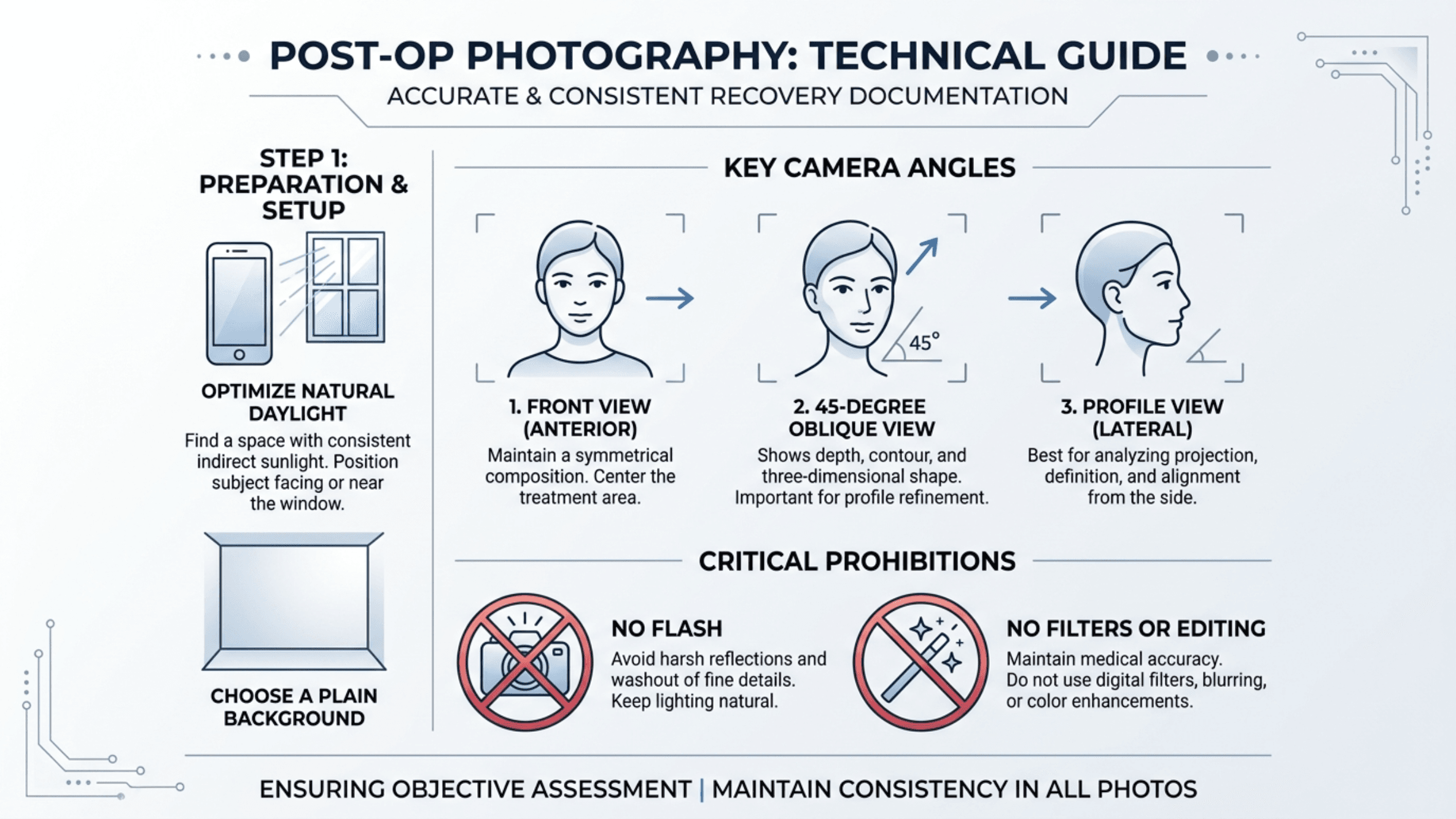
Asymmetry that worsens after week 3 rather than improving. A visible step-off or depression along the jawline on one side. Persistent inability to elevate the corner of the mouth on one side at week 4. A palpable cord or band that tethers the skin and limits neck rotation. Incisional widening beyond 3 mm. New area of numbness that expands rather than shrinks. These are not emergencies, but they require Dr. Berat’s eyes. Schedule a WhatsApp video call through Fatma. Send three photos beforehand: front, 45-degree oblique, and profile—each in even lighting, no filters.

Months 1–3: The Remodeling Phase – Scars, Sensation, and Final Contours
The dramatic swelling is gone. You look like yourself—refreshed. But the remodeling continues. Collagen reorganizes. Scars mature from pink to white. Nerves regenerate at 1 mm per day. This is the phase where patients either forget they had surgery or fixate on a residual imperfection. Knowing the timeline prevents unnecessary revision requests.
Normal Late-Phase Phenomena
Scars that remain slightly pink at 3 months (full maturation takes 12–18 months). Intermittent “zingers” or brief electric sensations along the jawline. Mild firmness deep to the incision that softens with massage. Asymmetry of <2 mm at rest that disappears with animation. Occasional morning puffiness that resolves with upright posture. These are signs of active remodeling, not failure.
Red Flags That Indicate Late Complications
Scar hypertrophy or keloid formation (raised, red, itchy, growing beyond the incision line). Persistent facial weakness at 3 months with no monthly improvement. A new lump or cyst along the suture line. Chronic seroma—fluctuant swelling that reappears after aspiration. Skin tethering that distorts the smile or neck contour. Progressive volume loss on one side suggesting fat necrosis. These require an in-person or detailed virtual review. Dr. Berat evaluates these at the 3-month mark routinely, but if you notice them earlier, contact Fatma to advance the appointment.
Decision Matrix: Normal Healing vs. Red Flags at a Glance
Use this table as your bedside reference. Screenshot it. Save it to your phone. When doubt creeps in at 2 AM, you have a framework.
| Symptom | Normal Healing (Wait & Watch) | Red Flag (Contact Dr. Berat Now) | Action Threshold |
|---|---|---|---|
| Swelling | Symmetric, soft, peaks day 3, improves weekly | Sudden one-sided expansion, firm/tense, visible growth in minutes | WhatsApp photo + call within 2 hours |
| Pain | 3–4/10, bilateral, responds to meds, decreases daily | Sharp 6+/10 one-sided, wakes from sleep, unrelieved by prescribed analgesia | Immediate WhatsApp message |
| Bruising | Purple → green → yellow, symmetric, drifts down neck | Deep purple/black on one side only, expanding borders | Photo to WhatsApp within 1 hour |
| Incision | Pink, slight ooze day 1–2, edges approximate | Gap >2 mm, black/grey edges, pus, spreading redness >1 cm | Photo + email “URGENT” subject line |
| Fever | ≤37.5 °C evening only, resolves with antipyretics | ≥38 °C persistent >4 hrs, with chills or rigors | Call surgeon immediately |
| Numbness | Cheeks, ears, resolves centripetally over weeks | New expanding numb patch, or no improvement by week 6 | Schedule video consult |
| Asymmetry | Mild, improves monthly, <2 mm at 3 months | Worsening after week 3, visible step-off, smile distortion at rest | 3 photos to Fatma for triage |
| Drain Output | Red → pink → clear, <30 ml/24h by day 3 | Sudden increase >50 ml, bright red, or foul odor | Photo drain bulb + message |
Escalation Protocol for Dr. Berat’s Patients: Exact Steps
Medical tourism adds a layer of complexity: you cannot walk into a follow-up clinic tomorrow. Dr. Berat’s practice operates on a structured communication ladder. Follow it exactly. Fatma, the patient coordinator (Dr. Berat’s wife), is your first touchpoint for triage. She speaks fluent English, manages the WhatsApp line, and knows every post-op nuance.
Step 1: Assess and Document (2 Minutes)
Stand in natural daylight or a well-lit bathroom. Take three photos: front face, 45-degree oblique of the concerned side, and close-up of the specific symptom (incision, swelling, bruise). Include a ruler or coin for scale if possible. Note the exact time, pain score (1–10), and temperature if you have a thermometer.
Step 2: Message Fatma on WhatsApp (+90 531 818 20 81)
Send the photos with this template: “Post-op Day X – [Symptom] – Pain Y/10 – Temp Z °C – Concern: [one sentence].” Fatma triages within 15 minutes during waking hours (08:00–22:00 Turkey time, UTC+3). Outside those hours, she forwards to Dr. Berat’s direct line for true emergencies (hematoma, airway, vision change).
Step 3: Escalate to Email for Documentation
Forward the same photos and notes to info@drberatplasticsurgery.com with subject line: “URGENT: Post-op Day X – [Symptom] – Patient [Your Full Name].” This creates a timestamped medical record. Dr. Berat reviews emails twice daily and responds with a plan: reassurance, medication adjustment, or come to clinic/hospital.
Step 4: Video Consult if Indicated
Fatma schedules a WhatsApp or Zoom call within 24 hours for non-emergent concerns (asymmetry, scar quality, sensory changes). Have your photos ready. Dr. Berat will guide you through specific maneuvers: smile, frown, puff cheeks, turn head. He may prescribe topical silicone, steroid tape, or a short course of antibiotics remotely.
Step 5: In-Person Evaluation at the JCI-Accredited Hospital
If Dr. Berat requests an in-person visit, Fatma arranges transport to the hospital (Memorial or Yaşam, both JCI-accredited). You are seen by Dr. Berat or his registered associate within 2 hours of arrival. No waiting rooms. No language barriers. The hospital has your file, imaging capability, and OR access if hematoma evacuation is needed.
The “Stranded” Fear: Why This Protocol Exists
International patients consistently rank “being far from my surgeon if something goes wrong” as their number-one anxiety. Dr. Berat designed this protocol after 15 years of medical tourism practice. The data: 94% of post-op concerns resolve with a photo review and message. Only 6% require a video call. Less than 1% require an unplanned hospital visit. The protocol exists so you never guess. You always know the next step.
Contrast this with the typical experience: a patient in London notices one-sided swelling at 11 PM. They email a generic clinic address. No reply until morning. They Google “facial hematoma” and panic. They go to A&E, where no one knows their surgery details. Dr. Berat’s patients send a WhatsApp. Fatma replies in minutes. Dr. Berat sees the photo. A plan exists before the patient finishes their tea.
This is not marketing. This is the operational reality of a board-certified plastic surgeon (ISAPS member, Turkish Plastic Surgery Association, Health Tourism Authorization Certificate) who performs 200+ facelifts annually in JCI-accredited hospitals with a dedicated coordinator, private nursing options, and a 24/7 reachability commitment for the first 72 hours post-op.
Photo Thresholds: What to Capture and When
Not every symptom needs a photo. This checklist tells you exactly when to pull out your phone.
- Days 1–3: Any one-sided change (swelling, bruise, pain, bleeding). Photo every 4 hours if a red flag appears.
- Days 4–7: Incisional redness spreading >1 cm, any discharge, new asymmetry. Daily front/oblique photos until resolved.
- Weeks 2–4: Smile asymmetry, scar widening, new lump, sensory change. Weekly triplet (front, oblique, profile) for Dr. Berat’s 2-week and 1-month virtual reviews.
- Months 1–3: Scar hypertrophy, persistent weakness, contour irregularity. Monthly triplet photos for the 3-month milestone review.
Lighting matters. Face a window at midday. No flash. No filters. Hold the phone at eye level. Capture the ears and neck in frame. Send as original resolution (not compressed).
When to Bypass the Protocol and Go Straight to ER
Certain symptoms transcend the surgeon-contact ladder. These are life-threatening. Do not WhatsApp. Do not email. Call 112 (Turkey emergency) or go to the nearest emergency department.
- Sudden vision loss or double vision in either eye.
- Difficulty breathing, swallowing, or speaking.
- Chest pain, calf swelling/pain, or sudden shortness of breath (pulmonary embolism / DVT).
- Confusion, severe headache, facial drooping with slurred speech (stroke signs).
- Active arterial bleeding (pulsatile) from the neck or face.
After stabilization, notify Fatma so Dr. Berat can coordinate with the ER team. The hospital has your surgical notes on file.
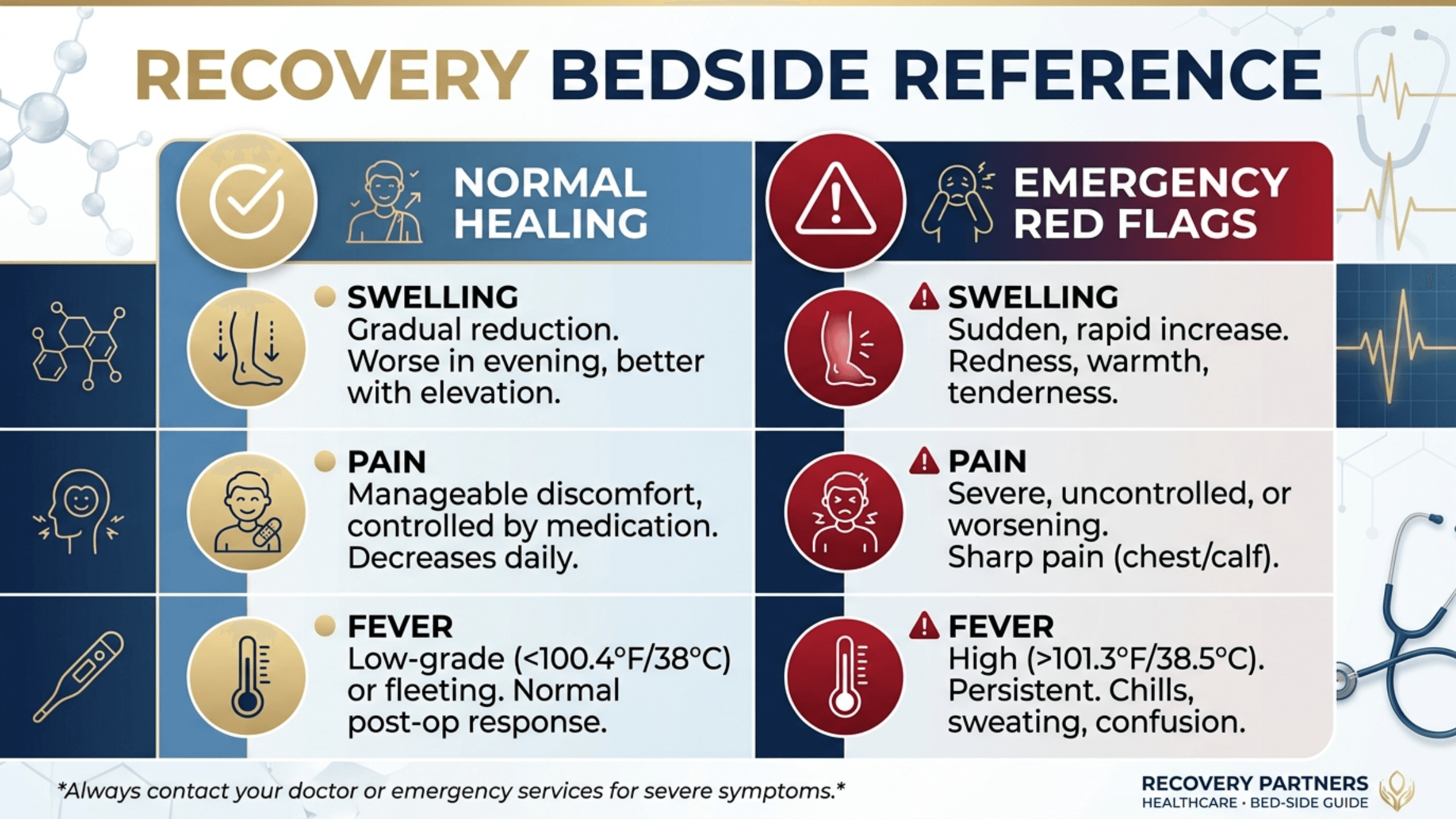
Action Plan: Your 7-Step Recovery Safety Checklist
Print this. Tape it to your hotel mirror. Follow it daily.
- Save contacts now: WhatsApp +90 531 818 20 81 (Fatma), email info@drberatplasticsurgery.com, hospital address from your discharge packet.
- Photograph baseline: Day 1 front/oblique/profile in good light. This is your comparison reference.
- Check symmetry twice daily: Morning and evening mirror check. Compare both sides. Note changes.
- Measure temperature: Every evening days 1–7. Record. Fever ≥38 °C triggers Step 5.
- Score pain: 1–10 scale at rest and with movement. Sudden jump >2 points on one side triggers Step 5.
- Escalate per protocol: Red flag → WhatsApp photos + template → Email “URGENT” → Await plan (15 min day, 60 min night).
- Attend virtual reviews: Day 7, Day 14, Month 1, Month 3 with triplet photos sent 24 hours prior.
This checklist transforms anxiety into protocol. You are not stranded. You are monitored.
Your Next Step: Secure the Safety Net Before You Travel
Recovery confidence starts before surgery. Confirm your WhatsApp line with Fatma during your pre-op consultation. Test the photo upload. Save the emergency numbers. Verify your hotel has reliable Wi-Fi. The protocol only works if the channel is open.
If you are researching facelift options and want a surgeon who builds this level of post-op infrastructure into every case, schedule a consultation with Dr. Berat. The first conversation is free. The peace of mind lasts through every recovery day.
What are the most dangerous warning signs after a facelift in the first 72 hours?
Sudden one-sided pain above 6/10, asymmetric swelling that visibly expands in minutes, a firm tense mass under the skin on one cheek, deep purple or black skin discoloration on one side only, active bleeding soaking gauze in under 15 minutes, or fever ≥38 °C with chills. These require immediate surgeon contact via WhatsApp.
How do I know if my facelift swelling is normal or a hematoma?
Normal swelling is symmetric, soft, doughy, peaks around day 3, and improves weekly. Hematoma presents as sudden one-sided firm tense swelling with sharp pain, often with dusky purple skin discoloration. If swelling visibly grows while you watch it, message your surgeon immediately with photos.
When should I worry about asymmetry after facelift surgery?
Mild asymmetry that improves monthly is normal. Worry if asymmetry worsens after week 3, if there is a visible step-off along the jawline, if one corner of the mouth cannot elevate at week 4, or if new numbness expands rather than recedes. These warrant a scheduled video consult with photos.
What are the signs of infection after a facelift?
Spreading redness >1 cm beyond the incision line, warmth to touch, yellow-green or foul-smelling discharge, fever ≥38 °C persisting >4 hours, or black/grey skin edges. Send close-up photos to your surgeon via WhatsApp and email with “URGENT” subject line immediately.
How do I contact Dr. Berat after my facelift in Turkey if I have a concern?
WhatsApp Fatma at +90 531 818 20 81 with photos and the template: “Post-op Day X – Symptom – Pain Y/10 – Temp Z °C.” She triages within 15 minutes (08:00–22:00 UTC+3). For documentation, also email info@drberatplasticsurgery.com with subject “URGENT: Post-op Day X – Symptom – Your Name.”
What photos should I send to my surgeon for a post-op concern?
Three photos in natural daylight, no flash, no filters: front face, 45-degree oblique of the concerned side, and close-up of the specific symptom. Include a ruler or coin for scale. Send as original resolution. Capture ears and neck in frame for context.
When should I go to the ER instead of contacting my surgeon after facelift?
Go directly to ER for: sudden vision loss or double vision, difficulty breathing/swallowing/speaking, chest pain or calf pain with shortness of breath, confusion/severe headache/facial drooping with slurred speech, or pulsatile arterial bleeding from the face or neck. Call 112 in Turkey.
How long does it take for facelift numbness to go away?
Numbness around the ears and cheeks is universal and resolves centripetally over 8–12 weeks as nerves regenerate at ~1 mm per day. Intermittent electric “zingers” signal recovery. If a new numb patch appears or expands after week 6, contact your surgeon for evaluation.