

Why do most patients spend twice the money, endure two separate recoveries, and delay their transformation by over a year when they could reshape their entire face in a single surgical session? The answer lies in a persistent myth: that combining major facial procedures increases risk beyond acceptable limits. Data from the International Society of Aesthetic Plastic Surgery tells a different story. When a qualified, board-certified surgeon performs a combined facelift with rhinoplasty, the total anesthesia duration actually decreases compared to two separate surgeries, and recovery compresses dramatically. Patients wake up once, heal once, and reveal their new face once.
A combined facelift rhinoplasty is not a shortcut. It is a deliberate, precision-driven strategy for patients who want total facial harmony rather than isolated corrections. When your nose dominates your profile and sagging skin ages your lower face, fixing one without the other leaves an unsettling imbalance. Addressing both in Antalya—under the care of a surgeon who plans your proportions as an artist would compose a portrait—delivers results that two isolated surgeries simply cannot match. This guide lays out the exact surgical sequencing, anesthesia realties, true cost savings, and combined recovery timeline so you can make your decision with absolute clarity.

Table of Contents
The Case for Single-Session Facial Transformation
Most plastic surgery practices treat the face in fragments. You visit a facial plastic surgeon for your nose, then seek a separate consultation for aging skin. Each surgeon operates within their narrow specialty, and nobody evaluates how your nose integrates with your jawline or how your mid-face volume influences nasal proportions. This fragmented approach creates a critical problem: without single-session facial transformation, your results compete against each other visually.
Consider this reality. A patient undergoes an aggressive rhinoplasty that dramatically narrows the nasal bridge. Six months later, a facelift tightens the lower face but leaves the mid-face appearing hollow because the nose reduction already removed structural volume. The face now looks disjointed—each procedure imposed its own logic without awareness of the other. A combined facelift rhinoplasty eliminates this gamble entirely because one surgeon, one plan, and one aesthetic vision governs every incision.
The Proportion Illusion: Why Isolated Procedures Fail the Face
The human eye detects facial harmony within 200 milliseconds—long before it registers individual features. Your brain does not process a nose, then a jawline, then cheeks. It processes the entire facial architecture as a single composition. A surgeon who reduces your nasal tip without simultaneously addressing the mid-face support risks creating a visible tension between features. The nose appears to float without adequate foundation, and the result screams surgery rather than natural beauty.
Dr. Berat Çiğdem brings a rare credential to this challenge: a background in award-winning painting and fine arts. His artistic training means he evaluates your face the way a portrait artist does—measuring the interplay of light, shadow, volume, and proportion. When he performs a rhinoplasty alongside a facelift, the two procedures share a unified proportion plan. Your nasal bridge reduction anchors to your mid-face repositioning, and the result reads as a single, coherent face.
What Single-Session Transformation Actually Means
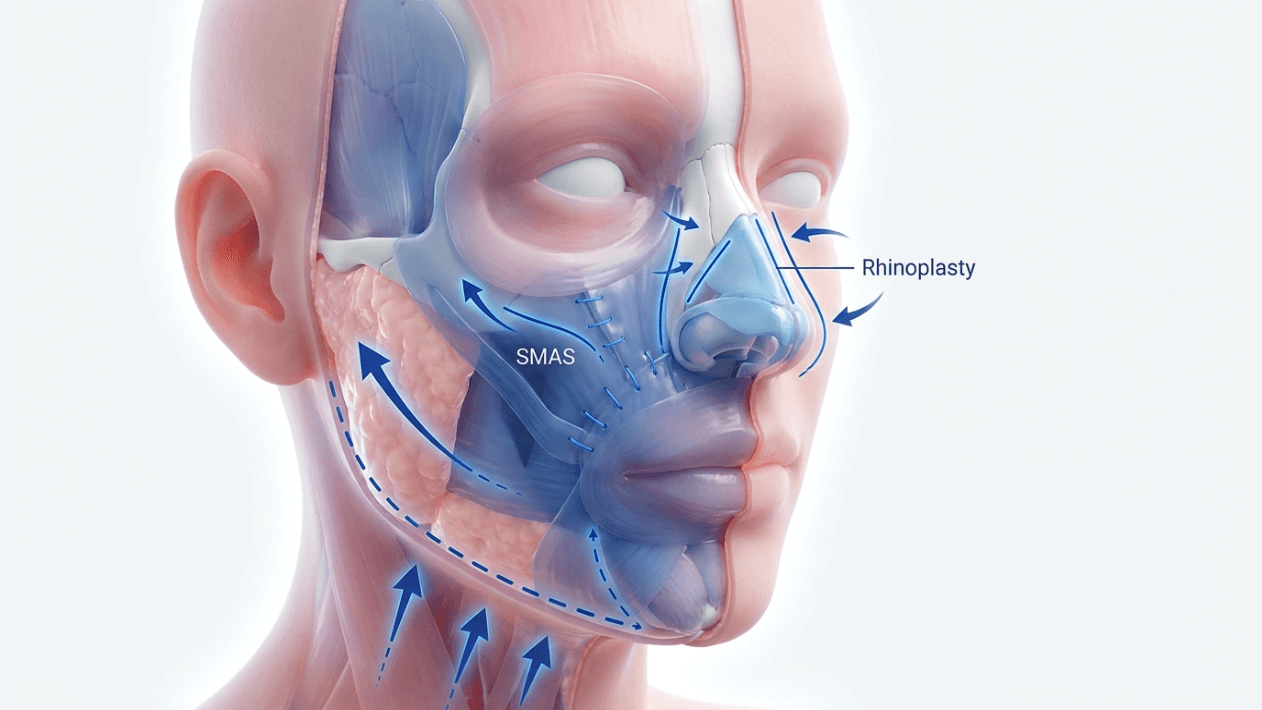
A single-session facial transformation means you undergo one pre-operative assessment, one intubation, one period of anesthesia, and one recovery arc. The surgeon maps every change on your face before the first incision, ensuring that each structural adjustment supports the next. Your nasal framework establishes new midline proportions, and your deep plane facelift uses those updated proportions to guide tissue repositioning across the lower and mid-face.
This unified approach carries a specific clinical advantage. When tissue is mobilized for a deep plane facelift, the adjacent nasal structures become accessible without additional dissection. The surgeon works through natural tissue planes that already communicate anatomically. This means less total undermining of tissue, less surface trauma, and a more predictable healing trajectory than two separate operations performed months apart.
Surgical Sequencing: The Critical Order That Determines Your Result
Sequence matters more than most patients realize. A combined facelift rhinoplasty performed in the wrong order can undermine both procedures. Rhinoplasty must precede the facelift because the nasal work accesses deep structures first, and the facelift tissue repositioning must accommodate the new nasal contours—not fight against old ones.
Phase One: Rhinoplasty Establishes the Central Anchor
The nose commands your facial midline. Every other proportion—the distance between your cheekbones, the definition of your jawline, the width of your mid-face—radiates outward from this central structure. When surgical sequencing begins with septorhinoplasty, the surgeon sets the architectural anchor for the entire face before addressing peripheral aging.
Closed or open septorhinoplasty takes approximately 2 to 3 hours depending on complexity. The hump reduction, tip refinement, and septal correction establish new nasal proportions. During this phase, the surgeon also harvests septal cartilage if structural grafting supports the facelift portion—specifically for tip support or mid-face reinforcement. This cartilage banking occurs before any facelift incisions, ensuring pristine graft material free from surgical field contamination.
Phase Two: Deep Plane Facelift Adapts to New Proportions
With the nasal structure finalized, the deep plane facelift proceeds using the newly established midline as its proportion guide. The SMAS layer—connective tissue sheet beneath facial fat—receives precise repositioning. Because the nose now sits at its final dimension, the surgeon can adjust mid-face tension to complement rather than distort the nasal contours.
The facelift portion requires approximately 3 to 4 hours. Incisions trace the temporal hairline, continue around the ear, and tuck into the postauricular crease. Dr. Çiğdem’s deep plane technique releases the zygomaticocutaneous ligaments and repositions tissue as a unified sheet rather than pulling skin tight. This prevents the windswept appearance patients fear and preserves natural expression. The temporal lift component can be incorporated to address lateral brow descent if the treatment plan calls for it.
Phase Three: Closure and Integration
The final phase involves meticulous layered closure. The deep plane sutures secure tissue at its new position, and the skin drapes without tension. This tension-free closure is what prevents visible scarring and preserves hair follicles along the incision line. Nasal incisions close with fine sutures that typically dissolve within a week, and splint application protects the newly positioned nasal framework.
At this point, the nose and lower face exist in intentional proportion rather than accidental adjacency. The surgical sequencing has ensured that every structural decision made during the rhinoplasty directly informed every tissue repositioning during the facelift—a level of integration impossible when procedures happen months apart.
Total Anesthesia Duration: The Safety Myth Exploded
Patients often assume that combining procedures maximizes anesthesia exposure. The numerical reality contradicts this fear. Total anesthesia duration for a combined facelift rhinoplasty ranges between 5 and 7 hours. Performing these procedures separately requires two inductions, two intubations, and two emergence sequences—each carrying its own risk profile.
Anesthesia Math: Combined versus Separate
When you undergo two separate surgeries, the cumulative anesthesia time increases because each session includes preparation time that a combined session eliminates. Intubation alone adds 15 to 20 minutes per session. Recovery room time, hemodynamic fluctuation during induction, and the physiological stress of two separate fasting periods compound the total burden on your body.
| Metric | Combined Surgery | Separate Surgeries |
|---|---|---|
| Total Anesthesia Duration | 5–7 hours (single session) | 3.5 hrs + 4.5 hrs = 8+ hours cumulative |
| Intubation Events | 1 | 2 |
| Fasting Periods | 1 | 2 |
| Recovery Room Admissions | 1 | 2 |
| Time Between Procedures | 0 | 6–12 months |
| Total Travel Requirements | 1 trip | 2 trips |
The data reveals a counterintuitive truth. A single 6-hour anesthetic under controlled conditions places less cumulative physiological stress on the body than two separate 3.5 to 4.5 hour surgeries six months apart. Each intubation irritates airway tissue. Each fasting period depletes glycogen stores. Every recovery room admission exposes the patient to different nursing teams and monitoring standards. Consolidation compresses risk rather than amplifying it.
Monitoring Protocols for Extended Procedures
Antalya facilities with JCI accreditation maintain board-certified anesthesiologists throughout procedures exceeding 5 hours. Continuous hemodynamic monitoring, arterial blood gas sampling, and temperature regulation protocols ensure physiological stability. Dr. Berat Çiğdem operates exclusively in hospitals meeting international surgical safety standards with dedicated anesthesia teams present from induction through extubation.
Temperature management proves especially critical during extended cases. Hypothermia increases infection risk and delays drug metabolism. Warm forced-air blankets, warmed IV fluids, and ambient operating room temperature control maintain normothermia throughout the combined procedure. These measures become standard once total anesthesia duration exceeds 4 hours, and Antalya hospitals equipped for combined facial procedures deploy them routinely.

Cost Savings of Combined Procedures: Your Financial Advantage
The financial comparison between a combined procedure and separate surgeries reveals savings that most patients underestimate. A combined facelift rhinoplasty in Antalya eliminates duplicate costs that accumulate invisibly when you schedule two independent operations. Hospital facility fees, anesthesia setup charges, pre-operative blood work, accommodation between stages—each category bleeds your budget when procedures remain separate.
Breaking Down the Numbers
Consider the component costs. A standalone facelift in the United Kingdom typically ranges between £8,000 and £15,000. A rhinoplasty adds £6,000 to £10,000. Performed separately, you face two hospital fees, two anesthesia charges, two sets of preoperative tests, two recovery periods requiring time off work, and potentially two flights if pursuing surgery abroad. The combined total easily reaches £20,000 to £35,000 when accounting for all incidental expenses.
| Cost Component | Separate Surgeries (UK) | Combined in Antalya |
|---|---|---|
| Surgeon Fees | £14,000–£25,000 | £7,500–£12,000 |
| Hospital/Anesthesia Fees | £4,000–£6,000 (x2) | £3,500–£5,500 (x1) |
| Pre-operative Testing | £500 (x2) | £400 (x1) |
| Flights and Accommodation | 2 round trips required | 1 round trip |
| Lost Income (2 recoveries) | 6–8 weeks cumulative | 3–4 weeks total |
| Estimated Total | £24,000–£40,000+ | £8,500–£14,500 all-inclusive |
The cost savings combined procedures offer can reach 50 to 65 percent when you choose Antalya over your home country. This is not a discount reflected in compromised quality—it represents the fundamentally different cost structure of Turkish healthcare, where operating room expenses, specialist fees, and pharmaceutical costs run at a fraction of Western European rates without sacrificing clinical standards.
What the Antalya Combined Package Actually Includes
An Antalya combined package for facelift with rhinoplasty typically covers: surgeon fees for both procedures, all anesthesia costs, hospital operating room charges, one to two nights of hospital stay, medications used during your stay, all post-operative garments including nasal splint and facial compression wrap, and a comprehensive follow-up schedule before your departure. Dr. Berat Plastic Surgery provides all-inclusive pricing during your consultation—no hidden administrative fees, no surprise pathology charges.
International patients receive dedicated coordination from Fatma Çiğdem, Dr. Berat’s wife and patient coordinator. She manages hotel recommendations, airport transfers, pharmacy runs, and every logistical detail that would otherwise create anxiety for a patient recovering far from home. This personal coordination layer—impossible at a high-volume clinic that treats you as a booking number—distinguishes the Antalya experience and explains why patients consistently cite the support system in their reviews.
Combined Recovery Timeline: Healing Once Instead of Twice
Recovery represents where combined surgery delivers its most underestimated advantage. Separate procedures force you through two full recovery arcs—each with its own swelling peak, bruising period, and scar maturation phase. The combined recovery timeline does not simply add two timelines together; overlapping healing processes create a compressed arc shorter than the sum of two separate recoveries.
Days 1 through 3: Maximum Inflammation, Maximum Support
The first 72 hours present the most intense swelling and bruising. You wear a nasal splint and facial compression garment simultaneously. Cold compresses applied around the eyes reduce periorbital edema from both the rhinoplasty and facelift. Head elevation at 45 degrees must remain constant—even while sleeping—to minimize gravitational fluid accumulation.
Breathing through your nose proves difficult during this window due to internal nasal splints and mucosal swelling. A humidifier at bedside, saline nasal spray, and prescribed decongestant medication manage this discomfort. Patients who attempt facelift recovery without rhinoplasty-specific nasal care—or vice versa—miss this integrated postoperative management that a combined plan necessarily includes.
Weeks 1 through 2: Transition and Early Social Readiness
By day 7, surgical drains (if placed) come out, and most external sutures dissolve or receive removal. The nasal splint typically stays for 10 to 14 days—protecting the reshaped bridge while initial bony remodeling begins. Facial swelling transitions from diffuse to localized, concentrating around the jawline and nasal tip. This marks the point where patients begin to recognize their emerging new proportions.
Most international patients depart Antalya between day 10 and day 14, once their initial follow-up confirms normal healing progression. Fatma coordinates the departure timeline with the surgical team, ensuring your flight home does not conflict with critical wound checks. You travel with detailed written instructions, a medication supply, and emergency contact access via WhatsApp.
Weeks 3 through 8: Refinement and Final Settlement
Residual swelling resolves unevenly. Your nasal tip may retain puffiness longer than expected—sometimes up to 6 months—while your facelift result becomes visible from week 3 onward. This asymmetrical resolution is normal and requires patience. Dr. Çiğdem schedules video consultations at 1-month and 3-month intervals for international patients, monitoring progress remotely and intervening only if a concern arises.
Physical activity resumes progressively. Walking begins immediately. Light cardio returns at week 3. Full exercise and heavy lifting return at week 6 to 8, depending on individual healing speed. Sun protection on all incision lines remains mandatory for 6 months minimum—pigmentation on recovering scars creates permanent visibility if UV exposure occurs during this vulnerable window.
Facial Harmony Through Single Surgery: The Artistic Dimension
Technical excellence alone cannot produce facial harmony through single surgery. A surgeon who memorizes anatomical landmarks but cannot perceive proportional relationships will produce technically correct results that fail the aesthetic test. The face requires an artist’s judgment—not just a technician’s precision.
What Art Training Brings to Surgical Planning
Dr. Berat Çiğdem’s award-winning background in painting directly informs his approach to combined facial surgery. A trained artist understands that reducing a nose by 2 millimeters at the bridge changes how the eye interprets cheekbone projection, jawline definition, and photic shadow distribution across the entire face. Without this perceptual framework, a surgeon reduces the hump because the patient requested it—without accounting for the downstream aesthetic consequences on the mid-face.
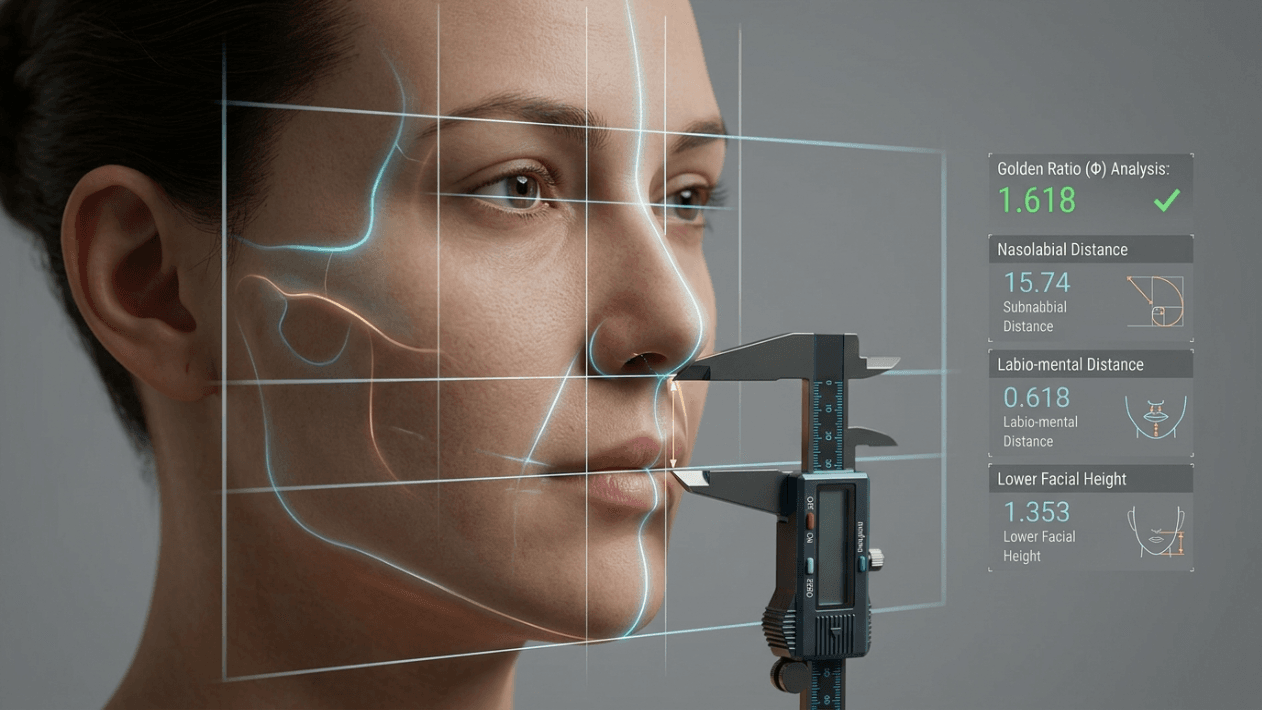
During surgical planning, Dr. Çiğdem evaluates the golden ratio of your facial thirds, the intercanthal distance relative to nasal width, and the lip projection relative to nasal tip position. These measurements do not exist in isolation—a combined facelift rhinoplasty allows these proportions to be calibrated simultaneously, achieving facial harmony single surgery objectives that staggered procedures cannot reach.
The Deep Plane Advantage for Combined Cases
The deep plane facelift technique delivers specific advantages when combined with rhinoplasty. Unlike skin-only lifts that create surface tension across the mid-face—potentially distorting the newly shaped nose—the deep plane approach releases the SMAS and facial ligaments before repositioning. This means the skin moves as a passenger on the deeper tissue, never pulling on the nasal structures.
Skin-only facelifts in combination with rhinoplasty carry a documented risk of alar base widening because upward traction on facial skin stretches the nasal ala. The deep plane technique eliminates this complication mechanism by moving the support layer rather than the skin surface. Patients with wide nasal anatomy—particularly Mediterranean, Middle Eastern, and African heritage patients—benefit enormously from this approach because preserving nasal base width remains a primary aesthetic priority.
Antalya Combined Package: Why Medical Tourists Choose This Route
Antalya has emerged as the premier destination for combined facial surgery for reasons beyond cost. The city offers a recovery environment that clinically accelerates healing—Mediterranean climate with warm temperatures promotes vasodilation and lymphatic drainage, reducing post-operative swelling compared to cold-climate recoveries. More importantly, Antalya presents a Health Tourism Authorization framework that mandates specific patient protection standards.
Regulatory Protections You Should Demand
Any surgeon offering combined procedures to international patients must hold a Health Tourism Authorization Certificate from the Turkish Ministry of Health. This certification requires the surgeon to operate in accredited hospitals, carry malpractice insurance meeting international thresholds, provide transparent pricing documentation in the patient’s language, and maintain a documented complaints resolution process. Dr. Çiğdem holds this authorization, and every patient receives a surgical agreement detailing procedure terms, cost inclusions, and post-operative care commitments before arriving in Antalya.
Patients comparing Antalya packages must verify this credential. Clinics operating without Health Tourism Authorization can offer lower prices but leave you without regulatory recourse if complications arise. The authorization certificate represents more than compliance—it signals institutional accountability at the governmental level.
The Single-Surgeon Advantage for International Patients
Most global surgery destinations route combined cases through two surgeons—one for the nose, one for the face. This divides responsibility and creates ambiguity about who manages complications affecting both areas. When your nasal tip loses support three weeks post-op, does the rhinoplasty surgeon blame the facelift tension, or does the facelift surgeon blame the nasal cartilage reduction? This finger-pointing scenario occurs more frequently than patients realize.
Dr. Berat Çiğdem’s dual specialization in deep plane facelift and septorhinoplasty eliminates this risk entirely. One surgeon planned your proportions. One surgeon executed every incision. One surgeon manages your entire recovery. If the nasal tip needs revision at 6 months, the same hands that performed the original surgery understand every anatomical decision that led to that outcome. This combined facelift rhinoplasty performed by a single qualified specialist provides accountability no multi-surgeon arrangement can match.
Deep Plane Technique: Why It Matters for Combined Facelift Rhinoplasty
Not all facelift techniques suit a combined approach. The specific technique chosen determines whether your rhinoplasty results survive the facelift or get distorted by it. Skin-only lifts—still performed widely—create upward tension that pulls the nasal base and alar margins. MACS lifts create vertical vectors that can widen the nose. Only the deep plane facelift releases the ligamentous attachments before repositioning tissue, creating movement without surface distortion.
The Biomechanics of Combined Facial Surgery
Understanding why technique selection matters requires grasping basic facial biomechanics. Your mid-face connects to the nasal pyriform aperture through ligamentous attachments. When a surgeon pulls skin upward without releasing these ligaments, the tension transmits to the nasal base. The ala flares. The columella shifts. A rhinoplasty performed beautifully under neutral tension on the operating table deforms weeks later when external traction vectors begin distorting the healing nasal framework.
The deep plane facelift releases the zygomaticocutaneous and masseteric cutaneous ligaments before any vector is applied. Tension shifts to the SMAS and deeper tissue plane, leaving the skin surface completely neutral. Nasal structures experience zero traction from the facelift. Your rhinoplasty heals within its own biomechanical environment—undisturbed by adjacent surgical forces. This biomechanical isolation represents the singular reason Dr. Çiğdem insists on deep plane technique for every combined case.
Addressing the Temporal and Brow Region
When facial aging extends to the upper third, adding a temporal lift to the combined procedure addresses lateral brow descent without significantly extending total anesthesia duration. The temporal lift accesses the lateral brow through a limited incision within the hairline, repositioning the lateral brow pad to open the eye and create upper facial balance with the newly shaped nose and lower face.
Upper eyelid hooding often improves when the brow elevates, potentially eliminating the need for a separate blepharoplasty. However, patients with significant dermatochalasis—excess upper eyelid skin—may benefit from concurrent blepharoplasty. Adding this procedure adds approximately 45 minutes to total anesthesia duration and delivers dramatic improvement in the periorbital region.
Who Makes an Ideal Candidate for Combined Facial Surgery
Not every patient benefits from combining a facelift with rhinoplasty. Determining candidacy requires honest evaluation of your anatomy, health status, and aesthetic goals. The decision should emerge from surgical planning, not convenience or cost pressure.
Anatomical Candidates: When Combined Surgery Excels
Patients who benefit most share a specific anatomical profile: age 40 to 65 with both nasal aesthetic concerns and lower facial aging. The nose shows a dorsal hump, tip descent, or septal deviation affecting appearance and breathing. Simultaneously, the lower face displays jowling, nasolabial deepening, platysmal banding, or volume loss along the jawline. When both regions demand correction, a combined facelift rhinoplasty delivers results that isolated procedures cannot achieve because the new nasal proportions and the new facial contour arise from a single artistic plan.
Medical Candidates: Health Requirements for Extended Surgery
Medical clearance proves essential for any procedure exceeding 5 hours. Your surgeon requires a comprehensive pre-operative assessment including complete blood count, coagulation studies, metabolic panel, electrocardiogram, and—depending on age—an echocardiogram or stress test. Patients with well-controlled hypertension, stable thyroid function, and no history of thromboembolic events typically receive clearance without difficulty.
Patients with uncontrolled diabetes, active autoimmune conditions, or body mass index exceeding 32 may require medical optimization before surgery. Smoking cessation for a minimum of 4 weeks before and after surgery proves non-negotiable—nicotine causes vasoconstriction that threatens skin flap viability in the facelift portion of a combined procedure. Dr. Çiğdem requires nicotine testing before confirming surgery dates for all combined cases.
Psychological Readiness: The Emotional Preparedness Factor
Undergoing a complete facial transformation in a single operation produces an intense emotional trajectory. You will not recognize yourself during the first two weeks due to swelling. Your new nose sits beneath a splint, and your new facial contour hides beneath inflammation. Patients who struggle with patience, control, or uncertainty may find the combined recovery psychologically more demanding than they anticipated.
Dr. Çiğdem addresses this during consultation by setting explicit expectations for each recovery phase. Patients see representative photographs of swelling progression at day 3, week 1, week 2, and month 3. Knowing that a frightening appearance at day 5 represents normal healing—not a complication—anchors patients emotionally through the most difficult recovery phase.
Your Combined Surgery Action Plan: Step by Step
Making your combined facelift rhinoplasty happen requires organized execution. The process below guides you from first inquiry to final result.
Step 1: Submit Your Photographs and Medical History
Send front, profile, and three-quarter view photographs along with a brief medical history via the contact form or WhatsApp at +90 531 818 20 81. Include your specific concerns about both your nose and facial aging. Dr. Çiğdem reviews every inquiry personally and provides a preliminary assessment within 48 hours.
Step 2: Attend a Virtual Consultation
Schedule a video call where Dr. Çiğdem examines your facial anatomy in real time, discusses what a combined approach can achieve, and presents a proportional analysis. Bring photographs of results you admire and results you want to avoid. This session establishes whether a combined procedure serves your goals or whether addressing one area first proves more appropriate.
Step 3: Receive Your All-Inclusive Surgical Plan and Quotation
Following the consultation, Fatma prepares your personalized treatment plan with itemized costs covering surgeon fees, hospital charges, anesthesia, medications, and recommended accommodation in Antalya. The quotation includes everything except your flights, providing complete financial transparency before you commit.
Step 4: Complete Pre-Operative Medical Clearance
Obtain the required blood tests and cardiac evaluation at home. Submit results electronically for Dr. Çiğdem’s review and the anesthesiologist’s assessment. Any concerning findings receive management before your surgical date is confirmed. This step ensures your safety throughout extended anesthesia duration.
Step 5: Arrive in Antalya for Your In-Person Assessment
Plan to arrive 2 days before your surgery date. This allows time for an in-person examination, final photographic documentation, marking of incision lines, and a pre-operative meeting with the anesthesiologist. You also receive prescriptions for pre-operative preparation including antiseptic wash, and you confirm your post-operative accommodation arrangements with Fatma.
Step 6: Undergo Your Combined Facelift Rhinoplasty
Surgery takes place in a fully accredited hospital with a dedicated anesthesia team and surgical nursing staff. You wake in your private recovery room with nasal splint and facial compression garment already in place. Hospital stay typically extends 1 to 2 nights depending on drainage output and your physiological recovery from anesthesia.
Step 7: Recover Under Supervised Care and Return Home
Post-operative days are managed with scheduled follow-ups including wound checks, suture removal, and photographic progress documentation. Fatma coordinates every logistics detail from medication pickup to hotel-to-clinic transfers. You return home equipped with a complete recovery guide, emergency contact access, and scheduled video follow-ups at 1, 3, and 6 months post-surgery.
Ready to Reshape Your Entire Face in a Single Surgery?
A combined facelift rhinoplasty compresses two life-changing procedures into one transformative event. You save thousands of pounds, avoid a second recovery period, and achieve facial proportions designed as a unified composition rather than assembled fragments. Dr. Berat Çiğdem’s dual expertise in deep plane facelift surgery and septorhinoplasty—supported by his artistic vision for facial harmony—makes Antalya the destination where this transformation happens with confidence, safety, and natural results.
Take the first step now. Send your photographs and concerns via WhatsApp or the contact form, and receive Dr. Çiğdem’s personal assessment of what a combined approach can accomplish for your face. Your transformation begins with a single conversation.
How long does a combined facelift rhinoplasty surgery take?
A combined facelift rhinoplasty typically takes 5 to 7 hours under general anesthesia. Rhinoplasty is performed first to establish the nasal midline, followed by the deep plane facelift. This sequencing ensures the facelift vectors accommodate your new nasal proportions without distortion.
Why should I choose Antalya for combined facial surgery?
Antalya offers board-certified surgeons with dual specialization, Health Tourism Authorization guarantees, JCI-accredited hospitals, and all-inclusive packages at 50 to 65 percent lower cost than the UK. The Mediterranean climate also supports faster resolution of post-operative swelling compared to cold climates.
What is the recovery timeline for combined facelift rhinoplasty?
Most swelling peaks at 72 hours, nasal splint removal occurs at 10 to 14 days, and international patients typically return home by day 14. Visible social recovery takes 3 to 4 weeks, while final results with complete resolution of nasal tip swelling may require 6 to 12 months.
Does combining facelift and rhinoplasty increase surgical risk?
No. A single 5 to 7 hour anesthetic under controlled conditions carries less cumulative physiological stress than two separate surgeries with double intubations, double fasting periods, and double recovery room admissions. Board-certified anesthesiologists monitor every parameter continuously.
How much money can I save with a combined procedure in Antalya?
Combined procedures in Antalya save 50 to 65 percent compared to separate surgeries in the UK. An all-inclusive Antalya package ranges from £8,500 to £14,500, while equivalent separate procedures in the UK total £24,000 to £40,000 or more when accounting for all incidental costs.
Will the facelift distort my rhinoplasty results?
Not when a deep plane facelift technique is used. The deep plane approach releases ligaments before repositioning tissue, eliminating surface tension that could pull on nasal structures. Skin-only facelift techniques carry this distortion risk, which is why Dr. Çiğdem uses deep plane technique exclusively for combined cases.
What qualifications should my surgeon have for combined facial surgery?
Your surgeon should hold board certification in plastic surgery, demonstrate specialized experience in both deep plane facelift and septorhinoplasty, possess Health Tourism Authorization, and operate in accredited hospitals. Reviewing before and after photographs of combined cases confirms they deliver consistent natural results.