

The modern man’s approach to aging has evolved. No longer content with merely accepting the passage of time, men in 2026 are seeking surgical solutions that preserve their masculine identity while delivering a refreshed, youthful appearance. A facelift for men is not just about turning back the clock—it’s about enhancing strength, definition, and confidence without sacrificing natural features. This guide delves into the tailored techniques, anatomical considerations, and psychological benefits of male facelift surgery, offering insights that go beyond generic advice to address what truly matters for masculine rejuvenation.
Why are more men than ever opting for facelift surgery? The answer lies in the unique anatomical and aesthetic challenges they face. Thicker skin, stronger bone structure, and facial hair patterns demand a surgical approach that differs significantly from traditional facelifts. This isn’t about creating a “softer” or more “feminine” look—it’s about restoring sharpness, definition, and vitality in a way that aligns with masculine beauty standards. If you’ve ever felt that your appearance no longer reflects how you feel inside, this guide will show you how a male facelift can bridge that gap.

Table of Contents
Why Male Facelifts Demand a Different Approach: The Anatomy of Masculinity
The idea that a facelift is a “one-size-fits-all” procedure is a myth—especially for men. The male face is structurally distinct, with thicker skin, more robust bone density, and unique fat distribution patterns. These differences aren’t just cosmetic; they directly influence how aging manifests and how surgery must be tailored to achieve natural results. For example, while women may seek a softer, more lifted appearance, men typically prioritize preserving angularity, definition, and a rugged aesthetic. Ignoring these distinctions can lead to results that look unnatural or overly refined, undermining the very goals of the surgery.
Thicker Skin, Stronger Bones: The Structural Challenges
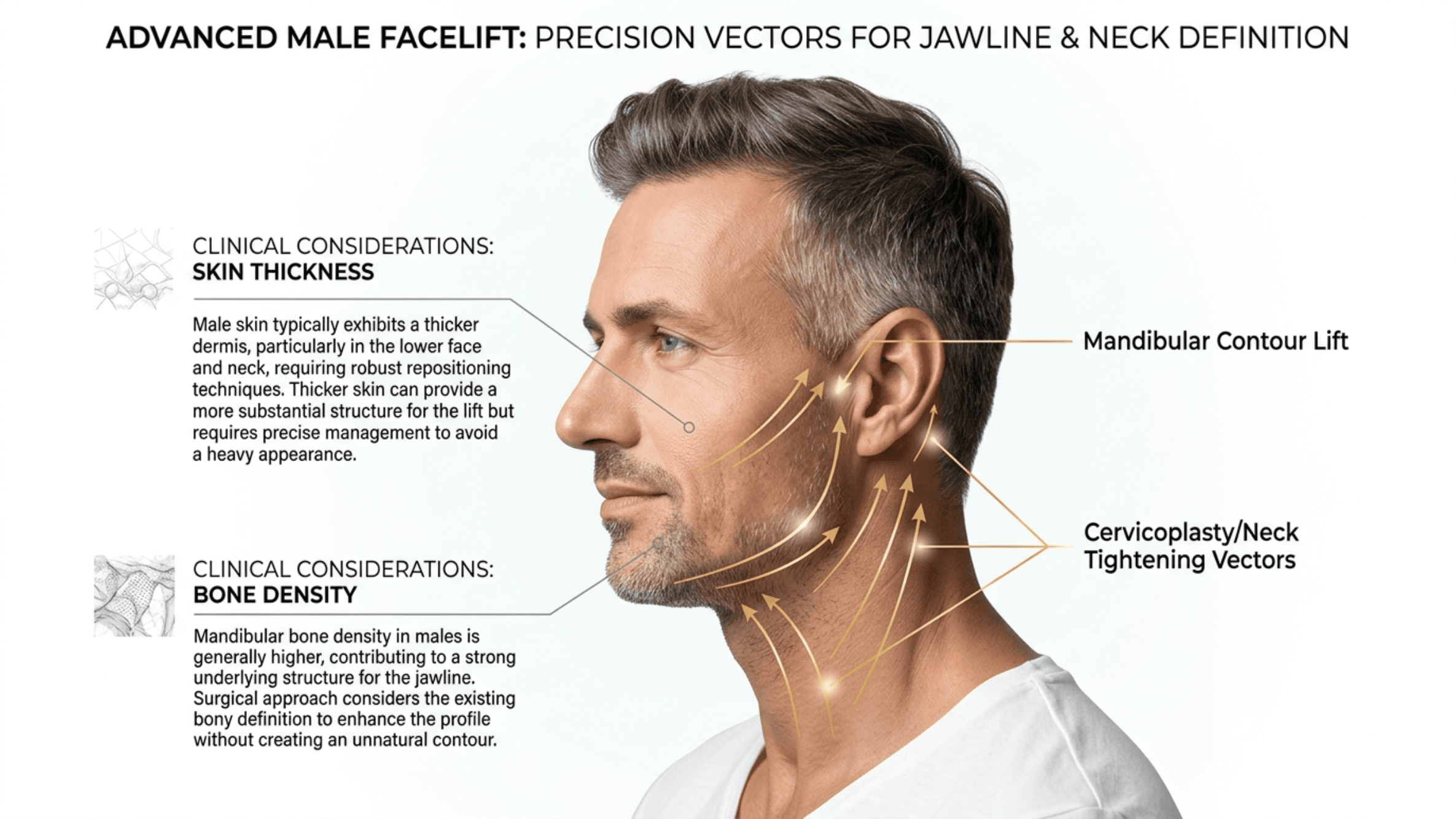
Men’s skin is, on average, 20–25% thicker than women’s, with a higher density of collagen and elastin fibers. While this can delay the onset of fine lines, it also means that when sagging does occur, it tends to be more pronounced. The heavier skin, combined with stronger underlying bone structure, creates a unique challenge: how to lift and reposition tissue without creating an overly tight or “pulled” appearance. Surgeons must account for these factors by using techniques that address the deeper layers of the face, such as the SMAS (Superficial Musculoaponeurotic System), rather than relying solely on skin tightening.
A study published in Aesthetic Surgery Journal found that male patients who underwent SMAS-based facelifts reported higher satisfaction rates compared to those who received skin-only lifts. The reason? SMAS techniques provide a more durable lift, preserving the natural contours of the jawline and midface while avoiding the artificial look that can result from excessive skin tension. This approach is particularly critical for men, whose facial features often rely on sharp angles and definition to convey strength and vitality.
Facial Hair and Incision Placement: The Art of Discretion
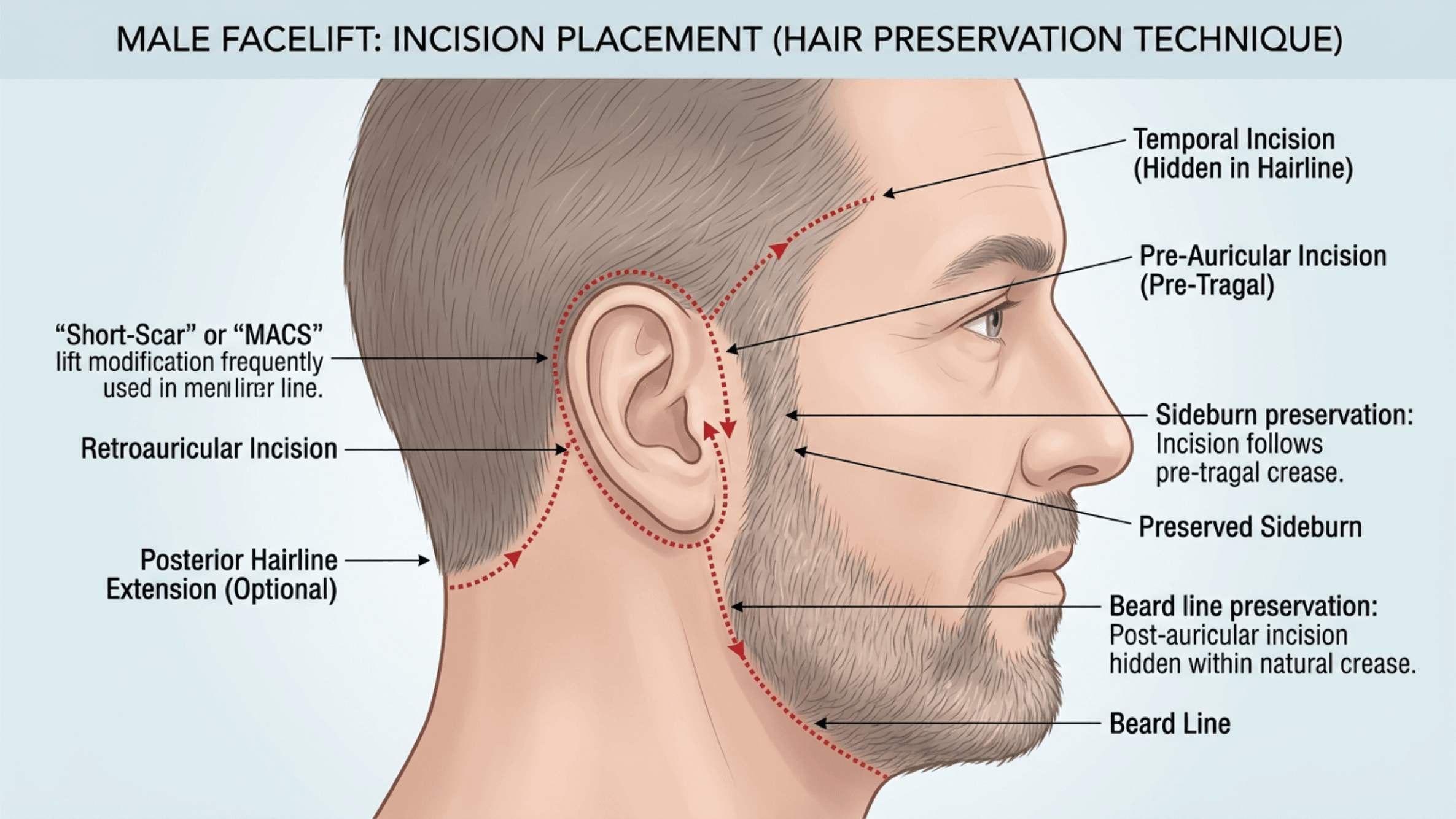
Facial hair isn’t just a cosmetic feature—it’s a surgical consideration. Traditional facelift incisions, often placed along the hairline or behind the ears, can disrupt beard growth patterns in men, leading to visible scarring or uneven hair distribution. To avoid this, surgeons must strategically place incisions within the natural creases of the face or along the sideburns, ensuring that facial hair remains intact and scars are concealed. This requires a deep understanding of male grooming habits and the long-term implications of incision placement.
Dr. Berat Çiğdem, a leading expert in male facelift surgery, emphasizes the importance of customizing incision patterns to each patient’s unique facial hair distribution. “A well-placed incision should disappear into the natural contours of the face,” he explains. “For men, this often means avoiding the preauricular area (in front of the ears) and instead opting for incisions within the sideburns or along the temporal hairline. This ensures that scars are virtually undetectable, even as facial hair grows back.”
Fat Distribution and the Illusion of Aging
Aging doesn’t just affect the skin—it alters the distribution of fat beneath the surface. In men, fat tends to accumulate in the lower face and neck, creating jowls and a “double chin” effect. Unlike women, who may experience volume loss in the cheeks, men often retain fat in the midface, which can exacerbate sagging. The solution? Strategic fat repositioning or removal to restore balance and definition without compromising the masculine structure of the face.
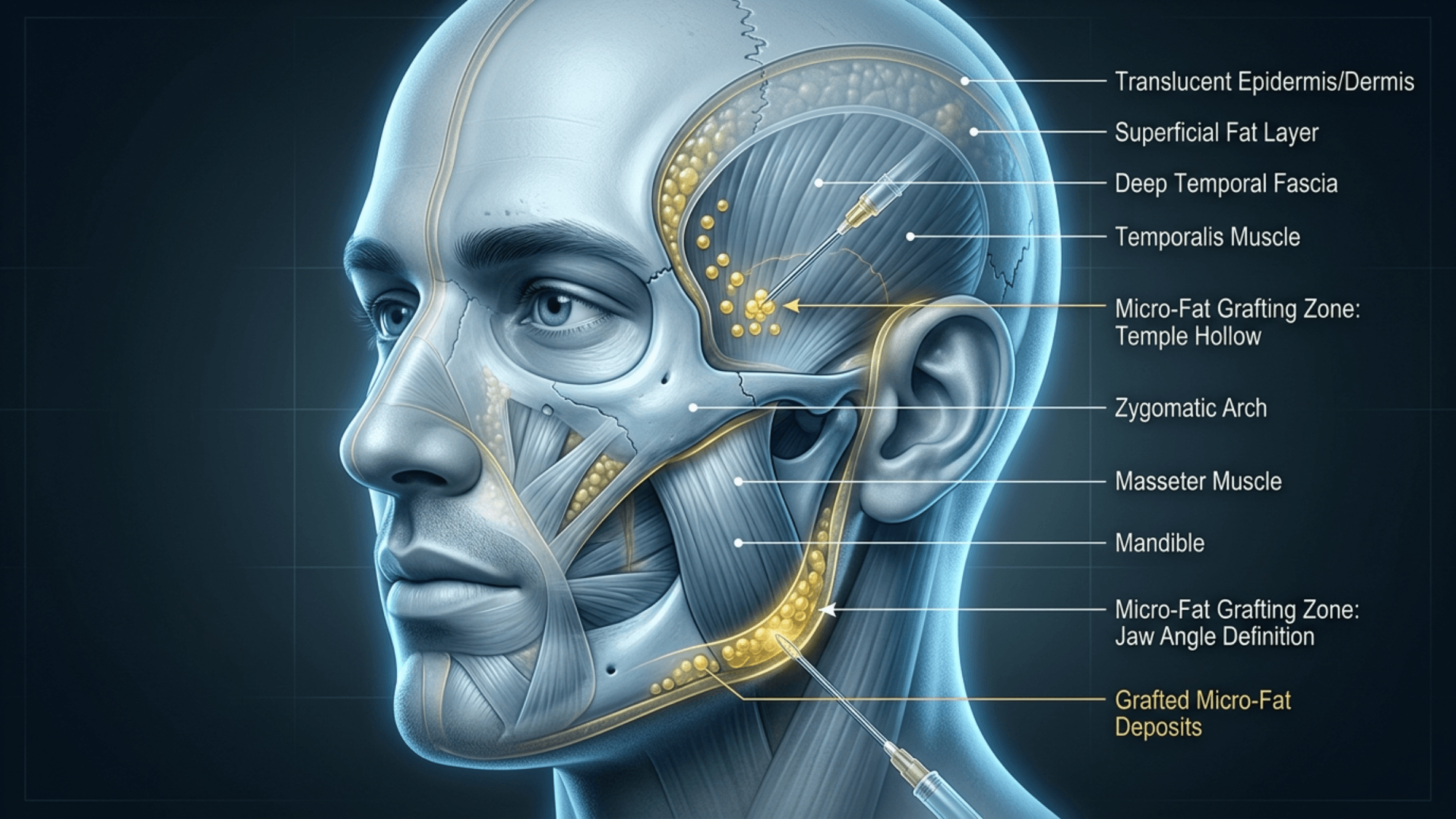
A recent study in Plastic and Reconstructive Surgery highlighted that men who underwent fat grafting in combination with a facelift achieved more natural-looking results than those who received a facelift alone. The study found that fat grafting helped to restore volume in the temples and cheeks, creating a more youthful contour while maintaining the angularity that defines masculine beauty. This dual approach—lifting sagging tissue while restoring lost volume—is becoming the gold standard for male facelift surgery.
Surgical Techniques for Male Facelifts: Precision Meets Masculine Aesthetics
The techniques used in male facelift surgery have evolved dramatically over the past decade. Gone are the days of overly aggressive lifts that left patients with a “windswept” or artificial appearance. Today, surgeons prioritize subtlety, precision, and the preservation of masculine features. The goal is not to erase signs of aging but to enhance the natural structure of the face, ensuring that patients look like a refreshed version of themselves—not a different person entirely.
The SMAS Lift: The Gold Standard for Natural Results
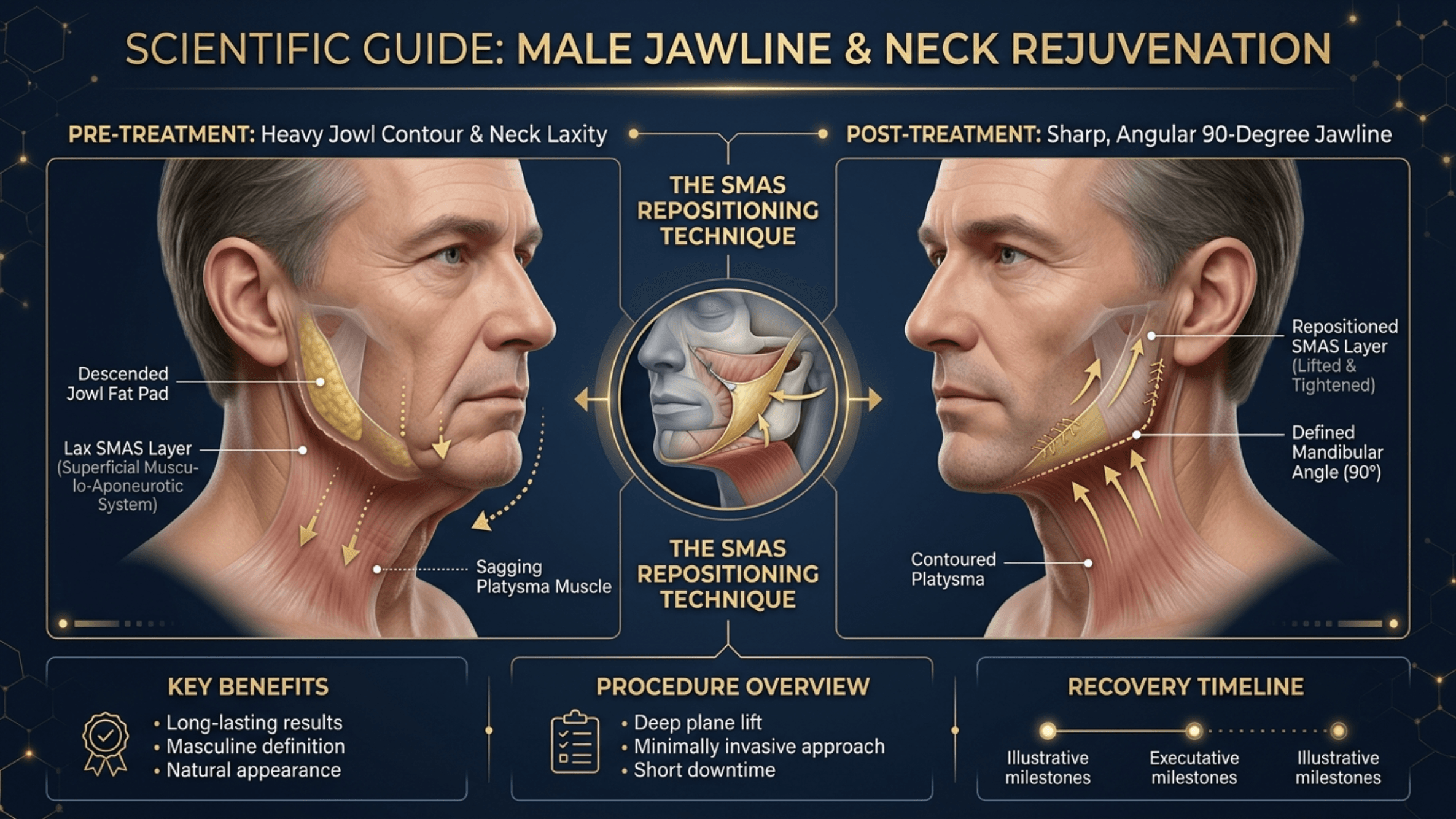
The SMAS (Superficial Musculoaponeurotic System) lift is widely regarded as the gold standard for male facelifts. Unlike traditional facelifts, which focus solely on tightening the skin, the SMAS technique targets the deeper layers of the face, providing a more durable and natural-looking lift. This is particularly important for men, whose thicker skin and stronger bone structure require a more robust approach to achieve lasting results.
The SMAS lift works by repositioning the underlying muscle and connective tissue, rather than simply pulling the skin tighter. This approach not only lifts sagging tissue but also restores volume to the midface and jawline, creating a more youthful contour. For men, this technique is ideal because it preserves the natural angles of the face, avoiding the overly smooth or rounded appearance that can result from skin-only lifts.
Dr. Çiğdem often combines the SMAS lift with fat grafting to enhance results. “Fat grafting allows us to restore volume to areas that have lost fullness over time, such as the temples and cheeks,” he explains. “When combined with an SMAS lift, this creates a harmonious balance between lifting sagging tissue and restoring lost volume, resulting in a more natural and masculine appearance.”
The Deep Plane Lift: For Comprehensive Rejuvenation
For men with more advanced signs of aging, the deep plane lift offers a comprehensive solution. This technique goes a step further than the SMAS lift by releasing and repositioning the deeper layers of the face as a single unit. This provides a smoother transition between the midface, jawline, and neck, addressing sagging in a way that looks natural and unforced.
The deep plane lift is particularly effective for men who have experienced significant volume loss or have heavy jowls. By lifting the deeper tissues, surgeons can create a more defined jawline and neck, restoring the sharp angles that are often associated with youth and vitality. This technique is often combined with a neck lift to achieve a cohesive result, ensuring that the lower face and neck appear harmonious and rejuvenated.
A study in Aesthetic Plastic Surgery found that patients who underwent a deep plane lift reported higher satisfaction rates compared to those who received a traditional SMAS lift. The study attributed this to the technique’s ability to address multiple layers of the face simultaneously, resulting in a more natural and long-lasting outcome. For men seeking a dramatic yet subtle transformation, the deep plane lift is often the preferred choice.
Minimally Invasive Options: Thread Lifts and Laser Resurfacing
Not all men require extensive surgery to achieve their desired results. For those with mild to moderate sagging, minimally invasive options like thread lifts or laser resurfacing can provide noticeable improvements with minimal downtime. These procedures are ideal for men who are not yet ready for a full facelift but want to address early signs of aging, such as fine lines, mild jowling, or loss of skin elasticity.
Thread lifts involve the insertion of dissolvable threads beneath the skin, which are then gently pulled to lift sagging tissue. The threads stimulate collagen production, further enhancing the lifting effect over time. Laser resurfacing, on the other hand, uses fractionated laser energy to tighten the skin and improve texture. Both procedures can be performed under local anesthesia and typically require only a few days of recovery.
While these minimally invasive options offer quicker recovery times, they are not a substitute for surgical intervention in cases of significant sagging. Dr. Çiğdem advises patients to consider their long-term goals when choosing a procedure. “Minimally invasive treatments can provide temporary improvements, but for men with advanced signs of aging, a surgical facelift is the only way to achieve lasting results,” he notes.
The Psychological and Aesthetic Benefits of Male Facelift Surgery
A facelift for men is more than just a physical transformation—it’s a psychological and emotional reset. Men are increasingly recognizing the link between their appearance and their confidence, career success, and social interactions. A well-executed facelift can restore self-assurance, enhance professional opportunities, and even improve personal relationships. But the benefits go beyond the surface. When performed with an understanding of masculine aesthetics, a facelift can help men feel more aligned with their inner vitality, without compromising their identity.
Natural Results: The Hallmark of a Successful Male Facelift
The most common concern among men considering a facelift is the fear of looking “overdone” or unnatural. This fear is not unfounded—poorly executed facelifts can leave patients with a stretched, artificial appearance that draws unwanted attention. However, when performed by a skilled surgeon who understands masculine facial anatomy and aesthetic goals, a facelift can deliver results that are virtually undetectable.
The key to natural results lies in preserving the unique features that define masculinity. This means maintaining sharp angles, avoiding excessive volume in the cheeks, and ensuring that the jawline remains defined. Dr. Çiğdem’s approach focuses on enhancing, rather than altering, the patient’s natural structure. “A successful male facelift should leave people wondering what’s different about you—not guessing that you’ve had surgery,” he says.
A study in Journal of Plastic, Reconstructive & Aesthetic Surgery found that men who underwent facelifts with a focus on natural results reported higher levels of satisfaction compared to those whose surgeries prioritized dramatic changes. The study also noted that natural-looking results were associated with improved self-esteem and social confidence, highlighting the psychological benefits of a well-executed procedure.
Confidence and Career: The Professional Advantage
In a competitive professional landscape, appearance plays a subtle but significant role in how men are perceived. Studies have shown that individuals with youthful, well-defined facial features are often viewed as more competent, approachable, and leadership-oriented. For men in industries where first impressions matter—such as business, sales, or public speaking—a facelift can provide a subtle but powerful advantage.
Dr. Çiğdem has worked with numerous professionals who sought facelift surgery to enhance their career prospects. “Many of my patients are executives, entrepreneurs, or public figures who want to project confidence and vitality,” he explains. “A facelift can help them feel more aligned with their professional goals, whether that’s commanding a boardroom or connecting with an audience.”
A survey conducted by the American Academy of Facial Plastic and Reconstructive Surgery (AAFPRS) found that 68% of men who underwent facial rejuvenation procedures reported improved career opportunities within a year of their surgery. The survey attributed this to increased self-confidence, which translated into more assertive communication and a stronger professional presence.
The Emotional Impact: Feeling Like Yourself Again
Aging can feel like a disconnect between how you see yourself and how the world perceives you. For many men, a facelift is about closing that gap. It’s not about chasing an unrealistic ideal but about reclaiming the vitality and energy that may have faded over time. This emotional aspect is often the most rewarding part of the process for patients.
James, a 52-year-old patient of Dr. Çiğdem, shared his experience: “I didn’t realize how much my sagging jowls and tired appearance were affecting my confidence until after the surgery. It wasn’t about looking younger—it was about looking like the best version of myself. I walk into rooms now and feel like I’m finally seen the way I want to be.”
The emotional benefits of a facelift extend beyond the individual. Many patients report improved relationships with partners, family, and colleagues, as their renewed confidence translates into more positive interactions. This ripple effect is a testament to the transformative power of facial rejuvenation when it’s done right.
Case Studies: Real Results from Male Facelift Surgery
Theory and technique are important, but nothing speaks louder than results. Below, we explore real case studies of men who underwent facelift surgery with Dr. Berat Çiğdem, highlighting the techniques used, the challenges faced, and the transformative outcomes achieved. These stories illustrate the power of a well-executed male facelift to restore confidence, enhance natural features, and deliver results that stand the test of time.
Case Study 1: Restoring Definition for a 55-Year-Old Executive
John, a 55-year-old executive, came to Dr. Çiğdem seeking a solution for his sagging jowls and loss of jawline definition. As a public speaker, he felt that his appearance no longer reflected the energy and confidence he brought to his work. After a thorough consultation, Dr. Çiğdem recommended a deep plane facelift combined with fat grafting to restore volume to his midface and temples.
The surgery focused on lifting the deeper layers of the face to create a natural, unforced result. Fat grafting was used to enhance the temples and cheeks, ensuring that the lift complemented his existing features rather than altering them. The incisions were placed within the sideburns and along the temporal hairline to conceal scarring.
Six months post-surgery, John’s results were transformative. His jowls were eliminated, his jawline was sharply defined, and his overall appearance was refreshed without looking artificial. “I feel like I’ve turned back the clock,” he shared. “People tell me I look rested and energized, but no one suspects I’ve had surgery. That’s exactly what I wanted.”
Case Study 2: A 48-Year-Old Athlete’s Journey to a Refreshed Appearance
Mark, a 48-year-old athlete, struggled with early signs of aging, including mild jowling and a loss of skin elasticity. While he was in excellent physical shape, he felt that his face didn’t reflect his active lifestyle. After researching his options, he chose Dr. Çiğdem for his SMAS facelift with neck lift.
The SMAS technique was ideal for Mark because it provided a durable lift without compromising his natural features. The neck lift addressed loose skin under the chin, creating a more defined and youthful contour. Dr. Çiğdem also used laser resurfacing to improve skin texture and reduce fine lines.
Mark’s recovery was smooth, and he was back to his regular routine within three weeks. His results were subtle but impactful—his jowls were gone, his neck was tighter, and his skin looked rejuvenated. “I didn’t want to look like a different person,” he said. “I just wanted to look like the best version of myself. Dr. Çiğdem understood that, and the results speak for themselves.”
Case Study 3: A 60-Year-Old Professional’s Comprehensive Transformation
David, a 60-year-old professional, sought a comprehensive facial rejuvenation to address multiple signs of aging, including deep wrinkles, sagging skin, and volume loss. He had considered surgery for years but was hesitant due to the fear of looking unnatural. After meeting with Dr. Çiğdem, he decided to proceed with a deep plane facelift, blepharoplasty, and fat grafting.
The deep plane facelift addressed the sagging in David’s midface and jawline, while the blepharoplasty rejuvenated his eyes, eliminating the tired appearance that had bothered him for years. Fat grafting restored volume to his temples and cheeks, ensuring a balanced and harmonious result. The incisions were strategically placed to minimize scarring, and the recovery process was carefully managed to ensure optimal healing.
One year post-surgery, David’s transformation was remarkable. His face looked naturally refreshed, with no signs of the artificial tightness that can result from poorly executed facelifts. “I feel like I’ve been given a second chance,” he said. “I’m more confident in my personal and professional life, and I finally feel like my appearance matches how I feel inside.”
Are You an Ideal Candidate for a Male Facelift?
Not every man is a candidate for facelift surgery, and not every sign of aging requires surgical intervention. The ideal candidate for a male facelift is someone who is in good overall health, has realistic expectations, and is bothered by specific signs of aging that cannot be addressed through non-surgical treatments alone. Below, we explore the characteristics of ideal candidates, as well as factors that may influence your suitability for the procedure.
Signs That You Might Benefit from a Male Facelift
The most common signs that indicate a man might benefit from a facelift include:
- Jowling: Sagging skin along the jawline that creates a “bulldog” appearance.
- Neck Laxity: Loose skin under the chin or along the neck, often referred to as a “turkey neck.”
- Loss of Jawline Definition: A once-sharp jawline that has become blurred or indistinct.
- Deep Wrinkles: Lines and folds that extend from the nose to the mouth (nasolabial folds) or from the mouth to the chin (marionette lines).
- Volume Loss: A sunken or hollow appearance in the midface or temples.
If you’re experiencing one or more of these signs, a facelift may be the solution. However, it’s important to note that a facelift is not a substitute for a healthy lifestyle. Candidates should be non-smokers (or willing to quit), maintain a stable weight, and have a skincare routine that includes sun protection. These habits not only improve surgical outcomes but also extend the longevity of the results.
Factors That May Affect Your Candidacy
While many men can benefit from a facelift, certain factors may influence your candidacy. These include:
- Overall Health: Candidates should be in good general health, with no uncontrolled medical conditions that could increase surgical risks. Conditions such as diabetes, heart disease, or a history of blood clots may require additional evaluation.
- Skin Elasticity: While thicker skin is an advantage for men, elasticity is still important for achieving a smooth, natural lift. Men with severely damaged skin (e.g., from sun exposure or smoking) may require additional treatments, such as laser resurfacing, to optimize results.
- Realistic Expectations: A facelift can enhance your appearance and restore confidence, but it won’t stop the aging process entirely. Ideal candidates understand the limitations of the procedure and have realistic goals for what it can achieve.
- Previous Surgeries: If you’ve had prior facial surgeries, such as a previous facelift or rhinoplasty, your surgeon will need to evaluate how these procedures may impact your results.
During your consultation, Dr. Çiğdem will conduct a thorough evaluation to determine whether you’re a suitable candidate for a male facelift. This includes a review of your medical history, a physical examination, and a discussion of your aesthetic goals. If a facelift isn’t the right option for you, he may recommend alternative treatments, such as neck lift or temporal lift, to address your concerns.
Non-Surgical Alternatives: Are They Right for You?
For men who are not ready for surgery or have mild signs of aging, non-surgical alternatives may be an option. These include:
- Thread Lifts: Dissolvable threads are inserted beneath the skin to lift sagging tissue. Results are temporary but can provide a noticeable improvement with minimal downtime.
- Laser Resurfacing: Laser energy tightens the skin and improves texture, reducing fine lines and mild sagging.
- Dermal Fillers: Injectable fillers can restore volume to the midface and temples, creating a more youthful contour.
- Botox: Botulinum toxin injections can temporarily relax dynamic wrinkles, such as crow’s feet or forehead lines.
While these treatments can provide temporary improvements, they are not a substitute for surgery in cases of significant sagging. Dr. Çiğdem often recommends combining non-surgical treatments with a facelift to enhance and prolong results. For example, laser resurfacing can be performed during the facelift recovery period to improve skin texture and reduce scarring.
Recovery and Expectations: What to Expect After a Male Facelift
Recovery is a critical phase of the facelift process, and understanding what to expect can help you prepare both physically and mentally for a smooth transition. While recovery times vary based on the surgical technique used and individual healing rates, adhering to your surgeon’s post-operative guidelines is essential for achieving optimal, long-lasting results.
The Recovery Timeline: Week by Week
- Week 1 (Days 1–7): Initial Healing and Rest
Swelling and mild bruising reach their peak within the first 48 to 72 hours. Bandages are typically removed within the first few days. Pain is easily managed with prescribed medications, and keeping your head elevated is crucial during rest. - Week 2 (Days 8–14): Returning to Social Activities
Sutures are generally removed between days 7 and 10. Bruising fades significantly, allowing most men to comfortably resume desk work, virtual meetings, and light walking. - Weeks 3–4: Resuming Normal Routines
Residual swelling continues to diminish rapidly. Most patients return to full workplace duties and low-impact exercise routines. Scars begin maturing and fading into natural facial creases. - Month 2 and Beyond: Final Results Unfold
Facial contours fully settle into their refined position. The sharp definition of the jawline and neck becomes clearly visible, yielding a natural, refreshed masculine look that lasts for years.
Essential Post-Operative Care Tips for Men
- Protect Your Skin from Sun Exposure: UV rays can darken fresh incision scars. Use broad-spectrum SPF 50+ sunscreen and wear protective hats when outdoors.
- Adjust Your Shaving Routine: Refrain from shaving near surgical incisions until cleared by your surgeon to prevent accidental skin irritation or hair follicle trauma.
- Avoid Strenuous Exercise Early On: Hold off on heavy lifting, high-intensity workouts, or sauna sessions for at least 4 weeks to prevent elevated blood pressure and swelling.
- Maintain Proper Hydration and Nutrition: A nutrient-dense diet rich in protein, vitamin C, and zinc accelerates tissue repair and supports healthy collagen synthesis.
Final Thoughts: Reclaim Your Youthful Edge
A male facelift is far more than a cosmetic enhancement; it is a strategic investment in self-confidence, professional presence, and personal vitality. By choosing a surgeon skilled in the anatomical intricacies of the male face, you can achieve sharp, natural-looking results that preserve your unique masculine identity. If you are ready to explore your options, schedule a personalized consultation with Dr. Berat Çiğdem to begin your aesthetic journey.
Frequently Asked Questions About Male Facelifts
How long does a male facelift last?
A male facelift provides long-lasting structural improvements, typically enduring between 10 to 15 years. While the natural aging process continues, you will permanently retain a more refreshed appearance compared to if you had not undergone surgery.
Will a male facelift leave visible scars?
No. Modern surgical techniques place incisions within natural skin creases, behind the ears, or aligned with the sideburns. This ensures scars remain virtually unnoticeable, even for men with short hair or facial hair.
How does a male facelift differ from a female facelift?
Male facelifts account for thicker skin, higher vascularity, distinct beard patterns, and strong bone structures. The primary goal is to maintain angular jawlines and rugged masculine definition rather than softening features.
What is the typical recovery time after male facelift surgery?
Most men resume light activities and remote work within 10 to 14 days. Strenuous exercises and heavy lifting can usually be resumed after 4 weeks, with final facial contours fully settling within a few months.