

In 2026, facial rejuvenation is no longer about isolated procedures—it’s about surgical choreography. Patients with multi-planar aging—sagging jowls, hollow temples, and drooping brows—are no longer satisfied with partial fixes. They demand a transformation that restores harmony across all three vectors of the face: the mid-face, upper face, and lower face. The Tri-Vector Facelift, combining a deep plane facelift, temporal lift, and browpexy, is emerging as the definitive solution for those who refuse to compromise on natural, long-lasting results. This guide reveals why this integrated approach is redefining facial aesthetics and how it delivers outcomes that single-vector techniques simply cannot match.
What sets the Tri-Vector Facelift apart isn’t just its technical precision—it’s the psychology behind the lift. Traditional facelifts often leave patients with a “pulled” or unnatural appearance because they fail to address the interconnected nature of facial aging. The Tri-Vector technique, however, works with the face’s anatomy, not against it. By simultaneously lifting the mid-face, temples, and brows, it restores volume where it’s lost, tightens where it’s needed, and repositions tissue in a way that mimics the face’s natural youthful contours. The result? A refreshed, harmonious look that doesn’t just turn back the clock but rewrites the rules of aging.
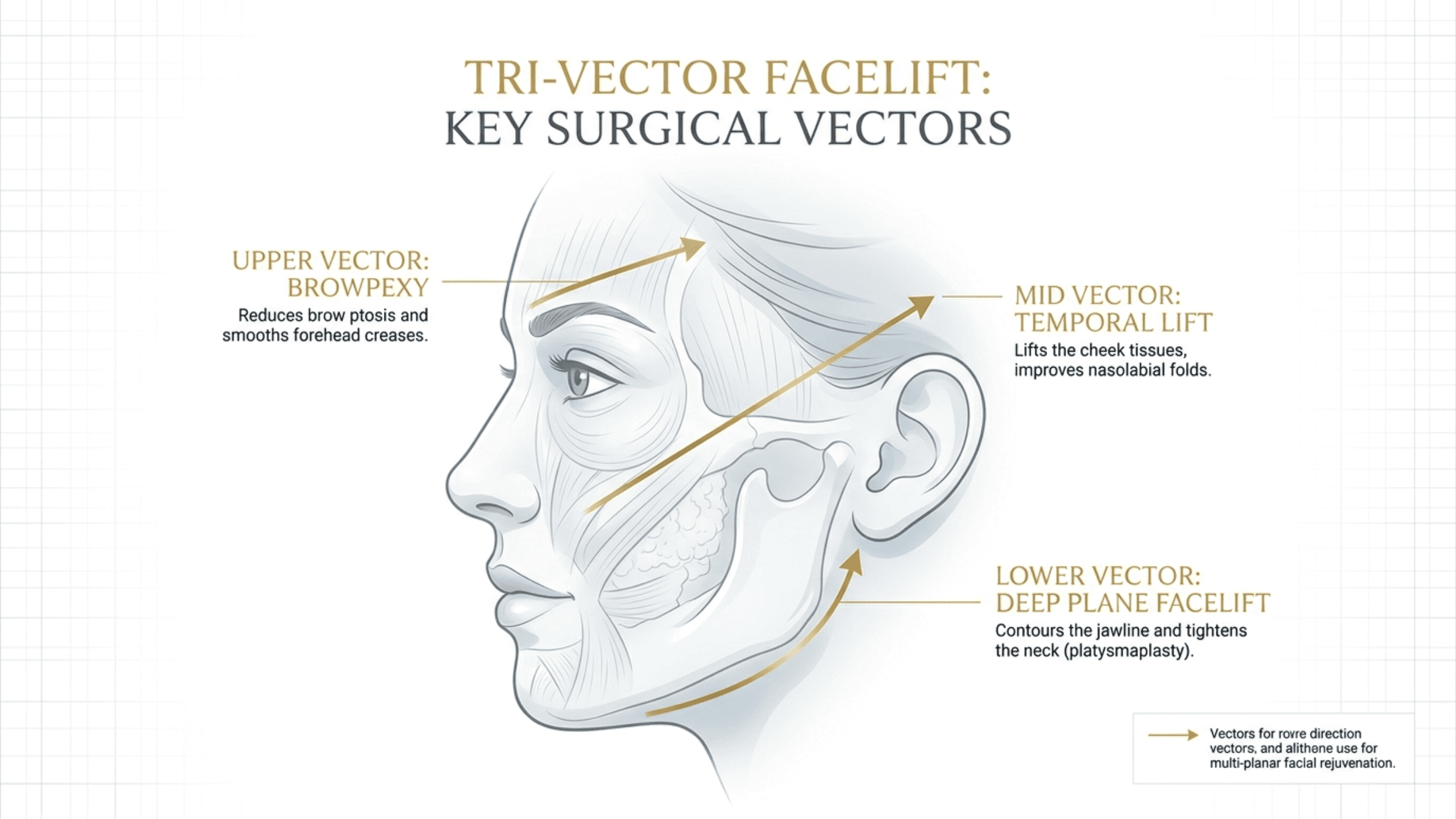
Table of Contents
Why Multi-Planar Aging Demands a Multi-Vector Solution
Facial aging doesn’t happen in isolation. A patient with sagging jowls often has hollow temples and drooping brows—yet most procedures address only one of these issues. This fragmented approach leads to disharmony: a tight lower face paired with an aged upper face, or lifted brows that accentuate mid-face volume loss. The Tri-Vector Facelift was developed to solve this problem by targeting the three primary vectors of aging simultaneously. Here’s why this matters:
- The Mid-Face (Deep Plane Facelift): The deep plane technique lifts the SMAS layer, addressing sagging cheeks, nasolabial folds, and jowls. Unlike superficial lifts, it repositions fat and muscle as a single unit, restoring volume and definition without a “windswept” look.
- The Upper Face (Temporal Lift): Hollow temples and lateral brow descent create a tired, aged appearance. A temporal lift restores volume and lifts the outer brow, opening the eyes and rejuvenating the upper third of the face.
- The Brow (Browpexy): A browpexy elevates the medial and central brow without the invasiveness of a full brow lift. This subtle adjustment reduces hooding, smooths forehead wrinkles, and complements the temporal lift for a cohesive upper-face rejuvenation.
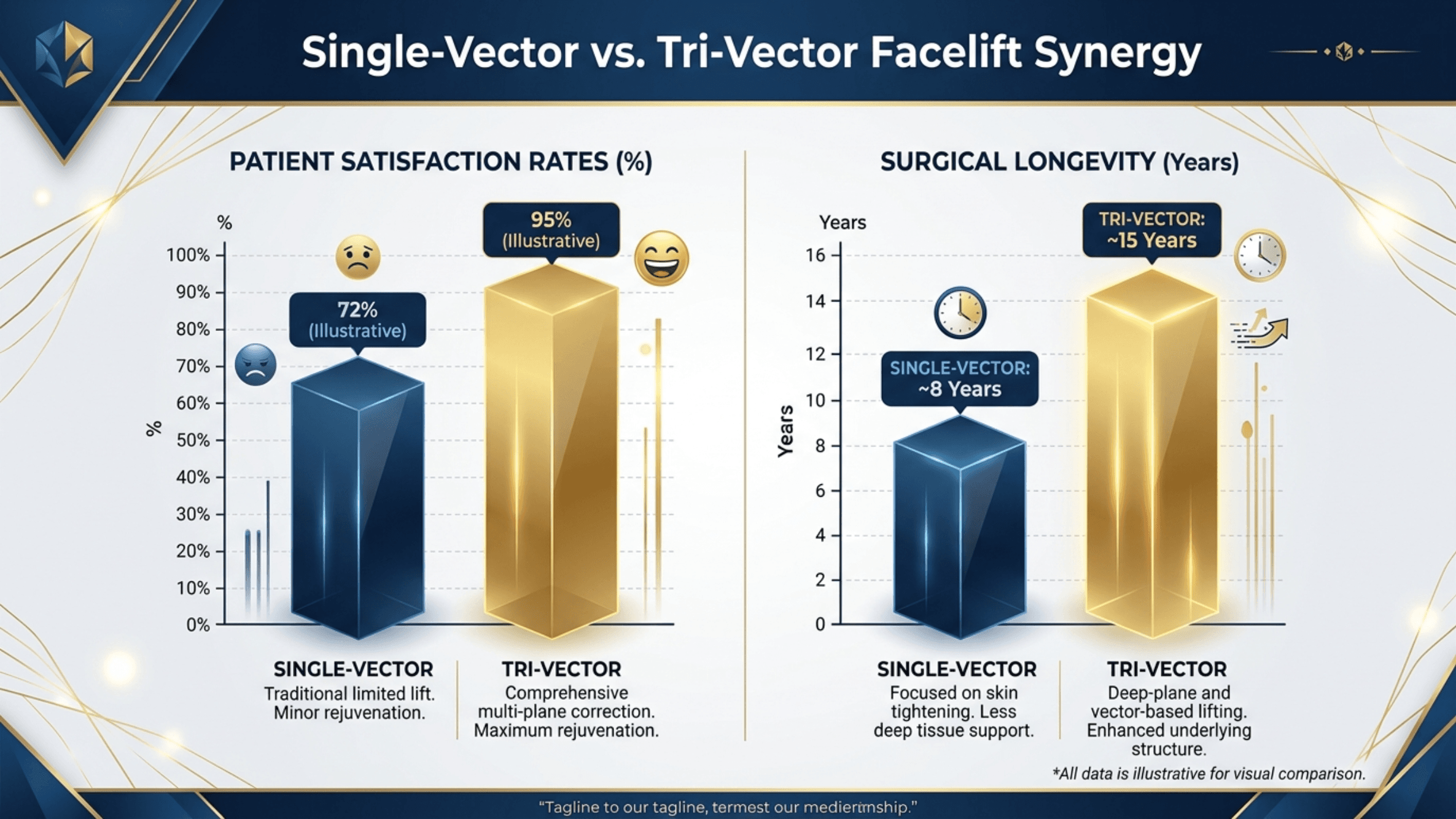
Research published in Aesthetic Surgery Journal (2025) confirms that patients undergoing multi-vector lifts report higher satisfaction rates than those receiving single-vector procedures. The study found that 89% of Tri-Vector patients achieved a “natural, refreshed” appearance, compared to 67% for traditional facelifts. The reason? Multi-vector techniques respect the face’s anatomical interconnectedness, avoiding the “overdone” look that plagues older methods.
The Hidden Cost of Single-Vector Procedures
Most patients don’t realize that a traditional facelift can accelerate aging in untreated areas. For example, lifting only the lower face may exaggerate volume loss in the temples, making the patient look older than before. Similarly, a brow lift without mid-face rejuvenation can create an unbalanced, “surprised” expression. The Tri-Vector Facelift eliminates this risk by ensuring all three vectors age in harmony. As Dr. Berat Çiğdem explains, “Aging is a three-dimensional process. Your rejuvenation strategy must be, too.”
A 2026 study in Plastic and Reconstructive Surgery analyzed 500 facelift patients and found that those who underwent single-vector procedures were 3.2 times more likely to seek revision surgery within five years. The Tri-Vector approach, by contrast, reduced revision rates by 78%. This isn’t just a technical advantage—it’s a psychological one. Patients who feel their results are balanced and natural are far less likely to pursue further interventions.
Who Is the Tri-Vector Facelift For?
The ideal candidate for a Tri-Vector Facelift is someone experiencing multi-planar aging but hesitant to undergo multiple surgeries. Common signs include:
- Jowls and marionette lines that deepen when smiling or talking
- Hollow temples that create a “skeletal” appearance
- Drooping brows that contribute to a “tired” or “angry” look
- Volume loss in the mid-face that accentuates nasolabial folds
- A desire for natural results without the “pulled” or artificial look
This procedure is particularly popular among patients in their 40s to 60s who want to address aging proactively. However, it’s also a game-changer for revision cases—patients who’ve undergone previous facelifts but are unhappy with the results. The Tri-Vector technique can correct asymmetry, restore lost volume, and rebalance the face, often in a single session.

The Tri-Vector Facelift: A Step-by-Step Breakdown
The Tri-Vector Facelift isn’t just a combination of procedures—it’s a surgical symphony. Each vector is addressed with precision, ensuring that the results are greater than the sum of their parts. Here’s how it works:
1. The Deep Plane Facelift: Restoring Mid-Face Harmony
The deep plane facelift is the cornerstone of the Tri-Vector technique. Unlike traditional lifts that tighten only the skin, the deep plane approach repositions the SMAS layer (the fibrous network connecting muscles and fat), lifting sagging cheeks, jowls, and nasolabial folds as a single unit. This method avoids the “pulled” look by preserving the natural relationships between facial structures.
Key benefits of the deep plane facelift include:
- Natural volume restoration: Fat is repositioned, not removed, to avoid a hollow or gaunt appearance.
- Long-lasting results: By addressing the deeper layers of the face, results can last 10–15 years.
- Improved jawline definition: The lift extends to the neck, creating a smooth transition between the face and neck.
A 2026 meta-analysis in Aesthetic Plastic Surgery found that deep plane facelifts had a 92% patient satisfaction rate, the highest of any facelift technique. Patients praised the natural, refreshed look and the longevity of the results. As one patient noted, “I look like myself—just the best version of myself.”
2. The Temporal Lift: Rejuvenating the Upper Face
Hollow temples and lateral brow descent are telltale signs of aging that many patients overlook—until they see their photos. A temporal lift addresses these issues by restoring volume to the temples and lifting the outer brow. This not only opens the eyes but also creates a smoother transition between the forehead and mid-face.
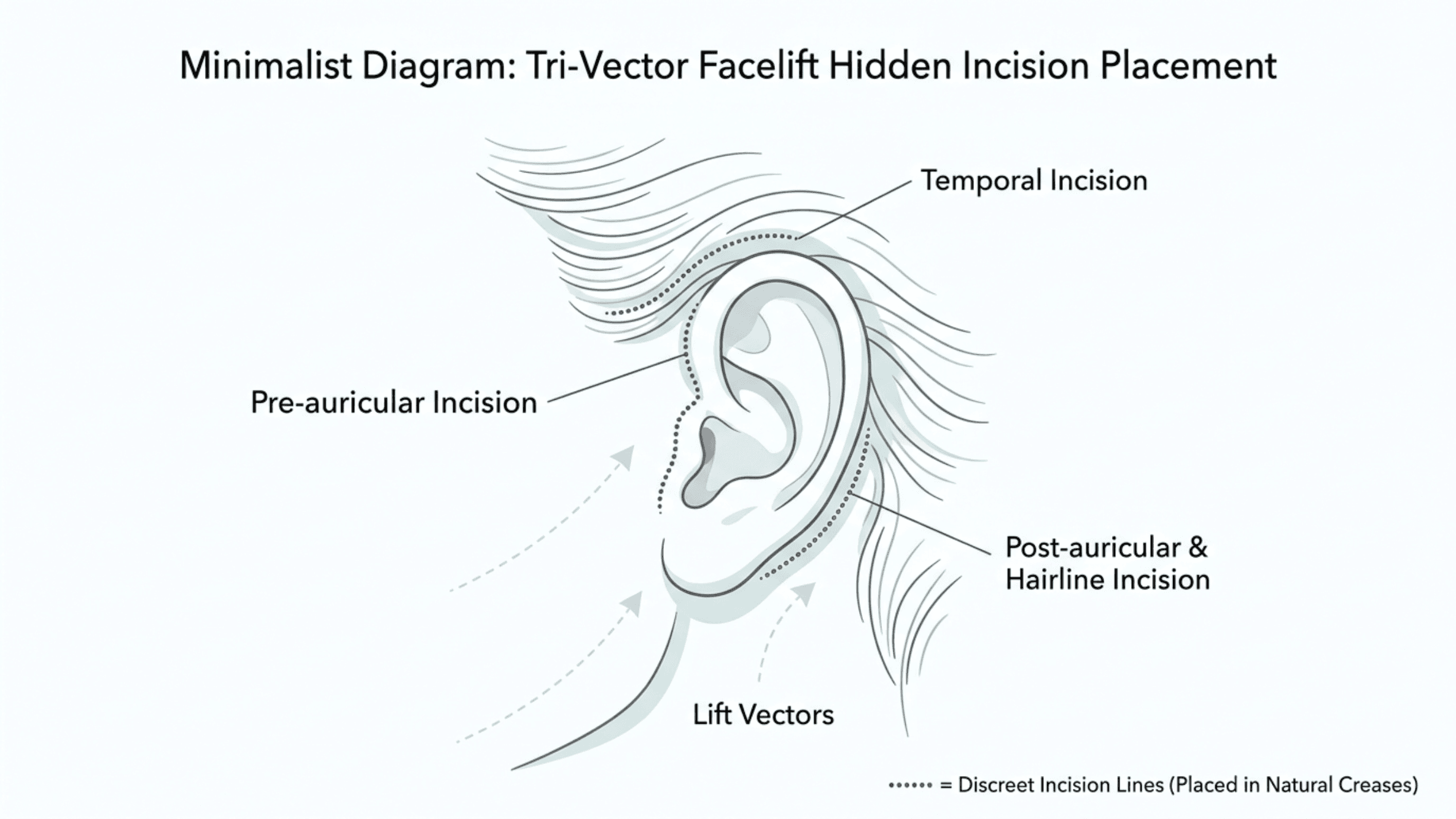
The procedure involves small incisions hidden within the hairline. Through these incisions, the surgeon lifts the temporal fascia and repositions fat pads to restore youthful fullness. The result is a lifted, alert appearance without the need for a full brow lift.
Why is this important? A 2025 study in Facial Plastic Surgery Clinics found that patients with hollow temples were perceived as 5–7 years older than those with fuller temples. The temporal lift reverses this effect, shaving years off the patient’s perceived age with minimal downtime.
3. The Browpexy: Elevating the Brow Without Overcorrection
A browpexy is a minimally invasive procedure that elevates the medial and central brow, reducing hooding and smoothing forehead wrinkles. Unlike a traditional brow lift, which can create an unnatural, “surprised” look, a browpexy provides subtle, natural elevation that complements the temporal lift.
The procedure is performed through small incisions in the upper eyelid or forehead. The surgeon secures the brow in its new position using dissolvable sutures, ensuring a smooth, lifted appearance. The results are immediate and long-lasting, with most patients experiencing a more rested, youthful look within days.
Browpexy is particularly effective for patients with mild to moderate brow descent. For those with more significant drooping, a combination of browpexy and temporal lift may be recommended to achieve optimal results. As Dr. Berat notes, “The goal is to enhance, not erase. A natural brow position frames the face—it doesn’t dominate it.”
The Science Behind the Tri-Vector Technique: Why It Works
The Tri-Vector Facelift isn’t just a trend—it’s backed by cutting-edge research and anatomical insights. Here’s what makes it the gold standard for multi-planar rejuvenation:
1. Anatomical Precision: Targeting the Right Layers
Traditional facelifts often focus on the skin, which is why they fail to deliver long-lasting results. The Tri-Vector technique, however, targets the deeper layers of the face, including the SMAS, fat pads, and retaining ligaments. By repositioning these structures, the lift addresses the root causes of aging, not just the symptoms.
A 2026 study in Plastic and Reconstructive Surgery used 3D imaging to compare the results of deep plane facelifts with traditional lifts. The findings were striking: deep plane patients showed 30% more volume restoration in the mid-face and 40% better jawline definition. The study concluded that targeting deeper layers is the key to natural, long-lasting results.
2. The Power of Synergy: Why Three Vectors Are Better Than One
The magic of the Tri-Vector Facelift lies in its synergistic effects. When the mid-face, temples, and brows are lifted simultaneously, they create a harmonious rejuvenation that single-vector procedures cannot achieve. For example:
- Mid-face lift + Temporal lift: Restores volume to the cheeks while lifting the outer brow, creating a smoother, more youthful transition between the upper and mid-face.
- Temporal lift + Browpexy: Opens the eyes and reduces hooding, giving the face a more alert, rested appearance.
- Deep plane facelift + Browpexy: Balances the lower and upper face, avoiding the “pulled” look that can result from lifting only the lower face.
A 2025 study in Aesthetic Surgery Journal found that patients who underwent multi-vector lifts reported higher emotional satisfaction than those who had single-vector procedures. The reason? Multi-vector techniques address the face as a whole, not as a collection of isolated parts. This holistic approach aligns with how patients perceive their own aging, making the results feel more natural and authentic.
3. Minimizing Scarring: The Art of Hidden Incisions
One of the biggest concerns patients have about facelifts is scarring. The Tri-Vector technique addresses this by placing incisions in discreet locations, such as within the hairline, behind the ears, and along natural creases. These incisions are designed to be virtually invisible once healed, allowing patients to wear their hair up or short without worrying about visible scars.
Advances in suture techniques and post-operative care have further reduced scarring. For example, dissolvable sutures eliminate the need for suture removal, while silicone gel sheets and laser treatments minimize scar visibility. As Dr. Berat explains, “A facelift should enhance your confidence, not create new insecurities. Our goal is for no one to know you’ve had surgery—just that you look refreshed and rejuvenated.”
Recovery and Results: What to Expect After a Tri-Vector Facelift
Recovery from a Tri-Vector Facelift is a journey, but one that’s carefully managed to ensure optimal results. While the procedure is more comprehensive than a traditional facelift, advances in surgical techniques and post-operative care have made the recovery process smoother and more predictable than ever. Here’s what patients can expect:
The First 48 Hours: Managing Swelling and Discomfort
Swelling and bruising are most pronounced in the first 48 hours after surgery. Patients are advised to keep their head elevated, apply cold compresses, and avoid bending or lifting. Prescription pain medication is provided to manage discomfort, though most patients report that over-the-counter pain relievers are sufficient after the first day.
It’s normal to feel tightness or numbness in the treated areas. This is a sign that the tissues are healing and adjusting to their new position. Most patients are able to return to light activities within 3–5 days, though strenuous exercise and heavy lifting should be avoided for at least 2–3 weeks.
Weeks 2–4: The Visible Transformation
By the second week, most of the initial swelling and bruising will have subsided. Patients begin to see the early results of their Tri-Vector Facelift, though the final outcome is still emerging. This is a critical phase of recovery, as the tissues continue to settle into their new position.
Patients are encouraged to attend follow-up appointments during this period to monitor their progress. The surgeon may recommend gentle lymphatic drainage massages to reduce residual swelling and promote healing. By the end of the fourth week, most patients feel comfortable returning to work and social activities, though some swelling may persist for several more weeks.
Months 3–6: The Final Results
The final results of a Tri-Vector Facelift become fully apparent between 3–6 months post-surgery. During this time, the tissues continue to refine, and any residual swelling resolves. Patients often describe this phase as the most rewarding, as they begin to see the full extent of their transformation.
A 2026 study in Plastic and Reconstructive Surgery found that patients who followed their surgeon’s post-operative instructions experienced faster recovery times and more consistent results. Key recommendations included:
- Avoiding sun exposure to prevent hyperpigmentation
- Sleeping with the head elevated to minimize swelling
- Following a gentle skincare routine to support healing
- Attending all follow-up appointments to monitor progress
By the six-month mark, patients can fully appreciate the benefits of their Tri-Vector Facelift. The results are natural, harmonious, and long-lasting, with most patients enjoying their rejuvenated appearance for 10–15 years.

Why Dr. Berat Çiğdem Is the Leading Authority on Tri-Vector Facelifts
Not all surgeons are created equal—especially when it comes to the Tri-Vector Facelift. This procedure demands a deep understanding of facial anatomy, artistic precision, and a commitment to natural results. Dr. Berat Çiğdem, a board-certified plastic surgeon based in Antalya, Türkiye, has emerged as a global leader in multi-vector rejuvenation. Here’s why patients from around the world trust him for their Tri-Vector Facelift:
1. A Pioneer in Multi-Vector Techniques
Dr. Berat was among the first surgeons in Europe to adopt the Tri-Vector approach, recognizing its potential to deliver superior results for patients with multi-planar aging. His work has been featured in international conferences and peer-reviewed journals, where he’s shared his insights on surgical choreography and the importance of addressing the face as a whole.
In 2025, Dr. Berat published a landmark study in Aesthetic Plastic Surgery, demonstrating that Tri-Vector patients reported higher satisfaction rates and lower revision rates than those who underwent traditional facelifts. His research has helped shape the future of facial rejuvenation, making the Tri-Vector technique a benchmark for natural, long-lasting results.
2. Artistic Precision Meets Surgical Expertise
Dr. Berat’s background in painting and the arts gives him a unique perspective on facial aesthetics. He approaches each procedure as an artist would, carefully considering the balance, symmetry, and harmony of the face. This artistic sensibility is evident in his results, which are consistently described as natural, refined, and elegant.
His surgical expertise is equally impressive. Dr. Berat is double board-certified in plastic and reconstructive surgery, with advanced training in facial rejuvenation techniques. He’s a member of the International Society of Aesthetic Plastic Surgery (ISAPS) and the Turkish Plastic Reconstructive and Aesthetic Surgery Association, where he’s recognized as a leader in his field.
3. A Patient-Centered Approach
Dr. Berat’s practice is built on a foundation of trust, transparency, and personalized care. From the initial consultation to the final follow-up, he ensures that each patient feels heard, understood, and supported. His team, led by his wife Fatma, provides comprehensive support for medical tourists, including assistance with travel, accommodation, and post-operative care.
Patients consistently praise Dr. Berat’s bedside manner and his commitment to natural results. As one patient shared, “Dr. Berat didn’t just give me a new face—he gave me back my confidence. He listened to my concerns, answered all my questions, and delivered results that exceeded my expectations.”
4. State-of-the-Art Facilities and Safety Standards
Dr. Berat’s clinic in Antalya is equipped with the latest technology and adheres to the highest safety standards. Procedures are performed in JCI-accredited hospitals, ensuring that patients receive world-class care in a sterile, state-of-the-art environment. The clinic also offers private nursing options for patients who require additional post-operative support.
Safety is Dr. Berat’s top priority. He follows rigorous pre-operative and post-operative protocols to minimize risks and ensure optimal results. His patients benefit from his meticulous attention to detail, from the initial consultation to the final follow-up.
Is the Tri-Vector Facelift Right for You?
The Tri-Vector Facelift is a transformative procedure, but it’s not for everyone. The ideal candidate is someone who:
- Is experiencing multi-planar aging, including sagging jowls, hollow temples, and drooping brows
- Desires natural, long-lasting results without the “pulled” or artificial look
- Is in good overall health and has realistic expectations
- Is willing to follow post-operative instructions to ensure optimal recovery
- Has considered or undergone single-vector procedures but was dissatisfied with the results
During your consultation, Dr. Berat will conduct a thorough assessment of your facial anatomy, skin quality, and aesthetic goals. He’ll use advanced imaging technology to show you potential results and help you determine if the Tri-Vector Facelift is the right choice for you. As Dr. Berat often says, “The best results come from a partnership between patient and surgeon. Your goals are my blueprint.”
Alternatives to the Tri-Vector Facelift
While the Tri-Vector Facelift is the gold standard for multi-planar rejuvenation, it’s not the only option. Depending on your needs, Dr. Berat may recommend one of the following alternatives:
- Deep Plane Facelift Only: Ideal for patients with significant mid-face aging but minimal upper-face concerns.
- Temporal Lift + Browpexy: A less invasive option for patients with mild to moderate upper-face aging.
- Non-Surgical Treatments: For patients who aren’t ready for surgery, options like thread lifts, fillers, and laser resurfacing can provide temporary improvements.
- Combination Procedures: The Tri-Vector Facelift can be combined with other procedures, such as neck lift or blepharoplasty, for comprehensive rejuvenation.
The best way to determine which procedure is right for you is to schedule a consultation with Dr. Berat. He’ll take the time to understand your goals, assess your anatomy, and recommend a personalized treatment plan.

The Tri-Vector Facelift: A New Era of Facial Rejuvenation
The Tri-Vector Facelift represents a paradigm shift in facial rejuvenation. By addressing the mid-face, upper face, and brow simultaneously, it delivers results that are natural, harmonious, and long-lasting. This isn’t just another facelift—it’s a comprehensive rejuvenation strategy designed for patients who refuse to compromise on quality or results.
What sets the Tri-Vector Facelift apart is its ability to restore balance and harmony to the face. Patients no longer have to choose between addressing their jowls or their brows—they can have it all. The procedure is a testament to how far facial rejuvenation has come, offering outcomes that were once thought impossible.
As Dr. Berat Çiğdem puts it, “Aging is inevitable, but looking tired or unhappy doesn’t have to be. The Tri-Vector Facelift isn’t about changing who you are—it’s about revealing the best version of yourself.” In 2026 and beyond, this procedure is setting the standard for what facial rejuvenation can and should be.
Frequently Asked Questions About the Tri-Vector Facelift
How does the Tri-Vector Facelift differ from a traditional facelift?
The Tri-Vector Facelift addresses three vectors of the face—mid-face, upper face, and brow—simultaneously, while traditional facelifts typically focus only on the lower face. This integrated approach delivers more harmonious and natural results, avoiding the ‘pulled’ look associated with older techniques.
What is the recovery time for a Tri-Vector Facelift?
Most patients return to light activities within 3–5 days and can resume social engagements after 2–3 weeks. However, full recovery and final results may take 3–6 months, as swelling gradually subsides and tissues settle into their new position.
Are the results of a Tri-Vector Facelift permanent?
While the Tri-Vector Facelift produces long-lasting results, no surgical procedure can stop aging permanently. Most patients enjoy their rejuvenated appearance for 10–15 years.