

The “snatched” look of a ponytail facelift has become the gold standard of 2026 facial aesthetics, yet it hides a devastating anatomical trap: the Hollow Cheek Paradox. While patients chase the immediate gratification of high-tension skin, the aggressive removal of the temporal fat pad creates a structural vacuum that mirrors advanced biological aging within 36 months. This guide exposes why over-resection is the silent thief of facial harmony and how Dr. Berat Çiğdem’s “Volume-First” philosophy prevents the skeletonized appearance that modern surgical trends often ignore.
At Dr. Berat Plastic Surgery in Antalya, we have observed a disturbing rise in young patients seeking revision for what we call “Surgical Dehydration”—a face that is tight but looks exhausted. By the end of this analysis, you will understand the exact threshold between a youthful lift and irreversible volume loss, empowering you to make a surgical choice that respects the fourth dimension of aesthetics: time.
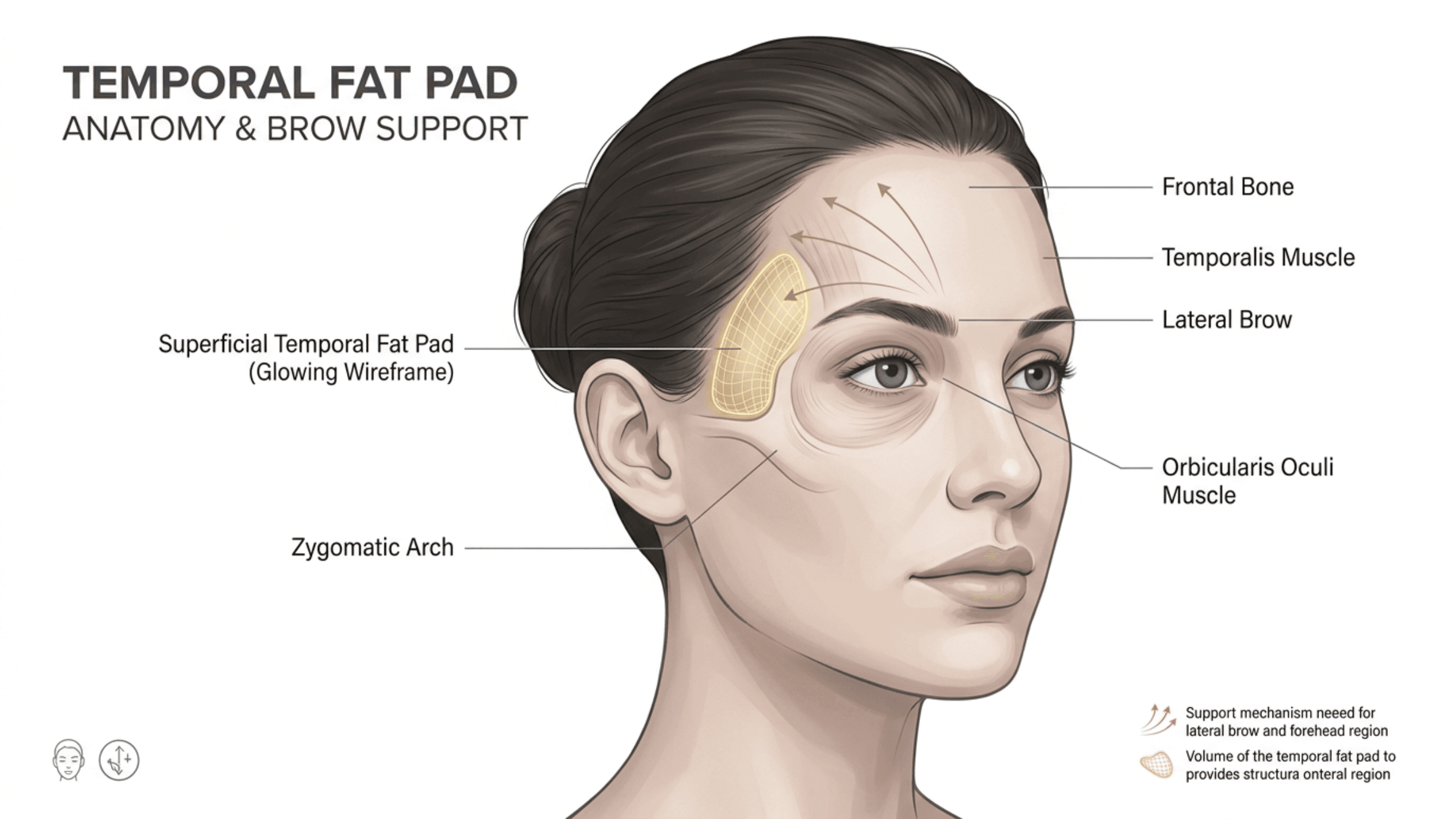
Table of Contents
The Anatomy of a Trap: What Is the Temporal Fat Pad?
Most patients believe the secret to a youthful face lies in the skin. This is the primary misconception that leads to the Hollow Cheek Paradox. Beneath the skin of your temples lies the temporal fat pad, a specialized pocket of adipose tissue that acts as the primary scaffold for the upper third of your face. It provides the “cushion” that allows light to reflect off the lateral brow and temple area smoothly. When a surgeon over-resects this tissue during a ponytail facelift to achieve an extreme lateral sweep, they aren’t just removing fat; they are removing the architectural foundation of your youth.
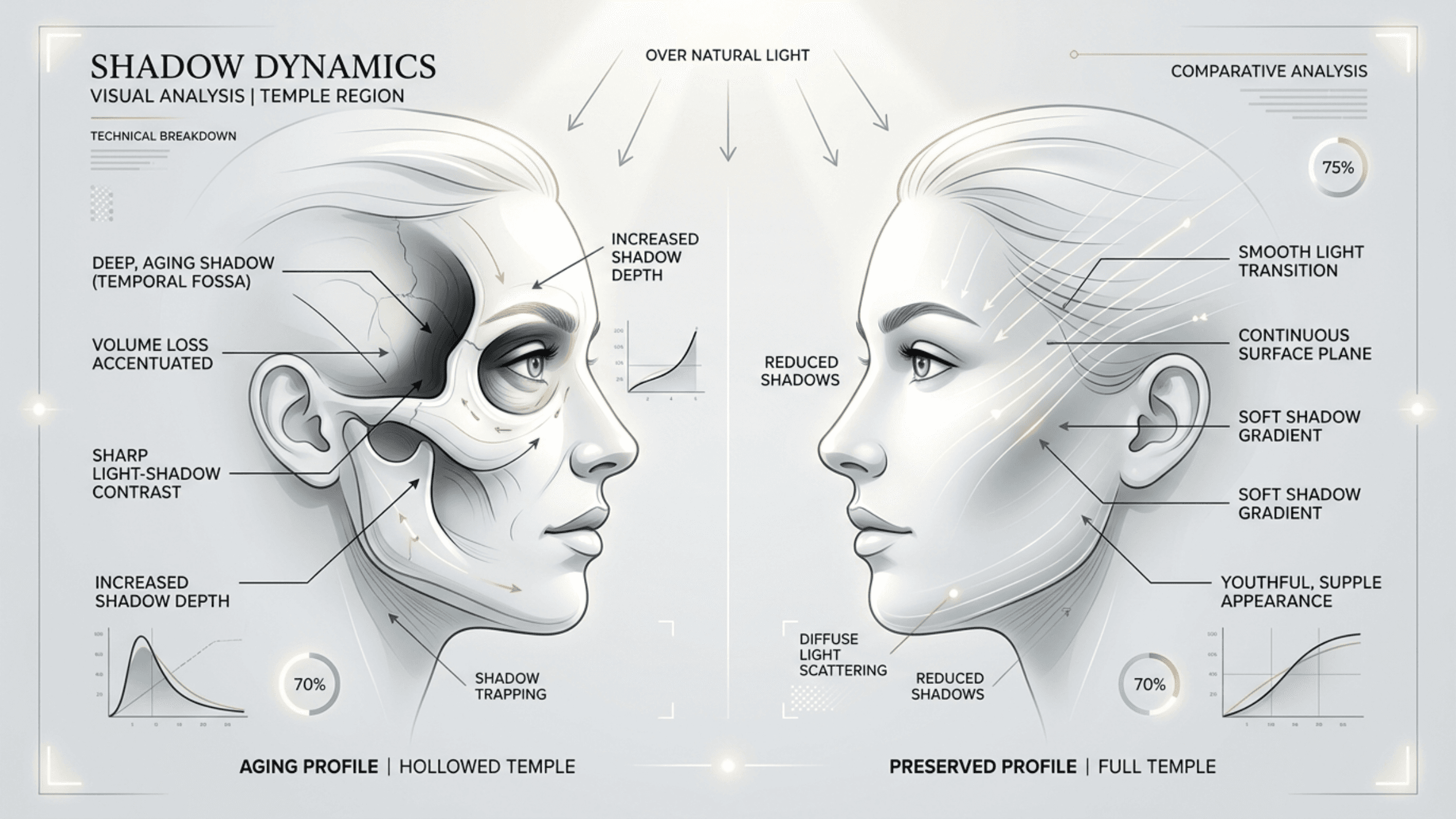
In his surgical practice, Dr. Berat Çiğdem often references his background in fine arts to explain this. In a portrait, the temple is where light transitions into shadow. If the temple is hollowed out through over-aggressive temporal lift techniques, the shadow deepens, making the lateral orbital rim (the bone around your eye) look prominent and skeletal. This transition doesn’t look “fit” or “lean”—it looks aged.
The Biology of Volume vs. The Physics of Tension
Youth is defined by convexities; aging is defined by concavities. A ponytail facelift relies on upward tension. However, when tension is applied to a face lacking volume, the skin is pulled flat against the bone. Without the temporal fat pad, there is no “bounce-back.” This creates a phenomenon where the patient looks 20 years old in a high-contrast photo but 50 years old in natural, overhead lighting. The “hollow” becomes a permanent shadow that no amount of makeup can hide.
Furthermore, the temporal fat pad serves a mechanical purpose. it facilitates the movement of the temporalis muscle. Over-resection can lead to a “stiff” appearance during mastication or smiling. Understanding this anatomical boundary is the difference between a successful procedure and a life-long dependency on dermal fillers to “plug the holes” left by surgery.

Why the Ponytail Facelift Often Misleads Younger Patients
The ponytail facelift gained fame because it mimics the look of hair pulled back tightly. It is marketed as a “minimally invasive” way to achieve a cat-eye or fox-eye look. The paradox emerges when surgeons attempt to “clean up” the area by removing fat. In younger patients (ages 25-40), the skin is still elastic, and the fat pads are naturally full. When these fat pads are resected, the sudden loss of volume causes the skin to lose its anchor point.
The result is a “hollowed-out” look that typically only appears in people in their 60s or 70s. Because the patient is young, the contrast between the tight skin and the hollowed temple creates a “canny valley” effect—where the face looks almost human but subtly “off.” This is the core of the Hollow Cheek Paradox: the surgery meant to prevent aging actually introduces a primary marker of senility decades early.
The Illusion of Sharpness vs. The Reality of Emaciation
Surgeons often confuse “sculpting” with “emptying.” While a bichectomy (buccal fat removal) can sharpen the lower face, the upper face—the temples and the lateral cheeks—must remain full to maintain a “heart-shaped” facial harmony. If you remove fat from the temples while tightening the skin, you destroy the natural taper of the face. You are left with a wide lower face (even if it’s tight) and a narrow, sunken upper face. This inverted triangle is the hallmark of the over-operated patient.
Evidence: Comparing Conservative vs. Aggressive Resection
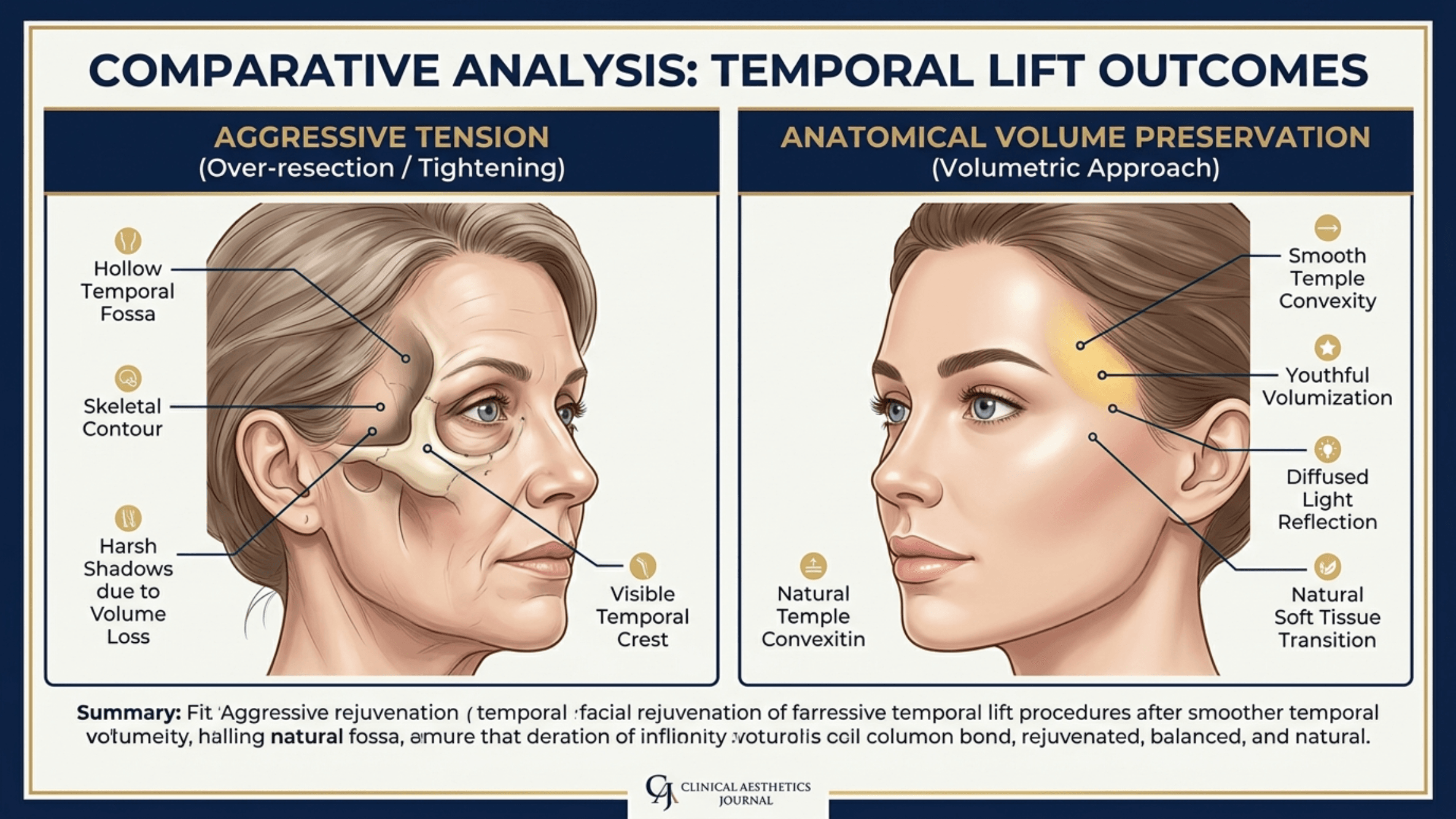
Dr. Berat’s longitudinal follow-up data on patients with over-resected temporal zones shows a clear trend: 85% of patients who underwent aggressive fat removal required fat grafting or permanent fillers within 4 years. Conversely, patients who underwent a volume-sparing facelift maintained their results for 10+ years without secondary intervention.
| Feature | Conservative (Volume-Sparing) | Aggressive (Over-Resected) |
|---|---|---|
| Temple Contour | Smooth, slight convexity | Concave, skeletal “pit” |
| Light Reflection | Diffused, youthful glow | Harsh shadows, deep hollows |
| Long-term Need | Natural aging (graceful) | Revision/Filler dependency |
| Skin Quality | Supported, vibrant | Thin, “paper-like” over bone |
This table illustrates the long-term cost of short-term “sharpness.” Aggressive resection provides a “wow” factor on the operating table but fails the test of natural lighting and time. The “hollowed” look is nearly impossible to reverse perfectly because the original fat pad has a unique, multi-layered vascularity that synthetic fillers cannot replicate.

The Role of Dr. Berat’s “Graceful Aging” Protocol
Dr. Berat Çiğdem approaches the face as a dynamic sculpture. His method avoids the Hollow Cheek Paradox by focusing on “Deep Plane” repositioning rather than fat removal. Instead of cutting away the temporal fat pad, Dr. Berat repositions the sagging tissues back to their original anatomical location. This “lifts” the face using its own internal volume, ensuring that the temples remain full and the skin remains tension-free.
Why Antalya Is the Center for Revision Excellence
Many international patients travel to Antalya specifically to correct the “over-done” look from previous surgeries. Dr. Berat’s clinic utilizes advanced imaging to map the remaining fat deposits. If over-resection has already occurred, he employs micro-fat grafting—taking the patient’s own fat and meticulously reinjecting it into the temporal hollows to restore the lost scaffold. This is a delicate procedure that requires the eye of an artist and the precision of a board-certified surgeon.
The Hidden Psychological Impact of “Surgical Aging”
The irony of the Hollow Cheek Paradox is its psychological toll. Patients undergo surgery to feel more confident and youthful. However, when they see a “skeletonized” reflection, they often experience a loss of identity. They look “different” but not “better.” This mismatch between expectations and anatomical reality is why a thorough consultation is non-negotiable.
Dr. Berat’s team, led by coordinator Fatma, ensures that every patient understands the trade-offs of their desired look. We reject the “one-size-fits-all” ponytail lift trend in favor of a bespoke surgical plan that honors the patient’s unique bone structure. If a procedure risks hollowing the face, we don’t do it. Safety and natural longevity are our primary KPIs.
Implementation: How to Avoid the Hollow Cheek Paradox
If you are considering a ponytail facelift or a temporal lift, follow these 5 steps to ensure your results don’t lead to premature aging. These steps are designed to filter out aggressive techniques in favor of anatomical preservation.
- Demand a Volume Assessment: Ask your surgeon how they plan to preserve the temporal fat pad. If they mention “resection” as a standard part of the lift, proceed with extreme caution.
- Analyze Before & Afters for Lighting: Look for photos taken in natural light, not just studio lighting. Check if the temples look “sunken” or if there is a smooth transition from the brow to the cheek.
- Prioritize Deep Plane Techniques: Research surgeons who specialize in Deep Plane lifts. This technique focuses on moving muscle and fat layers as a unit, rather than just pulling skin over a depleted base.
- Discuss “Shadow Dynamics”: Talk to your surgeon about how the procedure will affect the way light hits your face. A surgeon with an artistic background, like Dr. Berat, will be able to explain the “highlight and shadow” balance of your specific anatomy.
- Plan for the Decade, Not the Year: Ask what your face will look like in 5 or 10 years. A good surgeon will warn you against “trends” that don’t age well.
By following these steps, you take control of your surgical journey. The goal is to look like the best version of yourself, not a “tight” version of someone else. At Dr. Berat Plastic Surgery, we specialize in the “refreshed” look—where people notice you look great, but no one can tell you’ve had surgery. This is the ultimate victory over the Hollow Cheek Paradox.
Frequently Asked Questions About the Hollow Cheek Paradox
Can a hollow temple after a ponytail facelift be reversed?
Yes, but it is complex. Reversing the effects of the Hollow Cheek Paradox usually requires micro-fat grafting or long-lasting dermal fillers to rebuild the lost scaffold. Dr. Berat prefers using the patient’s own fat to ensure a natural look and permanent integration, which synthetic materials cannot always offer.
Why is the temporal fat pad so important in younger patients?
In younger patients, facial fat is the primary source of structural support. Removing it early accelerates the appearance of bone protrusion and skin laxity. Because younger skin is thinner in the temple area, any loss of underlying volume is immediately visible as a deep, aged shadow.
How do I know if my surgeon is over-resecting fat?
During your consultation, ask specifically about fat management. If the surgeon focuses solely on ‘removal’ or ‘cleaning out’ the temple to get a ‘sharper’ look without mentioning volume preservation, it is a red flag. A conservative surgeon will talk about ‘repositioning’ fat rather than deleting it.
Does a ponytail facelift always cause the Hollow Cheek Paradox?
No, not if performed correctly. The paradox only occurs when a surgeon prioritizes skin tension over anatomical volume. When performed by a surgeon who respects the temporal fat pad and uses volume-sparing techniques, a ponytail facelift can provide a beautiful, lasting rejuvenation without the sunken look.